
 Search
.jpg "Tibetan Local Travel Agency")



Mount Kailash and Mansarovar Weather: How Is the Climate?
Mt. Kailash and Lake Mansarovar share the typical high plateau weather: dry air, intense sunshine, and big swings in temperature withins hours. The annual temperature here ranges from about -12°C to 14°C on average.
At Kailash and Mansarovar, winter is long (November to March), while spring is short (April to May). The best weather for travel usually comes in summer (June to August) and autumn (September to October), when weather are milder and more favorable for the pilgrimage trek.
So, please join us to to explore the weather at Kailash Mansarovar to fully prepare yourself for a smooth journey to this sacred land.
Content
What Is the Weather at Kailash Mansarovar Overall: Dry, Thin Air & Unpredictable
What Are the Temperatures and Weather at Kailash Mansarovar in the Four Seasons?
Which Is the Best Month to Visit Kailash Mansarovar? May, June, September, and October
How Should I Dress to Adapt to the Weather at Kailash Mansarovar? Dress in Layers
What If the Bad Weather Affects My Visit to Kailash Manasarovar? Any Alternatives?
What Is the Weather at Kailash Mansarovar Overall: Dry, Thin Air & Unpredictable
Mount Kailash and Lake Manasarovar are situated in the Ngari region of western Tibet (around 1,200km west of Lhasa). Here, the average altitude sits at around 4,700m, and because of the extreme elevation, this sacred land is crowned as the " Roof of the Roof of the World " in Tibet.
It is the towering altitude and barren landscape that shape the unpredictable weather at Kailash and Mansarovar, and their majestic and rugged natural beauty, unlike anywhere else in Tibet.
The dry air and little rainfall here can make your lips and skin dry out quickly. Besides, since the air is thin, you may feel out of breath when walking along the long and rocky pilgrimage trails. So, please walk at your own pace and take your time to pause and rest when needed. You may also drink more water than usual to stay hydrated. This can help your body better adjust to the harsh weather and high altitude around Mt. Kailash and Lake Manasarovar.
In addition, the thin air also leads to intense sunlight during the daytime. Therefore, sunscreen, sunglasses, and a wide-brimmed hat are essential to protect yourself from sunburn when traveling in this region.
What’s more, the weather at Kailash Mansarovar is always changing. While you are enjoying the Mount Kailash trek or meditating peacefully by the sacred Lake Manasarovar, the sky might be bright and clear one moment, and then suddenly clouds, strong winds, a burst of showers, or even snow can appear, no matter the season.
In this case, please just go with the flow, dress in layers, prepare a waterproof and windproof jacket, and keep yourself warm. You will be ready for whatever this magical land has in store. Besides, no worries! Our local experts will ensure your travel safety and flexibly arrange the tour activities based on the actual weather conditions.
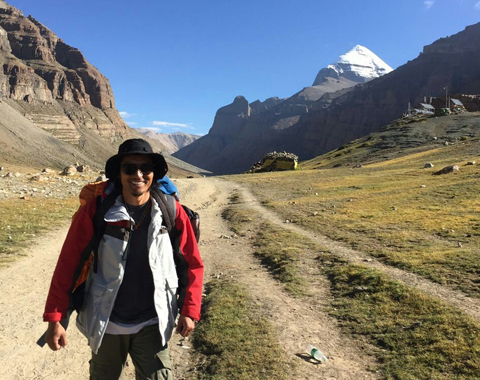
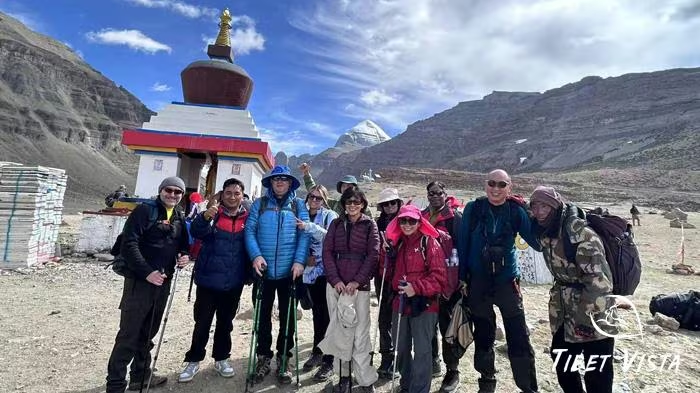 Our guests trek on the rugged trails around Mt. Kailash with our local Tibetan guide.
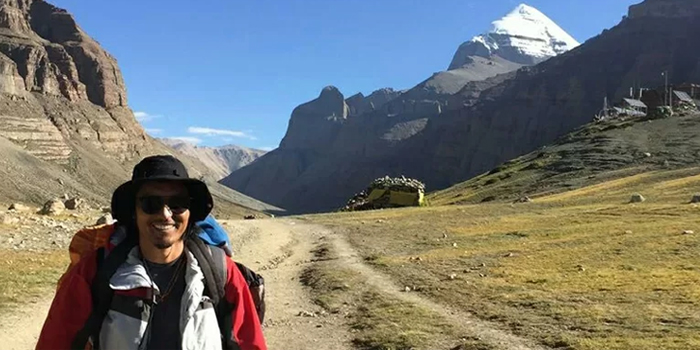

Enjoy the classic 15-day Lhasa to Mt. Kailash and Mansarovar small group tour to explore the magic of the holy peak and lake.
What Are the Temperatures and Weather at Kailash Mansarovar in the Four Seasons?
The spring in Mt. Kailash and Lake Manasarovar typically lasts from April to May. It is the time when this sacred land wakes up from its long winter slumber. Daytime temperatures usually range from 5°C to 15°C, while nights can still drop to around -7°C to 0°C.
Besides, April actually marks the start of a new Mt. Kailash and Mansarovar pilgrimage season. You can enjoy the crisp air and blue skies, with fewer crowds on pilgrimage trails. Meanwhile, patches of snow can still be seen on the age-old trails, especially around high mountain passes. In contrast, the Lake Mansarovar won’t thaw until mid-May to reveal its sapphire-blue water against the snowy peaks of Mount Kailash. Overall, spring is a great time for an immersive Mt. Kailash kora (pilgrimage trek) and Manasarovar visits.
| Tibet | Month | Avg Temp (°C) | Rainfall (mm) | Snow (mm) |
| Kailash & Mansarovar | April to May | 5~15 | 2~24 | < 5 |
Summer (June to August) is the warmest and most lively season at Kailash Mansarovar. Daytime temperatures can reach 10°C to 22°C, but nights remain cold at around 0°C to 5°C. Though it is the rainy season, most showers fall at night and usually won’t last long. So, it won’t affect your overall trekking experience around the holy Mt. Kailash and Lake Mansarovar.
Besides, with more moisture in the air, you actually feel more comfortable, and the valleys turn greener with grass and beautiful wild flowers. You can see many Tibetan pilgrims with families making the pilgrimage during the summer, particularly during the traditional Saga Dawa Festival (Late May or Early June). Meanwhile, Lake Mansarovar appears as a vast, sapphire mirror stretching across the plateau in summer. The shores of the lake are dotted with green grass and wildflowers, bringing a touch of life to the otherwise stark landscape of Ngari.
| Tibet | Month | Avg Temp (°C) | Rainfall (mm) | Snow (mm) |
| Kailash & Mansarovar | June to Aug | 10~22 | 32~54 | < 2 |
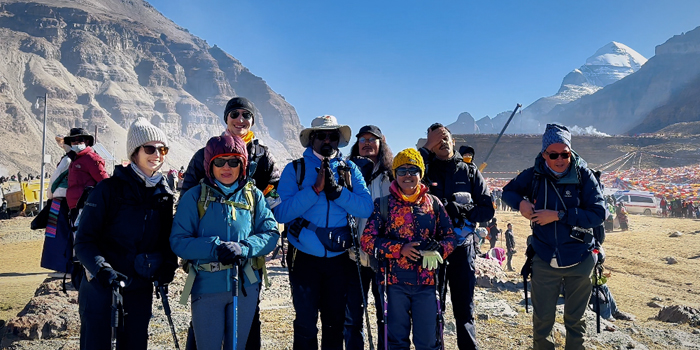
Time your visit to sacred Mt.Kailash and Lake Manasarovar during the joyous Saga Dawa Festival to experience unique festivities.
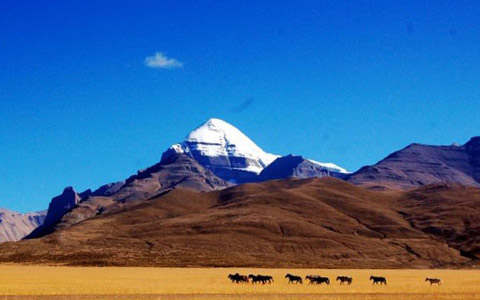
Autumn (September to October) is the golden season to visit Mt. Kailash and Lake Manasarovar. The air feels fresh, and you can enjoy the deep blue sky and crystal-clear views of Mt. Kailash and the surrounding peaks during your trek, and later explore the serene Lake Manasarovar and off-the-beaten monasteries nearby.
Daytime temperatures range from 3°C to 17°C, while nights are chilly and often drop below zero. Overall, for most travelers, autumn is your ideal and last window to enjoy relatively stable weather for Mt. Kailash trekking, photography, and other outdoor adventures at Kailash Manasarovar before the harsh winter puts the whole region into a deep slumber.
| Tibet | Month | Avg Temp (°C) | Rainfall (mm) | Snow (mm) |
| Kailash & Mansarovar | Sept to Oct | 3~17 | 15 | 10~50 |
Winter (November to March) at Kailash Mansarovar in Ngari is harsh and quiet. The average daytime temperatures are only about 4°C, while nights can plunge to -20°C or even lower. The strong winds and heavy snow often block the mountain passes, making the trekking route inaccessible. Local pilgrims also avoid this season for pilgrimage. To ensure travelers’ safety, the Mt. Kailash region is usually closed to travelers in winter until next April.
Besides, Lake Mansarovar in winter freezes into a sheet of ice, and the surrounding mountains are covered in snow. While it looks peaceful, for most travelers, it’s not worth traveling 1,200km from Lhasa just to see the frozen lake at this time of year.
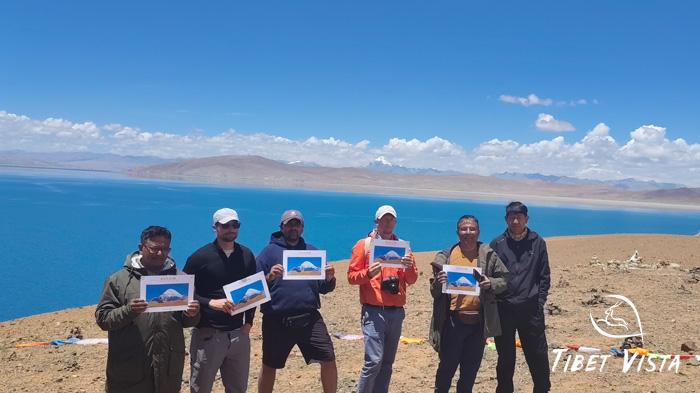 Our guests enjoy the serene lake Manasarovar in summer in western Tibet.
| Tibet | Month | Avg Temp (°C) | Rainfall (mm) | Snow (mm) |
| Kailash & Mansarovar | Nov to Mar | -10~-5 | 0~5 | < 1 |
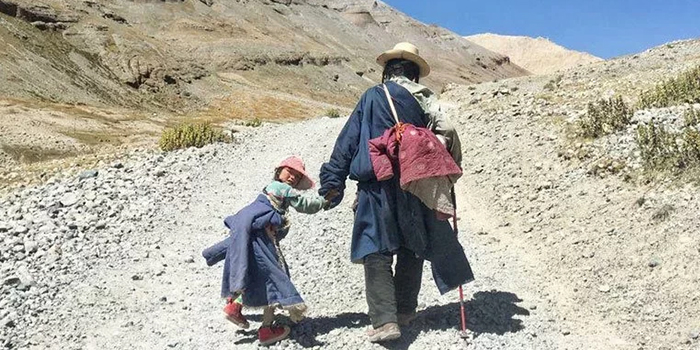
Journey to holy Mt. Kailash and keep traveling to vibrant Kathmandu with our smooth border transfer service.
Which Is the Best Month to Visit Kailash Mansarovar? May, June, September, and October
As a seasoned local Tibetan guide who has circumambulated Mt. Kailash over 100 times and visited Lake Mansarovar numerous times, I’m deeply convinced that May, June, September, and October are the best months to experience the sacred vibes and stunning views of Mt. Kailash and Lake Mansarovar.
To our Tibetans, the Saga Dawa Festival (Late May or Early June) is believed to be the most auspicious time to walk the kora (pilgrimage trek) around the holy Mt. Kailash and Lake Manasarovar. It is one of the most important Tibetan festivals that honors Sakyamuni’s enlightenment and entry into nirvana.
For global travelers, this offers you an eye-opening experience to dive deep into century-old Tibetan traditions. At the foot of Mt. Kailash, you can join thousands of devout Tibetan pilgrims to witness the huge Tarboche prayer pole being raised. You will see senior monks chanting mantras and blowing long horns, while the crowd bursts into cheers, tossing colorful prayer papers (Longda) and Tsampa (white barley flour) into the sky.
This marks the official start of the sacred Mt. Kailash kora (pilgrimage trek). From there, you can walk alongside a ceaseless flow of devoted Tibetan pilgrims to circumambulate around Mt. Kailash. It will definitely be a once-in-a-lifetime journey for you to cherish.
Time your visit to sacred Mt.Kailash and Lake Manasarovar during the joyous Saga Dawa Festival to experience unique festivities.
In addition, September and October are the best months for Mt. Kailash trekking and visiting Lake Manasarovar in terms of weather, scenery, and travel experience.
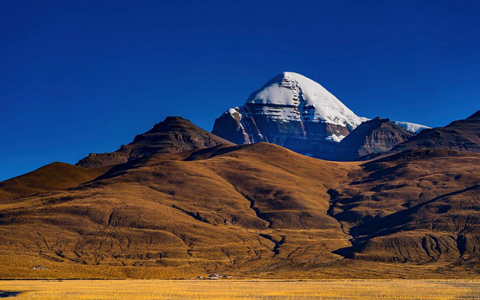
By this time, the blue skies in the Mt. Kailash region turn crystal clear. The weather is relatively stable, with daytime temperatures around 3 to 17°C, and the high mountain passes are free of snow, which is comfortable for trekking. At sunrise and sunset, you are more likely to see the pyramid-shaped summit of Mt. Kailash glow in a magical golden hue and feel the divine power of this Tibet’s holiest peak.
On the other hand, Lake Manasarovar becomes like a sapphire-blue mirror, perfectly reflecting Mt. Kailash and the surrounding peaks. It is a dream season for landscape photographers and outdoorsy travelers.
Besides, traveling in September and October also feels more peaceful and comfortable. Unlike in summer, when the Saga Dawa Festival brings huge crowds, this season is quieter. You can walk and meditate around the sacred Mt. Kailash and Mansarovar without feeling rushed, and even the accommodation for the Mt. Kailash trek is easier to find and more reasonably priced compared to peak festival season.
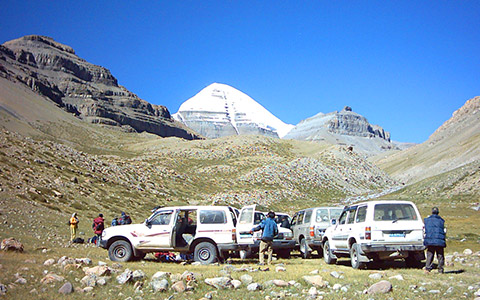
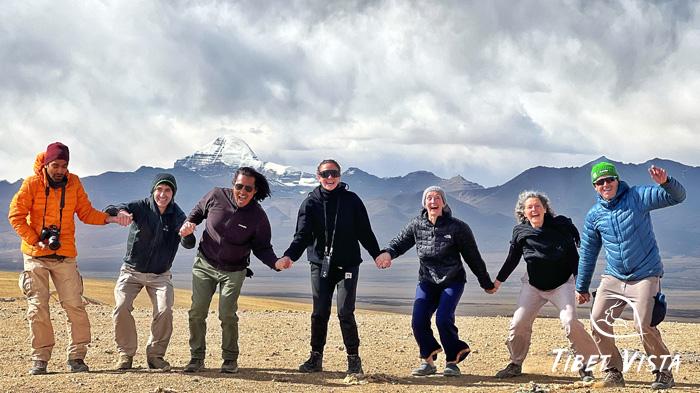 Our guests trek around holy Mt. Kailash in September with perfect weather.
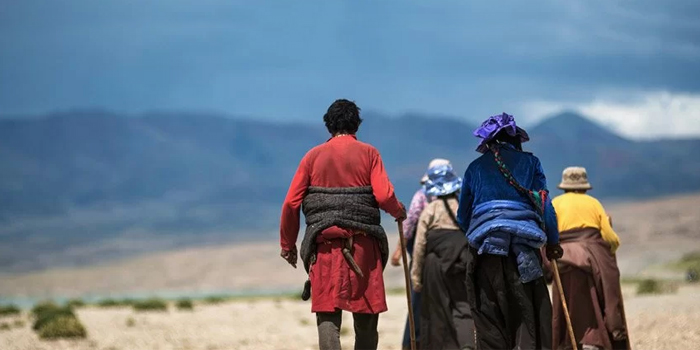
Travel overland from Kathmandu to holy Mt. Kailash and Lake Mansarovar and journey back to Nepal with our smooth border transfer.
How Should I Dress to Adapt to the Weather at Kailash Mansarovar? Dress in Layers
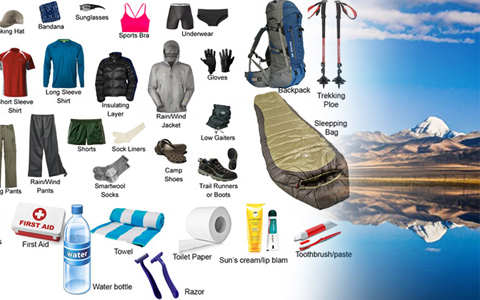
For what to pack and wear for visiting Kailash and Mansarovar, the rule of thumb is to dress in Layers, keep warm, and protect yourself from strong winds, powerful sunshine, and cold.
At over 4,500 meters, the weather here changes fast. For the underwear, we recommend that you choose quick-dry thermal underwear to stay dry and cool when you sweat during your trek around Mt. Kailash.
For the middle layer, you may wear a fleece jacket or a lightweight down jacket for insulation and to keep you warm. It’s easy to put on or take off according to the temperature change during the day.
To protect you from unpredictable weather at high altitude, for the outer layer, having a waterproof and windproof jacket with a hood and pants is a must to cope with the sudden showers, snow, or strong winds in the Mt. Kailash region.
Besides, you can wear a pair of comfortable trekking shoes or sports shoes for easy walking on the long, rugged trails and bring sunscreen, sunglasses, and a wide-brimmed sunhat for sun protection.
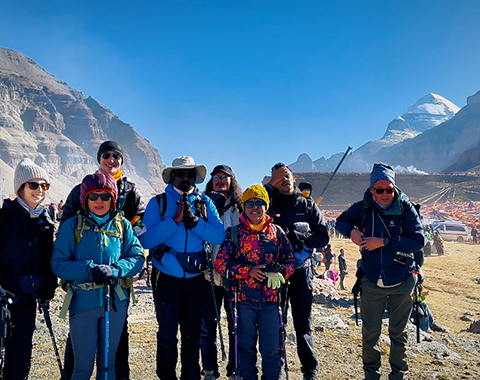
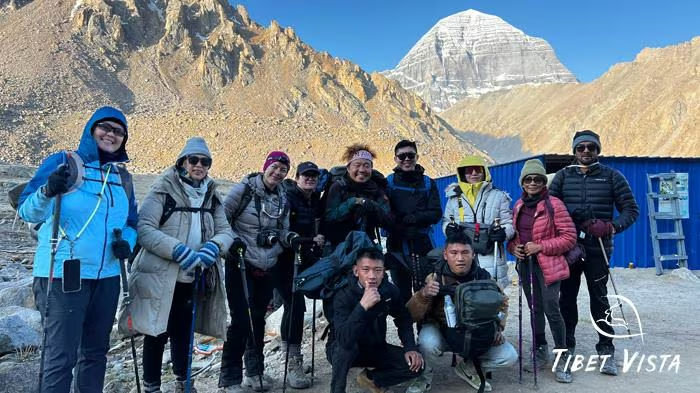 Our guests dressed in windproof and water-resistant jackets with trekking poles during the Mt. Kailash trek.
Enjoy the classic 15-day Lhasa to Mt. Kailash and Mansarovar small group tour to explore the magic of the holy peak and lake.
What If the Bad Weather Affects My Visit to Kailash Manasarovar? Any Alternatives?
If you happen to encounter extreme weather such as sudden snow, strong winds, or hail during your Mt. Kailash trek, your safety always comes first. In that case, we won’t push on across the high mountain passes. Instead, our local experts will escort you to the nearest supply points or monasteries and stay there until the weather improves.
If the weather at Lake Mansarovar turns bad, no worries! Our local experts will provide you with flexible options and respect each group member's ideas to fit your travel. For example, you may go the the nearby town (Darchen) for a good rest. Often, the next morning brings clearer skies, and then you can continue to enjoy Lake Mansarovar’s stunning beauty and admire the golden sunset of Mt. Kailash mirrored on the holy waters.
As a leading local Tibet travel agency since 1984, our mission is to ensure you enjoy a safe, comfortable, and authentic Tibet experience. No matter how the weather changes, we will respond promptly and provide you with attentive care and the best alternative options.
We believe that when traveling in Tibet, staying flexible and keeping an open mind often brings unexpected rewards. Sometimes, the moments after a storm will be your most unforgettable Tibet travel experience.
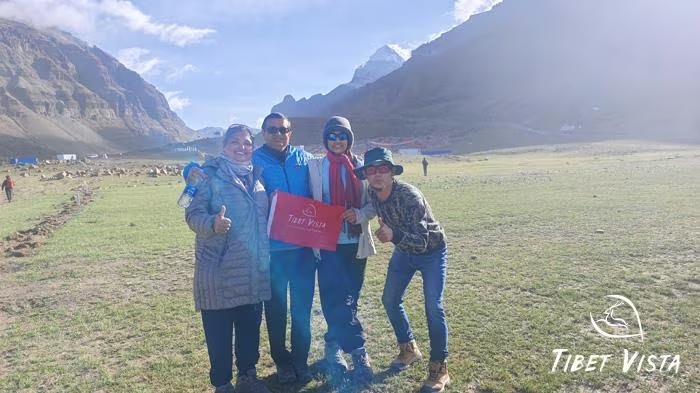 Our guests enjoy the trek with our local experts during the Mt. Kailash kora.
Conclusion
In a nutshell, the weather at Kailash Mansarovar is as magical as it is ever-changing. From sunny days to sudden winds and snow, it offers unforgettable experiences for well-prepared and the most adventurous travelers.
Hopefully, this travel guide can help you plan a safe and unforgettable adventure to Mt. Kailash and Mansarovar. If you have more questions about your Mt. Kailash and Mansarovar tour, don’t hesitate to email us for free and expert travel solutions. Looking forward to traveling to experience the ultimate pilgrimage in Tibet. Tashi Delek!

Exceedingly approachable, attentive, and knowledgeable, Pasang exemplifies what a top-notch local Tibetan guide can be. Based on his 20+ years of guide experience, Pasang knows how to flexibly rearrange a traveler’s itinerary to make it comfortable for travelers during long rides. He always checked in with each traveler to make sure they were feeling well due to the altitude.
Besides, Pasang’s encyclopedic knowledge of Tibetan culture & history helps travelers easily navigate through the mysterious Tibetan monasteries and old streets, etc. When Pasang unwinds, he also enjoys sharing his expertise by writing travel articles.
 Email me about your travel idea
Related Articles & Posts

Most Popular Tibet Tour Packages
-
Lhasa - Gyantse - Shigatse - E.B.C - Saga - Kailash Trek - Darchen - Lake Manasarovar - Saga - Gyirong - Tingri - Lhasa
USD2069
View Details -
Lhasa - Gyantse - Shigatse - EBC - Saga - Darchen - Kailash Trek - Darchen - Saga - Gyirong - Tingri - Lhasa
USD2219
View Details -
10 Days Kailash Pilgrimage Tour from Kathmandu, via Gyirong Port
Kathmandu - Gyirong - Saga - Mt.Kailash - Lake Manasarovar - Darchen - Saga - Gyirong - Kathmandu
USD1749
View Details -
Lhasa - Gyantse - Shigatse - EBC - Saga - Darchen - Kailash Trek - Darchen - Saga - Gyirong - Kathmandu
USD2069
View Details -
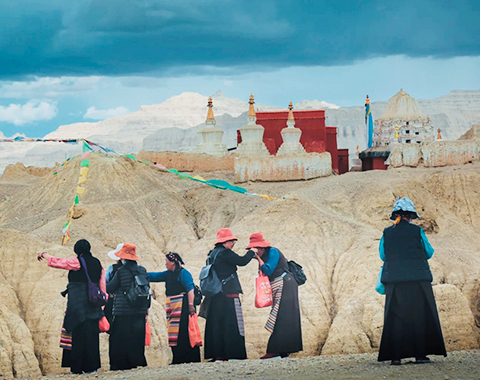
17 Days Kailash Manasarovar Full Moon Tour & Guge Kingdom Exploration
Lhasa - Gyantse - Shigatse - EBC - Saga - Darchen - Zanda - Kailash Trek - Darchen - Saga - Gyirong - Tingri - Lhasa
USD2299
View Details -
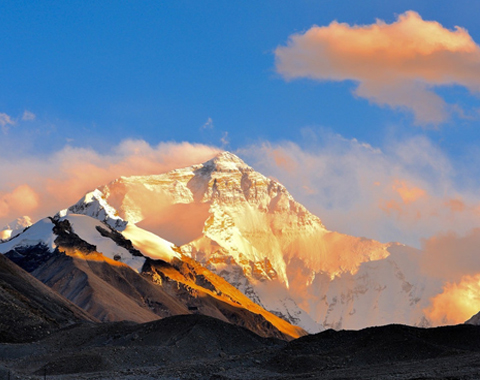
Lhasa - Gyantse - Shigatse - Everest Base Camp - Shigatse - Lhasa
USD949
View Details -
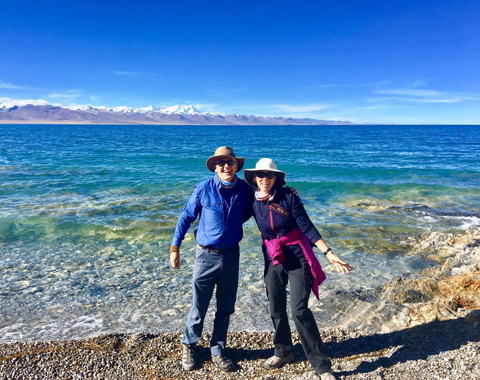
10 Days Lhasa to Everest Base Camp, Namtso Lake and Holy Elephant Gate Small Group Tour
Lhasa - Gyantse - Shigatse - EBC - Shigatse - North Tibet Grassland - Bange - Namtso Lake - Holy Elephant Gate - Lhasa
USD1299
View Details -
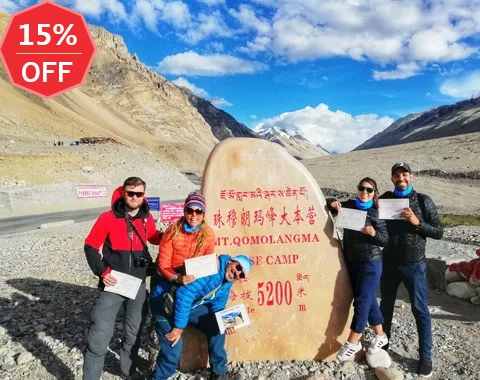
8 Days Driving Across Himalaya Overland Adventure from Kathmandu to Lhasa
Kathmandu - Gyirong - Everest Base Camp - Tingri - Shigatse - Gyantse - Lhasa
USD1019
View Details -
4 Days Lhasa Impression Small Group Tour: Explore the Heart of Tibet and Mingle with the Locals
Lhasa
USD509
View Details -
Lhasa - Gyantse - Shigatse - Everest Base Camp - Gyirong - Kathmandu
USD989
View Details -
Lhasa - Gyantse - Shigatse- Lhasa
USD799
View Details
0 Comment ON "Mount Kailash and Mansarovar Weather: How Is the Climate?"


What Is the Weather at Kailash Mansarovar Overall: Dry, Thin Air & Unpredictable
What Are the Temperatures and Weather at Kailash Mansarovar in the Four Seasons?
Which Is the Best Month to Visit Kailash Mansarovar? May, June, September, and October
How Should I Dress to Adapt to the Weather at Kailash Mansarovar? Dress in Layers
What If the Bad Weather Affects My Visit to Kailash Manasarovar? Any Alternatives?