
 Search
.jpg "Tibetan Local Travel Agency")


Tibetan Traditional Dress Male and Female: What Do Tibetan Men and Women Wear?
Traditionally, Tibetans have led a nomadic way of life in the Himalayan region. Tibetan traditional dress, also known as Chupa, is a long and loose-fitting robe designed for them to adapt to the unique Tibetan lifestyle and changing weather on the towering Tibetan Plateau.
Besides, Tibetan traditional dress differs in design and style between men and women and varies from region to region. So, in this travel guide, let’s explore the different types of Tibetan traditional dress and the best ways to experience it as you travel in Tibet.
 Tibetan Traditional Dress Male: What to Wear in Daily Life and on Special Occasions?
Tibetan Traditional Dress Female: What to Wear in Daily Life and on Special Occasions?
What Are Tibetan Traditional Dresses Made Of? How Much Do They Cost?
How Does Tibetan Traditional Dress Vary Across Different Regions?
Special: Tibetan Traditional Dress in Purang - A Unique Intangible Cultural Heritage
Try Tibetan Traditional Dress During Your Tibet Trip for a Memorable Experience
Tibetan Traditional Dress Male: What to Wear in Daily Life and on Special Occasions?
Tibetan traditional dress is largely shaped by the unique Tibetan landscape and climate.
In daily life, the most iconic Tibetan traditional dress for males consists of a long robe, a shirt, and loose-fitting trousers.
The long robes (Chupa) often have a dark color, either black, deep blue, or brown, made from Tibetan Yak wool, Tibetan lambskin, or cotton cloth to keep Tibetan men warm on the cold Tibetan Plateau. Usually, Tibetan men only wear one long sleeve for easy movement when herding Tibetan yaks and sheep.
Besides, you may also see their collars and cuffs adorned with simple embroidery or colorful ribbons, and a white shirt is worn underneath the robe. Accessories like belts, red topknot, headscarves, and boots are also pretty common.
When attending ceremonials, Tibetan festivals, and other formal events, Tibetan men will wear a more elaborate Tibetan traditional dress. The long robes feature intricate embroidery with high-quality silk in vibrant colors or luxurious otter fur. They will also wear red ornate belts, a golden thread hat made of fox hair, and amber necklaces.
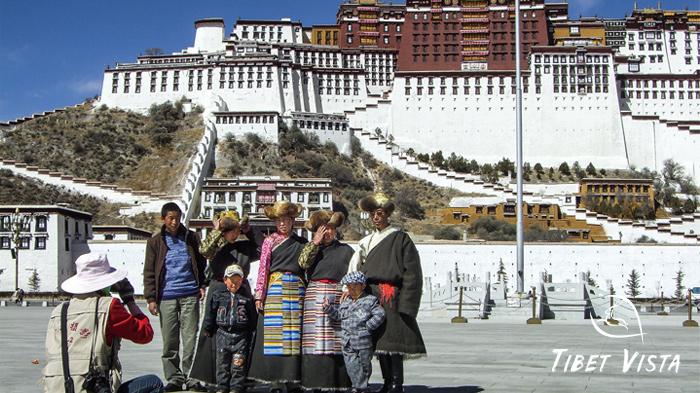 A Tibetan man dressed in Tibetan traditional dress took photos with his family in Lhasa.
Tibetan Traditional Dress Female: What to Wear in Daily Life and on Special Occasions?
Tibetan traditional dress for females is longer and often worn over a blouse. Interestingly, married Tibetan women will add a striped and colorful apron (Bangdian) over it to unveil their marital status.
In everyday life, Tibetan women will wear single-color, simple wool or cotton Chupa for herding Tibetan yaks and daily household tasks like collecting Yak dung for fuel and churning Tibetan butter tea, with the right-hand sleeve unworn to move easily.
However, during Tibetan festivals, weddings, and other formal occasions, Tibetan women will wear specially designed long Chupas with wide hems, beautifully embroidered with gold and silver patterns. They pair the skirt with a short jacket or vest, often made from silk or satin with intricate designs.
What’s more, Tibetan women would wear fancy accessories like colorful belts, red coral beads, turquoise necklaces/earrings, and Tibetan amber, and decorate their hair with ornate hairpins and bejeweled ornaments. All the elements come together on their long robes can weigh a staggering 30 to 40 pounds. Learn more about Tibetan clothing and accessories.
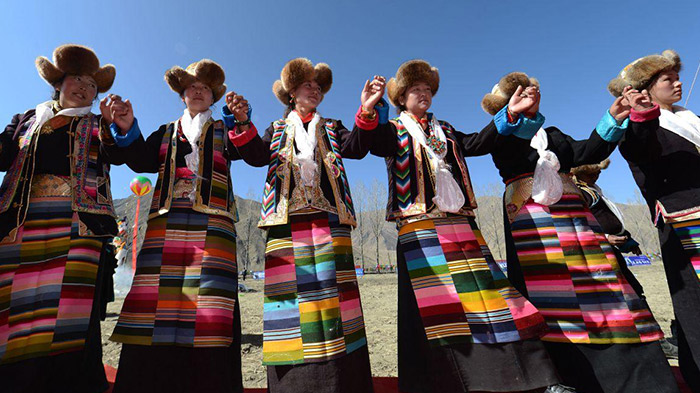 Married Tibetan women wear Tibetan traditional dress with colorful aprons.
What Are Tibetan Traditional Dresses Made Of? How Much Do They Cost?
The most common Tibetan traditional dress is made of hand-made Tibetan Yak wool fabric, Tibetan lambskin, and cotton cloth, which are durable, warm, and ideal for daily tasks like herding or farming on the harsh Tibetan Plateau.
The more elaborate Tibetan traditional dress with a blend of modern design is made of silk, brocade, otter fur, and exquisite jewelry ornaments including turquoise, coral, silver, and amber. Learn more about the Tibetan monks’ clothing.
The cost of Tibetan traditional dress depends on its raw materials, design, and craftsmanship. The everyday and affordable Chupa, made of wool or cotton, costs around 30 to 100 USD.
For mid-range and luxurious Tibetan traditional dresses with imported silk, lamb wool, intricate embroidery, and handcrafted embellishments, the price can be 150 to 1,400 USD.
Yet, no worries. For most travelers, there are shops in Lhasa where you can rent Tibetan traditional dresses for taking photos, which we will cover later. Please keep reading.
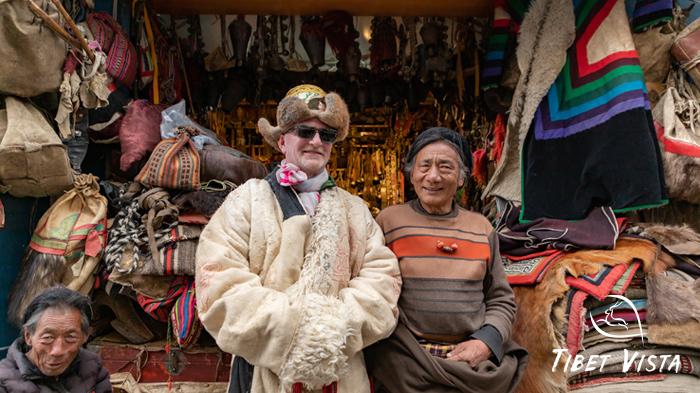 The diverse Tibetan traditional dress for sale in the Lhasa boutiques.
How Does Tibetan Traditional Dress Vary Across Different Regions?
Tibetan traditional dress differs subtly from region to region, largely due to distinctive living environments and climates. Take Lhasa, Nagqu, and Nyingchi for example:
In Lhasa, the capital of Tibet, where locals mainly live on farming and animal husbandry in the fertile Lhasa Valley. Lhasa residents typically wear white, round-collared, and woolen robes. The collars, cuffs, and edges are decorated with colorful trims featuring cross patterns in red, yellow, and blue.
Besides, they also prefer high-quality materials like silk and satin with soft, elegant hues, which stand in stark contrast to the bold and vibrant reds and greens commonly seen in nomadic regions of Tibet.
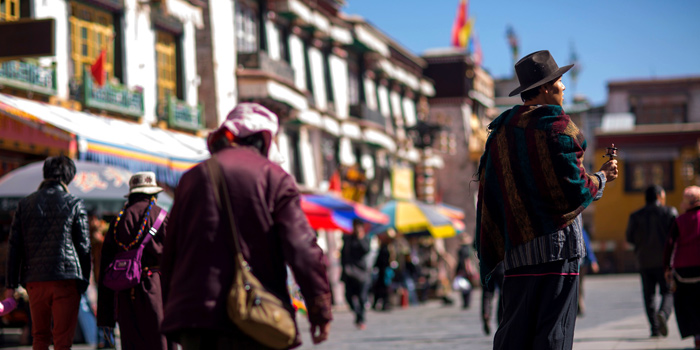

Roam over old Lhasa quarter to discover Tibetan traditional dress on the Lhasa street.
In Nagqu, the nomadic region in northern Tibet, the high altitude and low temperature make Tibetans here wear long robes all year round.
With thick sheepskin robes, Tibetan nomads can endure the harsh, cold climate of the northern Tibetan Plateau. Most robes are made from smooth Yak leather and lambskin, often featuring black velvet trims on the cuffs, lapels, and hems.
Tibetan nomads wear them in the daytime and use them as a comforter/quilt to keep them warm for sleeping and long sleeves can be folded as pillows for nomads.
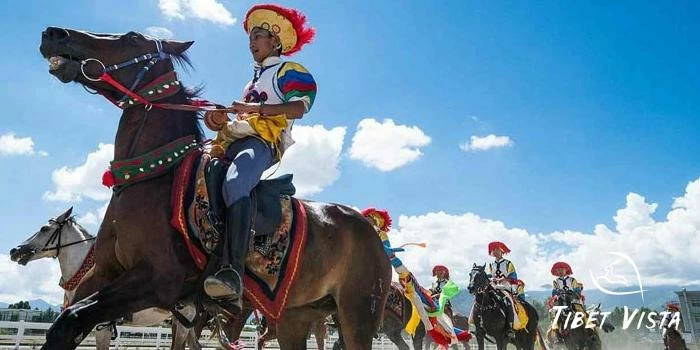
Visiting Nagqu during its horse-racing festival is a great time to explore Tibetan traditional dress for Tibetan nomads.
In Nyingchi, the eastern Tibet with the lowest altitude and dense forests, local Tibetans used to live on hunting. The iconic Gongbu Tibetan traditional dress here features a wide-shouldered, sleeveless, collarless robe, made of black or brown Tibetan Yak wool fabric and all kinds of animal hides.
You can notice a circular opening at the top for the head and a silk belt is tied at the waist, allowing the arms to move freely through side openings. Another unique feature is that for women’s dresses, there is golden satin embroidered with floral and bird patterns. These robes are warm, durable, and perfectly suited for hunting and daily chores in lush Nyingchi.
To experience it, you can plan your visit during the famous Peach Blossom Festival in Nyingchi from mid-March to early April. You can dress in Gongbu Tibetan traditional dress and enjoy massive pink peach blossoms and engage in archery, dancing, and other festivities.
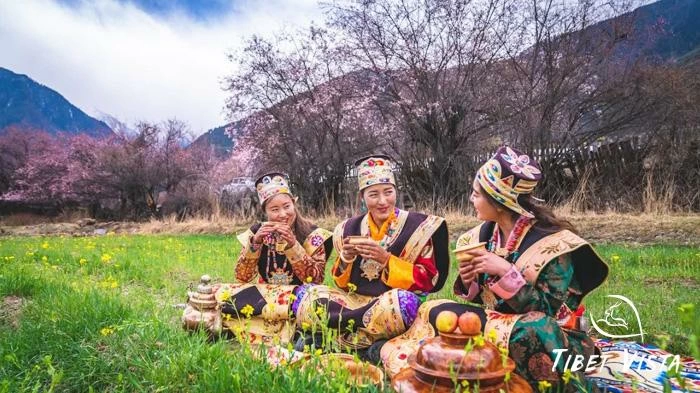 The typical Tibetan traditional dress in Nyingchi.
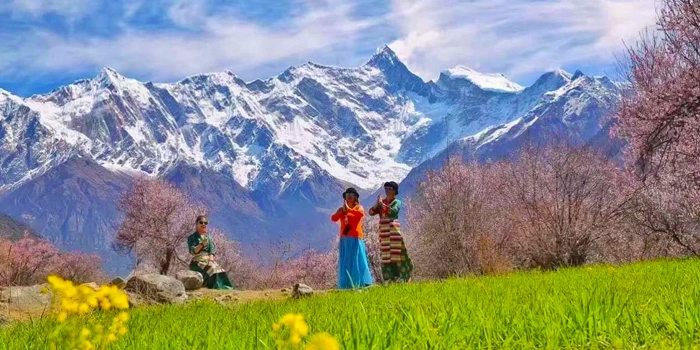
Dressed in Tibetan traditional dress in Nyingchi and mingle with locals for Nyingchi Peach Blossom Festival celebration.
Special: Tibetan Traditional Dress in Purang - A Unique Intangible Cultural Heritage
Of all the Tibetan traditional dresses, none is more visually striking and precious than the traditional “Peacock Dress” in Purang County of remote and mystical western Tibet.
The Peacock dress in Purang has over 1,000 years of history and features a crescent-shaped headdress with a veil adorned with red coral beads, cascading down the front. At the bottom of the veil, silver leaves dangle, producing a crisp, melodic sound when they hit.
When Tibetan women wear the Purang Tibetan Traditional dress, on the back, you can see a unique apron, crafted from pure white, smooth mountain goat fur. The center is decorated with a circular-patterned patch of brown and blue wool, representing the graceful wings of a peacock. The apron’s lower section splits into three flares, symbolizing the peacock tail feathers.
The entire dress is embellished with gold, silver, turquoise, agate, coral, and pearls, making it a stunning display of craftsmanship. It takes around 30 minutes to put on the entire dress.
Currently, in Korjak Village, seven families have preserved seven sets of these traditional Purang costumes, passed down for over a thousand years. Only during festivals will these women dress in Peakcock dress for dancing and celebration.
We can arrange custom tours to enjoy the unique charm of traditional Peacock dress in Purang, together with Mt. Kailash kora in Purang County.
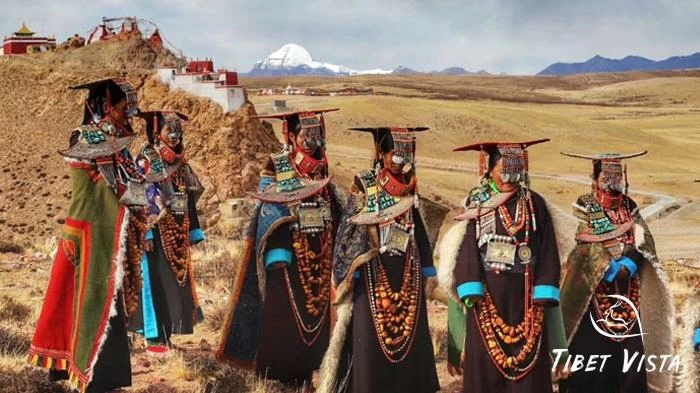 The traditional peacock Tibetan dress in Purang.
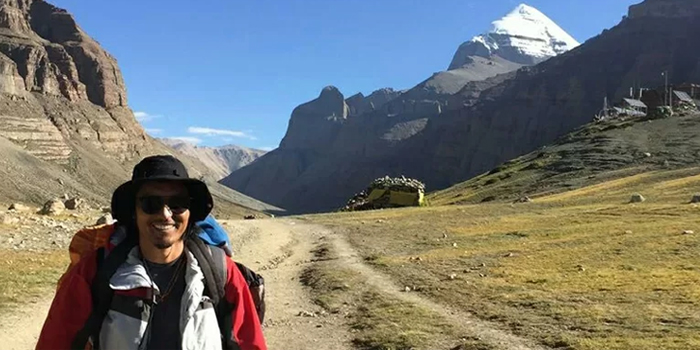
Book our custom tour to enjoy traditional peacock Tibetan dress in Purang and experience holy 3-day Mt. Kailash kora.
Try Tibetan Traditional Dress During Your Tibet Trip for a Memorable Experience
Well, for our guests, not only can you see locals dressed in Tibetan traditional dress in Tibet, but also get many chances to try on them yourself during your Tibet trip.
In Lhasa, as you roam over the bustling Barkhor Street, our local travel experts will guide you to Tibetan dress boutiques and workshops, where you can feel the textures of traditional Tibetan attire and listen to shopowners explaining the design, raw materials, and legends of Tibetan traditional dress.
Besides, you can dress in Tibetan robes with tourist-friendly make-up and styling services, and later our local experts and professional photographers will take you to iconic landmarks in Lhasa for a memorable photo shoot.
Additionally, visiting Tibet during traditional Tibetan festivals is another perfect time to experience Tibetan traditional dress. As the Nyingchi peach blossom festival is in full swing in early Spring, you can visit the Gongbu Tibetan family and try on traditional Gongbu dresses and savior local cuisines and mingle with locals for thrilling festivities.
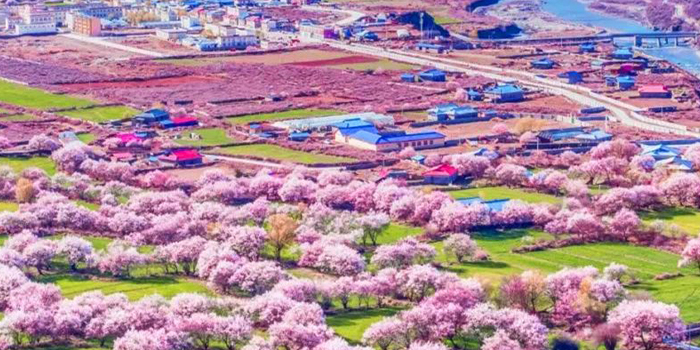
Be the guests of Gongbu Tibetan family and dress in their Tibetan traditional dress for diverse Nyingchi Peach Blossom festivities.
As the local Tibet travel agency, we offer you local experts, local drivers, extensive quality local hotels, and secure all travel permits needed and other make-up and photography services for you to enjoy the unique charm of Tibetan traditional dress during exotic Tibetan festive vibes.
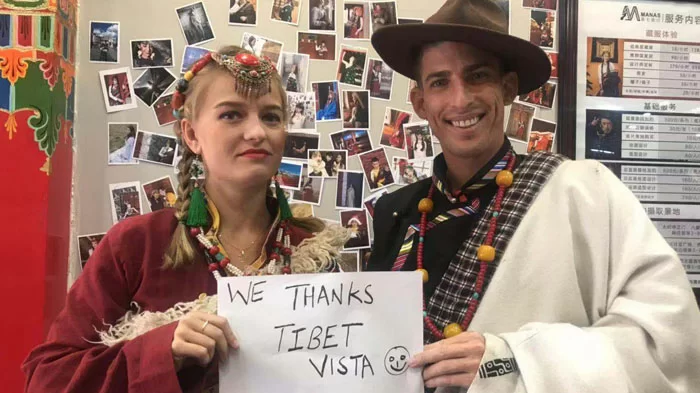 We offer make-up, styling and photography services for our guests dressed in Tibetan traditional dress.
More Insider Tips on Tibetan Traditional Dress
For overseas travelers, if you encounter traditional Tibetan attire that might seem unusual to you, please remember that it is a cherished part of Tibetan culture and show your respect.
Besides, some Tibetan robes may come with jewelry or belts, as you dress in traditional Tibetan robes, please keep the accessories intact. If you don’t know how to wear it correctly, always look for your guide or shopkeepers’ guidance.
What’s more, If you are keen to dress in Tibetan traditional dress for photo shooting, some boutiques provide paid make-up and styling services to help you wear the dress properly and authentically, which is extremely helpful.
In addition, in Lhasa, you can find modern Tibetan dresses with a perfect blend of traditional elements with contemporary fashion for sale if you plan to buy one as a souvenir. Remember to shop around and rely on your guide for bargaining.
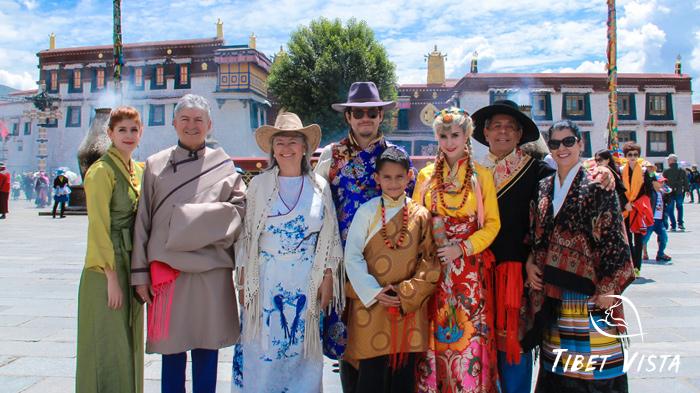 Our guests dressed in Tibetan traditonal dress with modern design for memorable photo shooting in Lhasa.
Conclusion
In a nutshell, Tibetan traditional dress, also known as chuba, is a reflection of Tibet’s unique culture, environment, and history. It’s not just clothing, but a living symbol of identity and pride deeply rooted in Tibetan life. If you have more questions about Tibetan traditional dress and Tibet tour, don’t hesitate to email us for free and expert travel solutions. Cheers!

Yangkyi is one of the experienced female local Tibetan guides in our team. She is exceptionally enthusiastic and responsible. The moment you meet Yangkyi in Lhasa, you will be greeted with her infectious smile and deeply impressed by her encyclopedic insight of Tibetan Buddhism and culture.
Traveling with Ynagkyi in Tibet is a breeze. She takes great care of everything and is extremely accommodating to the needs of every traveler in the tour group. Hopefully, you find Yangki’s travel articles hopeful in planning your Tibet tour.
 Email me about your travel idea
Related Articles & Posts




-
10 Days Nyingchi Peach Blossom Festival Small Group Tour with Everest Base Camp in 2026
Nyingchi - Bomi - Basom tso Lake - Lhasa - Shigatse - Everest Base Camp - Shigatse - Lhasa
USD1729
View Details -
Lhasa - Gyantse - Shigatse - Everest Base Camp - Shigatse - Lhasa
USD949
View Details -
Lhasa - Gyantse - Shigatse - E.B.C - Saga - Kailash Trek - Darchen - Lake Manasarovar - Saga - Gyirong - Tingri - Lhasa
USD2069
View Details -
10 Days Lhasa to Everest Base Camp, Namtso Lake and Holy Elephant Gate Small Group Tour
Lhasa - Gyantse - Shigatse - EBC - Shigatse - North Tibet Grassland - Bange - Namtso Lake - Holy Elephant Gate - Lhasa
USD1299
View Details -
8 Days Driving Across Himalaya Overland Adventure from Kathmandu to Lhasa
Kathmandu - Gyirong - Everest Base Camp - Tingri - Shigatse - Gyantse - Lhasa
USD1019
View Details -
4 Days Lhasa Impression Small Group Tour: Explore the Heart of Tibet and Mingle with the Locals
Lhasa
USD509
View Details -
Lhasa - Gyantse - Shigatse - Everest Base Camp - Gyirong - Kathmandu
USD989
View Details -
Lhasa - Gyantse - Shigatse- Lhasa
USD799
View Details -
Lhasa - Gyantse - Shigatse - EBC - Saga - Darchen - Kailash Trek - Darchen - Saga - Gyirong - Kathmandu
USD2069
View Details
0 Comment ON "Tibetan Traditional Dress Male and Female: What Do Tibetan Men and Women Wear?"


Tibetan Traditional Dress Male: What to Wear in Daily Life and on Special Occasions?
Tibetan Traditional Dress Female: What to Wear in Daily Life and on Special Occasions?
What Are Tibetan Traditional Dresses Made Of? How Much Do They Cost?
How Does Tibetan Traditional Dress Vary Across Different Regions?
Special: Tibetan Traditional Dress in Purang - A Unique Intangible Cultural Heritage
Try Tibetan Traditional Dress During Your Tibet Trip for a Memorable Experience