
 Search
.jpg "Tibetan Local Travel Agency")


Overland Journey Along the Qinghai-Tibet Highway: Stunning Views from Xining to Lhasa
As one of the highest highways in the world, the 1,937-kilometer-long Qinghai-Tibet Highway not only provides the earliest, most convenient, and safest access to Tibet, but also serves as a thread connecting the stunning attractions across the Qinghai-Tibetan Plateau.
Starting from Xining and ending in Lhasa, the route rises in elevation, and so do its highlights. Along the way, you’ll encounter vast grasslands, shimmering lakes, vast stretches of Gobi Desert, and snow-capped mountains, making it one of the most beautiful overland journeys in China.
To help you fully appreciate this scenic route, this guide offers detailed information on distances, major attractions, and essential travel tips for the Qinghai-Tibet Highway. Read on to discover everything you need to know for an unforgettable journey across the “Roof of the World.”
Content
The Qinghai-Tibet Highway: 1,937 km of the World’s Highest Road
From Xining to Golmud: Modern Roadways and Sparkling Plateau Lakes
From Golmud to Tuotuo River: Qarhan Salt Lake, Hoh Xil Area & Yuzhu Peak
From Tuotuo River to Nagchu: Tanggula Pass, Vast Grasslands & Cuona Lake
From Nagchu to Lhasa: Namtso Lake, Yangpachen Hot Springs, the Essence of Lhasa
More Practical Travel Tips for Traveling along the Scenic Qinghai-Tibet Highway
The Qinghai-Tibet Highway: 1,937 km of the World’s Highest Road
The Qinghai-Tibet Highway begins in Xining, Qinghai Province, in the east and ends in Lhasa, Tibet Autonomous Region, in the west. Stretching 1,937 kilometers, it stands as one of the world’s highest asphalt roads, as well as one of the earliest highways built to reach Tibet.
Averaging over 4,000 meters above sea level. Built across frozen earth and rugged terrain, it is also widely regarded as an engineering marvel, overcoming extreme altitude and harsh weather conditions to make travel between Qinghai and Tibet possible.
The scenery along the road transforms gradually from low altitude to high plateau scenery, from grasslands and salt lakes to snow-capped peaks. Major attractions along the way include Qinghai Lake, Chaka Salt Lake, Qarhan Salt Lake, Yuzhu Peak, Hoh Xil Nature Reserve, Tanggula Mountain, Nagchu grasslland before finally reaching Lhasa.
Given the high elevation and remote place, the main cities along the route are limited, including Xining, Golmud, Amdo, Nagchu, and Lhasa. But they still offer decent accommodation along the Qinghaj-Tibet highway. A complete overland journey usually takes about five to seven days.
While the road remains open throughout the year, the best time for travel is from May to October, when the temperature is mild and the skies are clear. Whether you drive from Lhasa to Xining or the other way around, you’ll experience four seasons just in one go during this period. - Click here to see the best time to travel Tibet
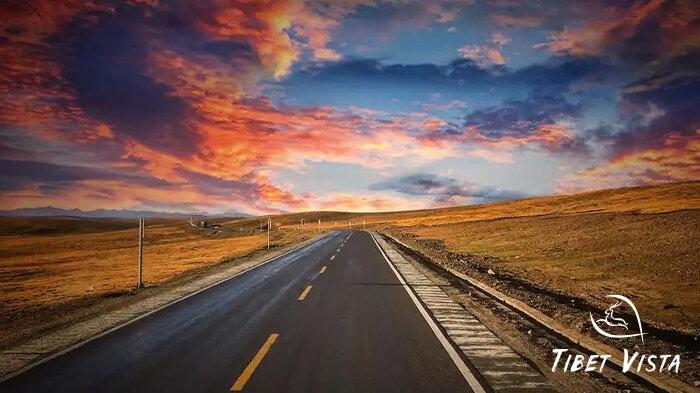 The well-paved Xining to Golmud section during the Qinghai-Tibet Highway.
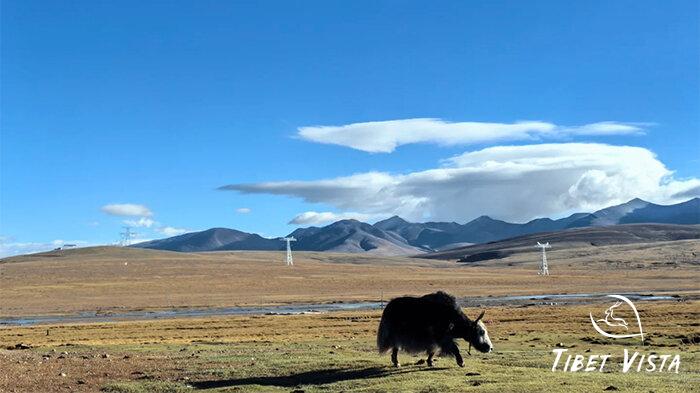 Stunning natural views of along the Qinghai-Tibet highway.
From Xining to Golmud: Modern Roadways and Sparkling Plateau Lakes
The section from Xining to Golmud covers 760 kilometers. After maintenance and renovation, this stretch is now in the best condition along the Qinghai-Tibet Highway. It is a two-way single-lane road, and given the traffic and speed limits, the drive takes around 7 to 8 hours.
A visit to Ta’er Monastery is a must before you leave Xining. Also known as the Kumbum Monastery, It is one of the six great monasteries of the Gelugpa school of Tibetan Buddhism, is the birthplace of Master Tsongkhapa, founder of the Gelug sect.
Built in 1560 during the Ming Dynasty, it covers about 40 hectares. Nestled in the valley of Lotus Mountain, its halls, pagodas, and monks’ quarters blend Tibetan and Han architectural styles. Viewed from above, the golden roofs and grand structures create a magnificent sight.
The second well-known attraction you’ll encounter after leaving Xining is Qinghai Lake. Shaped like a pear, the lake stretches about 105 kilometers long and 63 kilometers wide, covering an area of more than 30,000 square kilometers. Sitting at an elevation of 3,196 meters, it is the largest inland saltwater lake in China.
Chaka Salt Lake is another highlight. The name “Chaka” means “salt pond” in Tibetan. Sitting at an average elevation of 3,059 meters, the lake covers a surface area of 154 square kilometers. Once an important stop along the ancient Silk Road, it is surrounded by snow-capped mountains, and its mirror-like surface reflects the stunning sky above, earning it the title “Mirror of the Sky.”
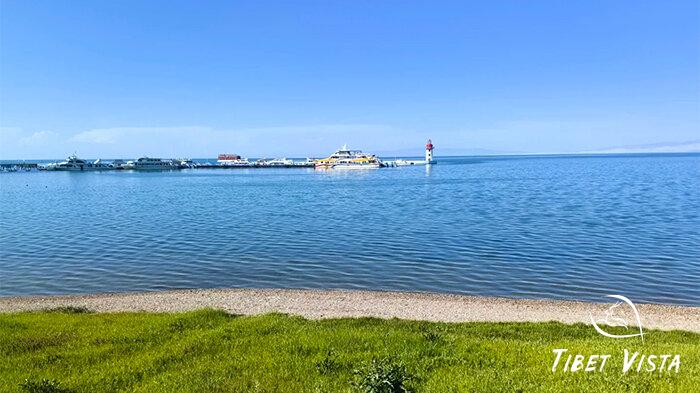 Qinghai Lake, the largest inland saltwater lake in China with beautiful scenery.


Enjoy an overland tour from Qinghai to Tibet to explore the stunning natural views.
From Golmud to Tuotuo River: Qarhan Salt Lake, Hoh Xil Area & Yuzhu Peak
From Golmud, which is a new industrial city, the second largest in Qinghai, and the third largest on the Tibetan Plateau, to the Tuotuo River, this section stretches 524 km. The road is an asphalt highway, though part of it is currently under maintenance. The drive generally takes 5 to 6 hours.
This section is famous as the source of many rivers in China and is a remarkable natural reserve with stunning ecosystems. There are also several must-see places in and around Golmud, including Qarhan Salt Lake, the Hoh Xil Natural Reserve, and Yuzhu Peak.
Qarhan Salt Lake, covering an area of 5,800 square kilometers, is located in Golmud. It is one of the most famous inland salt lakes and the biggest one in China. The plants are hardly grow around the lake, but plenty of salt flowers are formed there.
Yuzhu Peak, the main peak of the Kunlun Mountains and one of the famous among Tibet mountains, rises to an elevation of 6,178 metres and is covered in snow year-round. It is also one of the best places to enjoy the breathtaking scenery of snow-capped mountains, glaciers, primeval forests, grasslands, and lakes.
After crossing the Chuma'er River, you will reach Wudaoliang. This area is mostly desert, and the weather is highly changeable. Even in July, the average temperature is just 5.5°C, and snow is frequent. However, you will be getting close to the Hoh Xil area, a remote, uninhabited region home to many rare animals, including camels, antelopes, and yaks.
Hoh Xil is also home to the well-known Qingshui River Bridge, which stands at an elevation of 4,600 metres. It is the longest bridge crossing plateau permafrost and nature reserves in China, stretching 11.7 km with more than 1,300 archways for animals to pass through. Walking on the bridge is sure to be an unforgettable experience.
In addition to Qingshui River Bridge, the Hoh Xil area features the famous Wind Volcanic Tunnel, a railway tunnel 1,338 metres long and the highest permafrost tunnel in the world.
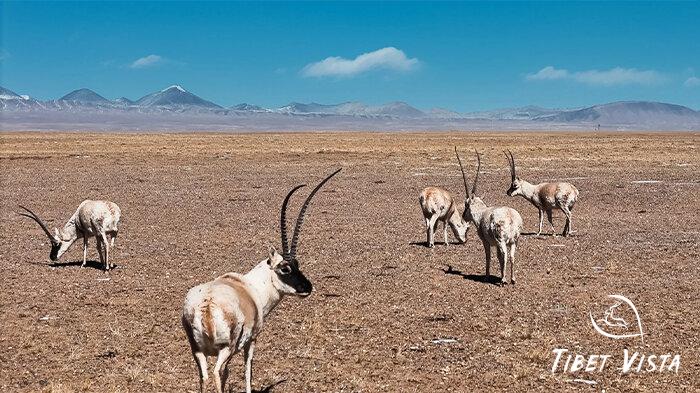 Tibetan antelopes could be spotted in Hoh Xil natural reserve.
From Tuotuo River to Nagchu: Tanggula Pass, Vast Grasslands & Cuona Lake
The section of the Qinghai-Tibet Highway from Tuotuo River to Nagchu is about 407 km and generally takes around 5 hours to drive. Along the way, you’ll see stunning scenery, including Tanggula Mountain, the vast grasslands of Nagchu, and the famous Cuona Lake.
Starting from Tuotuo River, the headwater of the Yangtze River, you travel south to reach Tanggula Mountain Pass after passing Buqiangge Station. This pass, at 5,231 meters above sea level, is the highest point on the Qinghai-Tibet Highway.
The environment here is harsh, with frozen ground, low temperatures year-round, and rapidly changing weather. Oxygen levels are only about 60% of what they are at sea level, so most travelers may experience altitude sickness in Tibet. Despite this, seeing the stone monument marking "Tanggula Mountain Pass, 5,231 meters above sea level" is an unforgettable moment.
After leaving Tanggula Mountain Pass, another 91 kilometers brings you to Amdo, where you can visit Cuona Lake. At 4,800 meters above sea level, it is the world’s highest freshwater lake. It is also a sacred lake for local Tibetans, and the surrounding scenery is breathtaking.
It will be Nagchu after you leave Amdo and keep moving for 129 kilometers. At the same time, the elevation will lower down gradually. Nagqu, at an elevation of 4,600 meters, means "black river" in Tibetan language. Especially, the horse racing festival in Nagchu is held between August and September, so it is really worth your visit.
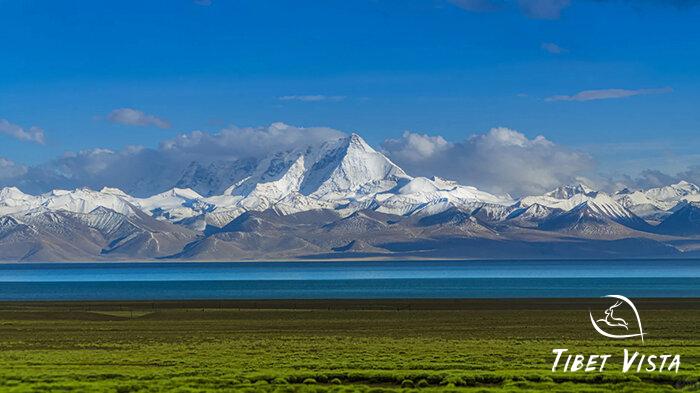 The snow peaked Tanggula Mountain you could admire along the Qinghai-Tibet highway.
From Nagchu to Lhasa: Namtso Lake, Yangpachen Hot Springs, the Essence of Lhasa
The section of the Qinghai-Tibet Highway from Nagchu to Lhasa is around 330 kilometers and takes about 5 hours to drive. The first must-see spot along the way is Namtso Lake, one of Tibet’s holy lakes, famous for its blue waters and the iconic holy elephant gate on its north bank.
Namtso is a mountain lake on the border between Damxung County in Lhasa Prefecture and Baingoin County in Nagqu Prefecture. This saltwater lake, at an elevation of 4,718 meters, is the second-largest lake in the Tibet Autonomous Region and is renowned as one of the most beautiful spots in the Nyainqentanglha mountain range.
Continuing north, you can relax in the Yangpachen hot spring. Yangbajing is a town approximately 87 kilometers northwest of Lhasa, famous for its hot springs and the Yangbajing power station. The hot springs sit at an altitude of 4,290 to 4,500 meters, making them the highest-altitude hot springs in China, and possibly the world.
After enjoying the hot springs, another 75 kilometers brings you to Lhasa, the political, economic, and cultural center of the Tibet Autonomous Region, and one of the highest cities in the world. Here, you can enjoy your Lhasa tour and explore culturally significant Tibetan Buddhist sites such as the Potala Palace, Jokhang Temple, and Norbulingka, among many other attractions.
The Potala Palace is undoubtedly a must-see. Built by Tibetan King Songtsen Gampo as a gift for his bride, Princess Wencheng of the Tang Dynasty, it sits atop Red Hill and remains Tibet’s most iconic landmark. Both the white palace and red palace has more cultural relics to explore.
Jokhang Temple, located on Barkhor Square, is another major symbol of Tibet. As the spiritual heart of Tibet, it is the most sacred temple for local Tibetans, with an architectural style combining Indian vihara, Tang Dynasty Chinese, and Nepalese influences.
Also Norbulingka, a great place to relax and the local’s favourite park. Surrounded by beautiful gardens, it served as the traditional summer residence of successive Dalai Lamas from the 1780s until the 14th Dalai Lama’s exile in 1959. It is also recognized as a UNESCO World Heritage Site.
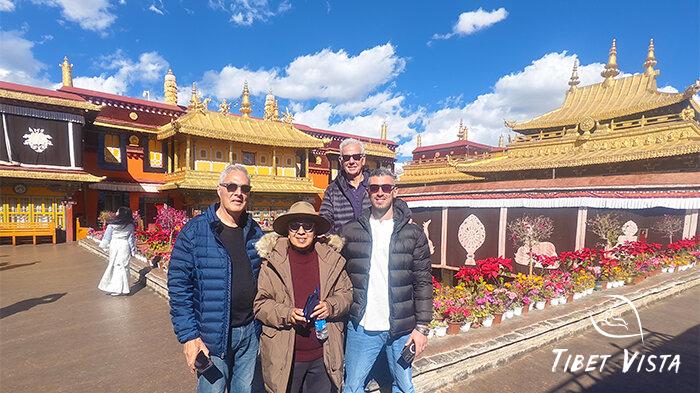 Our beloved guests’ photo on the second floor of Jokhang temple, the spiritual heart of Tibet.
More Practical Travel Tips for Traveling along the Scenic Qinghai-Tibet Highway
1. To keep the best road conditions, maintenance work is ongoing on the Qinghai-Tibet Highway from June 2025, particularly between Golmud and Lhasa. Certain sections may be closed, and detours could be required. Please keep in contact with us for the latest information.
2. Accommodations and food along the Qinghai-Tibet Highway are limited before you reach Lhasa. If you plan to take an overland tour from Xining to Lhasa, it is recommended to bring some snacks, such as chocolate bars, as well as disposable bed sheets for hygiene purposes.
3. The Qinghai-Tibet Highway also offers stunning views of wildlife, including yaks, Tibetan antelopes, and wild donkeys. To spot these beautiful creatures, it’s best to bring a telescope so you can admire them from a distance.
4. Given the long drive, it is advisable to bring a portable battery bank and extra memory cards, as the supply points may limited during the long drive hours. With its stunning natural scenery, this route is the perfect place for a photography tour of Tibet.
Conclusion
The Qinghai-Tibet Highway is more than just a road, it’s a journey through some of the most amazing landscapes in the world. From the clear lakes and modern roads near Xining to the endless grasslands, snow-capped mountains, and sacred sites near Lhasa, every part of the 1,937-kilometer route has something special to offer.
The trip takes planning, you’ll need to be ready for high altitudes, long stretches without services, and limited accommodations, but the sights and experiences along the way make it all worth it. For anyone who loves adventure, photography, or simply exploring Tibetan culture, this highway is an unforgettable overland journey. Contact us to start your Tibet tour right now.

Tashi Namgyal is a devout Buddhist and an extraordinary local Tibetan guide who exemplifies the essence of excellence. With 20+ years of guide experience, Tashi excels at channeling his deep knowledge of Tibetan culture to guests through his unique sense of humor.
When off work, Tashi loves reading books on Tibetan Buddhism and practicing Buddhism himself like meditation, which makes him a perfect choice for the Tibet meditation tour.
Apart from that, Tashi was born with a knack for connecting with young people. Whether you are on his cycling tour, Buddhist meditation tour, or Mt.Kailash pilgrimage, you will be taken great care of and have a delightful experience.
 Email me about your travel idea
Related Articles & Posts
Most Popular Tibet Tour Packages
-
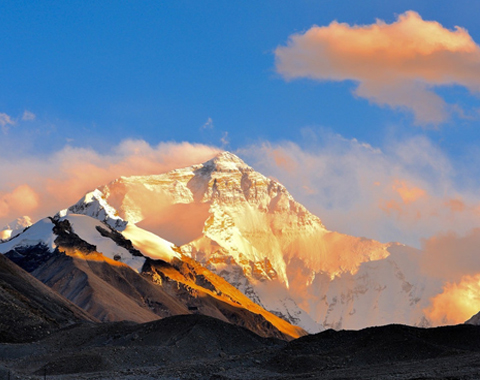
Lhasa - Gyantse - Shigatse - Everest Base Camp - Shigatse - Lhasa
USD949
View Details -
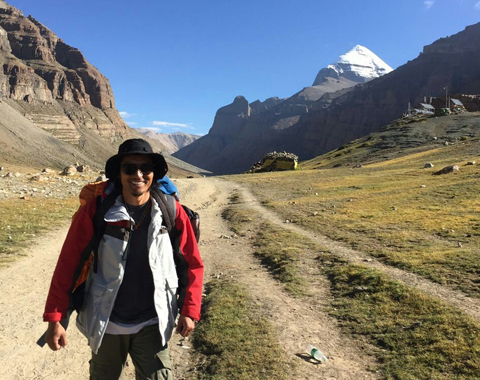
Lhasa - Gyantse - Shigatse - E.B.C - Saga - Kailash Trek - Darchen - Lake Manasarovar - Saga - Gyirong - Tingri - Lhasa
USD2069
View Details -
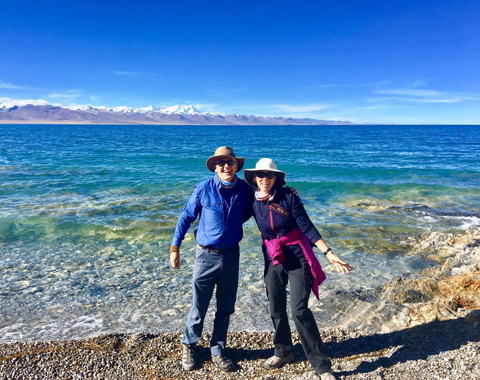
10 Days Lhasa to Everest Base Camp, Namtso Lake and Holy Elephant Gate Small Group Tour
Lhasa - Gyantse - Shigatse - EBC - Shigatse - North Tibet Grassland - Bange - Namtso Lake - Holy Elephant Gate - Lhasa
USD1299
View Details -
8 Days Driving Across Himalaya Overland Adventure from Kathmandu to Lhasa
Kathmandu - Gyirong - Everest Base Camp - Tingri - Shigatse - Gyantse - Lhasa
USD1019
View Details -
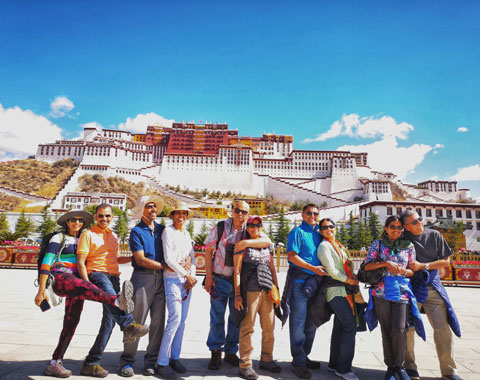
4 Days Lhasa Impression Small Group Tour: Explore the Heart of Tibet and Mingle with the Locals
Lhasa
USD509
View Details -
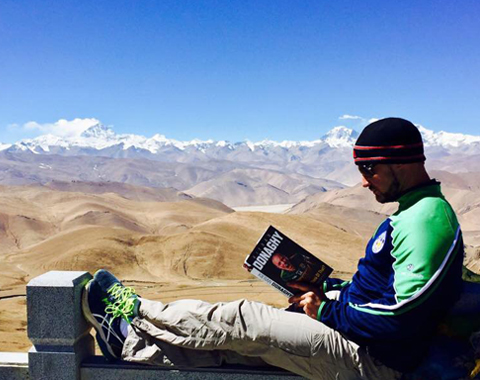
Lhasa - Gyantse - Shigatse - Everest Base Camp - Gyirong - Kathmandu
USD989
View Details -
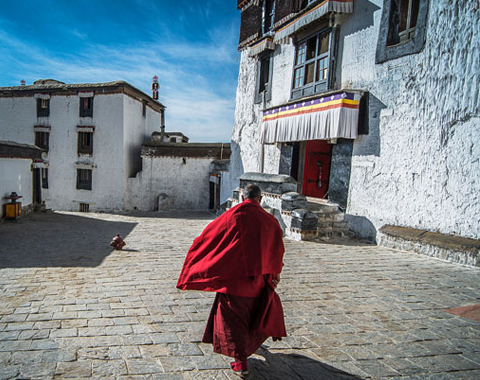
Lhasa - Gyantse - Shigatse- Lhasa
USD799
View Details -
Lhasa - Gyantse - Shigatse - EBC - Saga - Darchen - Kailash Trek - Darchen - Saga - Gyirong - Kathmandu
USD2069
View Details
0 Comment ON "Overland Journey Along the Qinghai-Tibet Highway: Stunning Views from Xining to Lhasa"


The Qinghai-Tibet Highway: 1,937 km of the World’s Highest Road
From Xining to Golmud: Modern Roadways and Sparkling Plateau Lakes
From Golmud to Tuotuo River: Qarhan Salt Lake, Hoh Xil Area & Yuzhu Peak
From Tuotuo River to Nagchu: Tanggula Pass, Vast Grasslands & Cuona Lake
From Nagchu to Lhasa: Namtso Lake, Yangpachen Hot Springs, the Essence of Lhasa
More Practical Travel Tips for Traveling along the Scenic Qinghai-Tibet Highway