
 Search
.jpg "Tibetan Local Travel Agency")


5 Main Ways to Meditate in Tibet: Try Them on Your Tibet Trip
Practicing meditation during your Tibet tour not only allows you to experience the essence of Tibetan culture but also helps you reconnect with your inner self. There is no better place to combine the ancient art of mental training with the spiritual atmosphere of Tibetan Buddhism.
Since Tibetan Buddhism has many sects, each with its own rich meditation traditions, this article highlights five major meditation techniques - from Dzogchen, the most advanced practice in the Nyingma tradition, to the simplest forms of breath meditation which you can practice anywhere.
Along with tips on how to practice each meditation, you will also find the best places to meditate, as well as recommended itineraries for an authentic meditation experience. With these, you can truly uncover both the natural beauty and the Buddhist essence of Tibet.
Content
Dzogchen: Highest Form of Meditation Practice in Nyingma Tradition
Mantra Recitation: A Popular Form of Meditation Among Local Tibetans
Visualization: Uses Mental Imagery to Achieve Relaxation and Focus
Loving-Kindness meditation: A Distinct Meditation On Compassion
Breath Meditation: Simplest Form of Meditation to Reduce Stress
Recommenced Itineraries for Meditating on the Roof of the world
Dzogchen: Highest Form of Meditation Practice in Nyingma Tradition
Meaning “the great perfection” in Tibetan, Dzogchen is a form of advanced meditative techniques from the Nyingma school of Tibetan Buddhism. The principle is to remain and be aware of the complete present. It is an abiding in the innate completeness of ourselves and hence realizing our Buddha nature that way.
The practitioner is taught to cut all unnecessary mental activity so one can realize the luminosity of their own true natures, as well as to calm the mind so that they are able to visualize the Buddhas and Bodhisattvas and use these visualizations on their path to enlightenment. It helps one recognize the pure and primordially aware nature of the mind, called Rigpa in Tibetan.
Dzogchen is considered to be one of the direct ways to realization and Buddhism but at the same time it is a very complex and difficult process. It requires the complete abandonment of desire, habits and tendencies so the mind becomes like an empty slate waiting to be written upon.
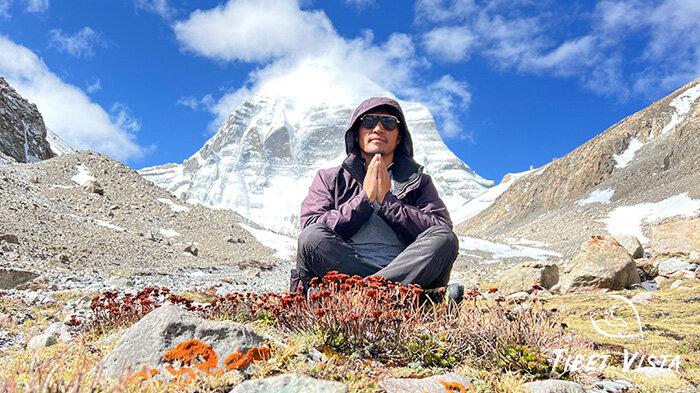 Our Tibetan tour Guide Sonam Tenphel perform meditation in front of Mt. Kailash.
The benefits of doing Dzogchen are that with practice, the practitioner sees the way his/her thoughts are formed. They can catch mental tendencies and habits as they arise. Dzogchen is also extremely useful in learning to manage negative emotions like anger, grief, jealousy, etc.
Dzogchen meditation is done generally in silence. It is believed that only in silence can the mind shed away all its layers of social conditioning, thoughts and conceptual thinking. The meditation itself requires years of practice and patience.
It involves sitting in silence in an alert meditative posture rather than slouching posture and paying attention to thoughts and mental formations as they arise. They key here is to objectively observe, only observe, but not interact with the mental arisings.
As the first monastery and a key site of the Nyingma tradition, Samye Monastery is an excellent place to practice Dzogchen meditation during your Lhasa tour. Nearby, the Chim-puk Hermitage is another great choice, a centuries-old meditation retreat once used by the great Buddhist master Padmasambhava. Many of its sacred caves are still used today by Tibetan Buddhists.
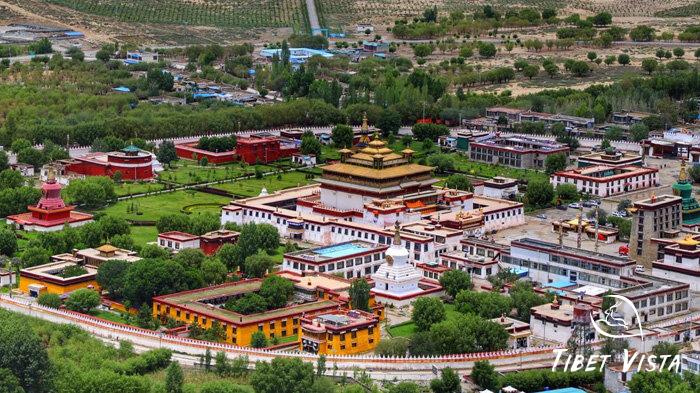 Samye Monastery of Nyingma tradition, the first monastery in Tibet.
Mantra Recitation: A Popular Form of Meditation Among Local Tibetans
Mantra recitation, as the name suggests, is a form of meditation that involves chanting mantras. It is one of the most popular practices in Tibet, helping practitioners focus their minds, calm their bodies, and nurture spiritual growth through the rhythmic repetition of sacred sounds.
During a Tibet tour, you might see many locals, particularly older people and monks constantly muttering prayers and sometimes counting beads on a mala or rosary. A very common mantra is the “Om Mani Padme Hum mantra”. It is used extensively by Tibetans. It has a very profound meaning but in short it means “The Jewel in the Lotus”, referring to the spirit of enlightenment.
This form of meditation can be done anywhere. You can practice mantra recitation while sitting quietly in a peaceful corner of a monastery or walking one of Tibet’s popular koras. Many practitioners also use prayer beads, or mala, during the recitation. A traditional mala has 108 beads, and you gently move one bead with your thumb each time you chant your chosen mantra.
The mantra can be recited silently or out loud. Each bead of the mala represents one recitation of the mantra. It doesn’t require any special training. It is also convenient for those who cannot spare much time for sitting practice. It is also believed that reciting mantras can ward away negative energy and attract positivity.
The ideal mindset for mantra recitation is one of positivity, compassion, and inner calm. While meditating in this way, it is recommended to dedicate the spiritual merits gained from the practice to all sentient beings, including yourself.
The best place to recite mantras is while walking the Barkhor Street kora alongside the locals, with prayer beads in hand. Around 9 to 10 a.m., many Tibetans begin their kora from the front gate of Jokhang Temple. Joining them and walking clockwise while softly reciting your chosen mantra is the most authentic and peaceful way to experience this sacred ritual.
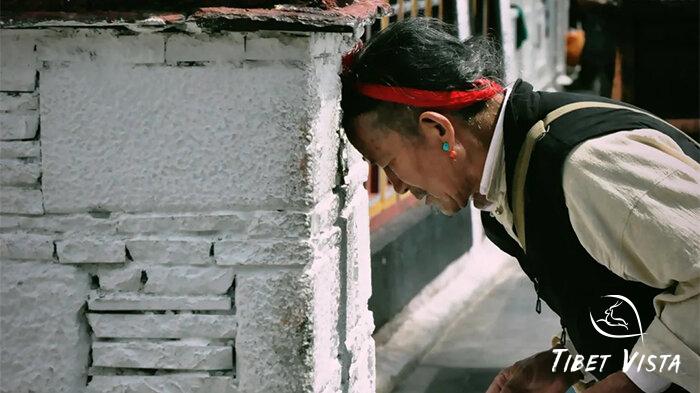 Local Tibetans on Barkhor street.
Visualization: Uses Mental Imagery to Achieve Relaxation and Focus
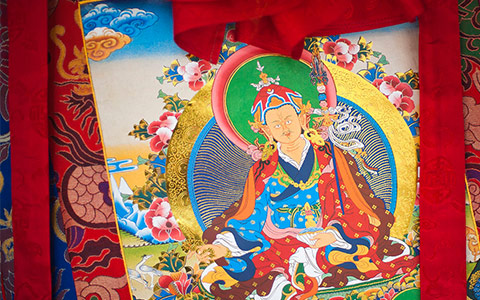
Visualization is another profound form of Tibetan meditation. This form involves visualizing a Buddhist deity or Buddha and meditating upon that image and upon the qualities possessed by the deity. The visualization is done in the mind rather than very literally.
It is recommended to visualize a deity like the Bodhisattvas or any of the Buddhas. A common visualization is the six-armed Bodhisattva of compassion (Chenrezig). He represents universal compassion and loving-kindness. Another visualization is to visualize the Buddha, who represents the spirit of enlightenment and awareness. It depends on the individual’s preference.
This meditation of visualization involves focusing the image of the chosen deity in the mind’s eye on concentrating on this image. Alternatively, you can initially focus only on the image and once the concentration is gained, you can move on to contemplating the attributes and characteristics of the deity.
The best places for visualization practice are the large Tibetan monasteries. Choose a quiet corner to settle in before you begin. This practice often brings a deep sense of meditative absorption and calm, serving as a foundation for cultivating the deity’s qualities within yourself.
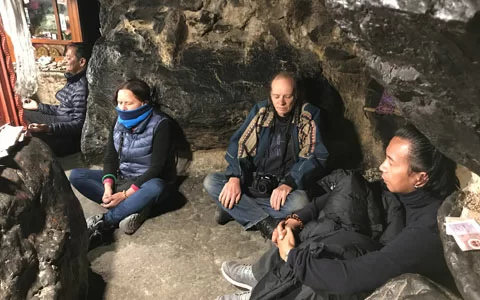
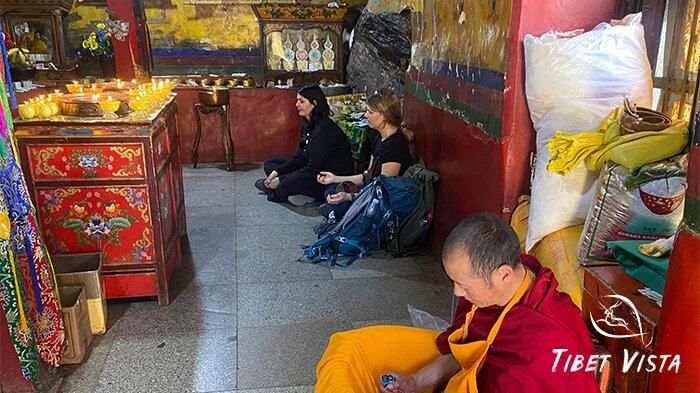 Following the monk’s lead, Our beloved guests meditate inside the Tibetan monastery.
Loving-Kindness meditation: A Distinct Meditation On Compassion
Loving-Kindness, known as Maitri in Sanskrit and Jampa in Tibetan, refers to a state of compassion combined with wisdom toward all beings. In Tibetan Buddhism, it holds great importance as the central quality of Chenrezig, the most revered Bodhisattva in Tibet.
In loving-kindness meditation, the practitioner calms his mind first and then projects or thinks thoughts of compassion towards himself and all beings. This meditation can be done anywhere.
It is recommended that the practitioner starts off by projecting thoughts like “May I be happy” ,”May I be well”, “May I be free from Suffering” towards himself. Then once he feels stable enough in his meditation, he can progress on to a loved one, then a neutral object, then someone he dislikes and eventually to all sentient beings.
Doing this has many benefits. One will be kinder towards all things because loving-kindness comes under the realisation that all beings suffer, no matter what. One will be peaceful in the mind as loving thoughts replace thoughts of harm and hatred. It is said that practising loving-kindness causes the risk of high blood pressure and stress related disorders to go down.
One of the most popular places for loving-kindness meditation among our guests is the DolmaLa Pass during the Mt. Kailash tour. At altitude of 5,630 meters, many of our guests choose to pause, meditate for a while, and offer prayers for the well-being of all beings and for world peace.
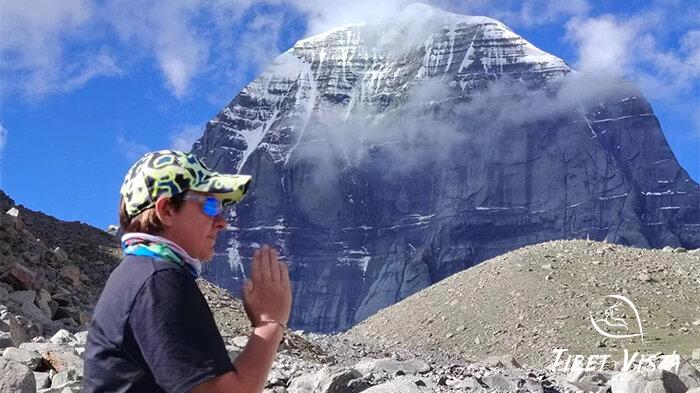 Our beloved guests meditates right in front of Mount Kailash.
Breath Meditation: Simplest Form of Meditation to Reduce Stress
Breath meditation is a fairly simple and popular form of meditation. This involves observing one's breathing. The basis for this meditation technique is awareness and mindfulness.
There are different ways of doing this meditation. One may observe the sensation of the breath entering and leaving the body at the nostril or one may focus on the rise and fall of the chest or one may follow the breath cycle from beginning to end.
The key is to gently focus the attention on the normal breathing. One should not forcefully breathe. When the attention wavers, one should notice this and gently bring it back to the breath without getting tensed by it.
The benefits of doing this meditation involve increased awareness of bodily sensations, more attention span, lowering of anxiety as this technique can be used while having anxiety attacks (grounding oneself) and this form of meditation is also very relaxing as it is simple, can be done anywhere and does not involve too much thinking.
Breathing meditation may also help ease altitude sickness in Tibet. By increasing oxygen intake and improving the body’s oxygen levels at a certain pace, it helps relax both the mind and body. A calm and comfortable state of mind during meditation also helps your body adjust to the high-altitude environment.
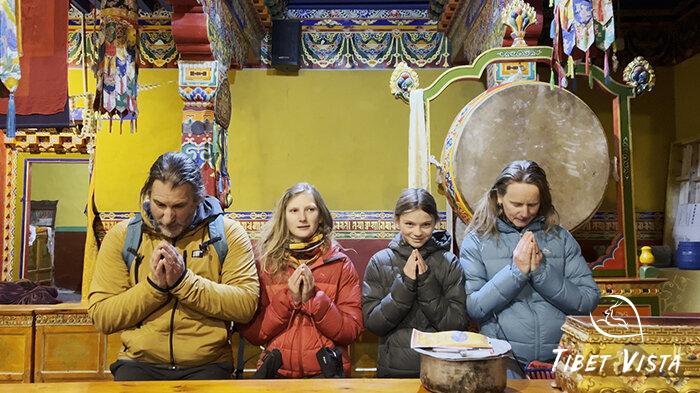 Family from New Zealand meditate in Rongbuk Monastery, the highest monastery in the world.
Recommenced Itineraries for Meditating on the Roof of the world
Whether you want to combine your Tibet journey with meditation sessions, or are seeking a meditative path to healing, we’re ready to help you achieve your goal with a perfectly tailored tour. Here are three of the most popular Tibet meditation trips among our cherished guests.
7 Days Lhasa, Samye Monastery and Chim-puk Hermitage Meditation Tour: Combine Lhasa’s highlights with solitude and self-reflection. Visit holy monasteries, cliffside retreats, and remote hermitages while enjoying stunning Tibetan landscapes and deepening your meditation practice.
9 Days Lhasa to EBC Meditation Journey: This takes you to all of the best meditation spots on the route from the Tibetan capital of Lhasa to the stunning Mount Everest Base Camp. A stunning nine-day tour of the plateau and its sights and scenery, the meditation sites are carefully chosen to give you the best meditation experiences in Tibet for this route across the vast plateau.
14 Days Ultimate Holy Mt.Kailash and Manasarovar Meditation Tour: Experience Tibet’s most sacred pilgrimage on this 14-day tour to Mount Kailash and Lake Manasarovar. Meditate at iconic sites like Drirapuk, Tashilhunpo, and Rongbuk Monasteries for a transformative spiritual journey.
To give more of our beloved guests the chance to immerse themselves in Tibetan meditation culture, Tibet Vista has opened its own Tibet Culture Center. During the Tibet winter tour season, from late October to the following March, we’ve added this cultural experience to our itineraries. Here, you can explore meditation, Thangka painting, and Tibetan calligraphy at your own pace, guided by expert masters in each discipline.
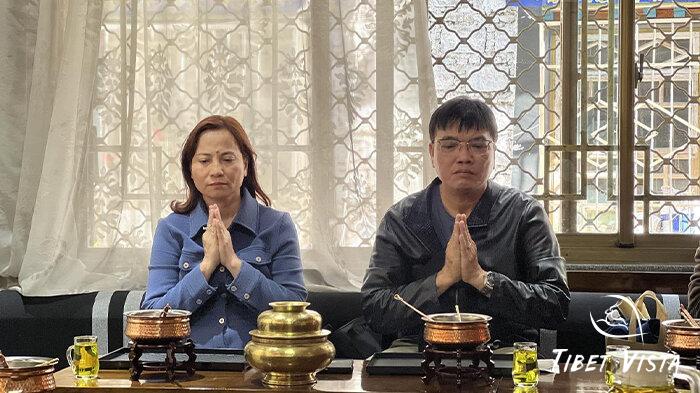 Guests meditate at Tibet Vista’s Tibet cultural center.
Conclusion
Meditation in Tibet offers a unique opportunity to connect with both the spiritual essence of Tibetan Buddhism and your own inner self. From advanced Dzogchen practices to simple breath meditation, each technique provides its own path to mindfulness, compassion, and inner peace.
Paired with Tibet’s breathtaking landscapes and sacred sites, these meditation experiences turn your journey into not just a travel adventure, but a transformative spiritual retreat. Contact us today to begin an unforgettable Tibet journey and fully immerse yourself in the art of meditation.

Exceedingly approachable, attentive, and knowledgeable, Pasang exemplifies what a top-notch local Tibetan guide can be. Based on his 20+ years of guide experience, Pasang knows how to flexibly rearrange a traveler’s itinerary to make it comfortable for travelers during long rides. He always checked in with each traveler to make sure they were feeling well due to the altitude.
Besides, Pasang’s encyclopedic knowledge of Tibetan culture & history helps travelers easily navigate through the mysterious Tibetan monasteries and old streets, etc. When Pasang unwinds, he also enjoys sharing his expertise by writing travel articles.
 Email me about your travel idea
Related Articles & Posts

Most Popular Tibet Tour Packages
-
Lhasa - Gyantse - Shigatse - Everest Base Camp - Shigatse - Lhasa
USD949
View Details -
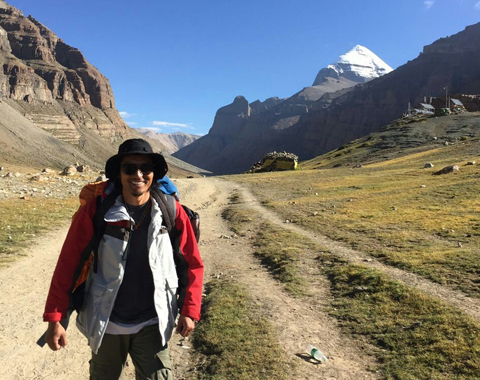
Lhasa - Gyantse - Shigatse - E.B.C - Saga - Kailash Trek - Darchen - Lake Manasarovar - Saga - Gyirong - Tingri - Lhasa
USD2069
View Details -
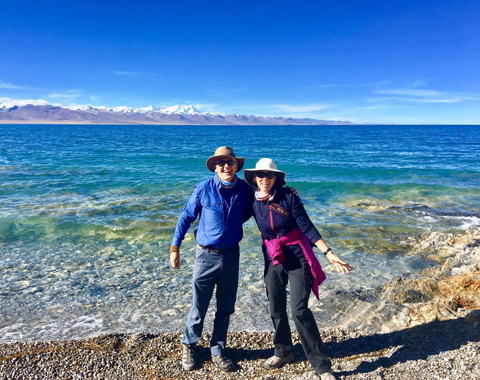
10 Days Lhasa to Everest Base Camp, Namtso Lake and Holy Elephant Gate Small Group Tour
Lhasa - Gyantse - Shigatse - EBC - Shigatse - North Tibet Grassland - Bange - Namtso Lake - Holy Elephant Gate - Lhasa
USD1299
View Details -
8 Days Driving Across Himalaya Overland Adventure from Kathmandu to Lhasa
Kathmandu - Gyirong - Everest Base Camp - Tingri - Shigatse - Gyantse - Lhasa
USD1019
View Details -
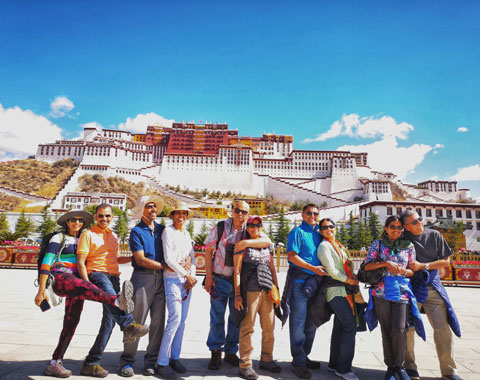
4 Days Lhasa Impression Small Group Tour: Explore the Heart of Tibet and Mingle with the Locals
Lhasa
USD509
View Details -
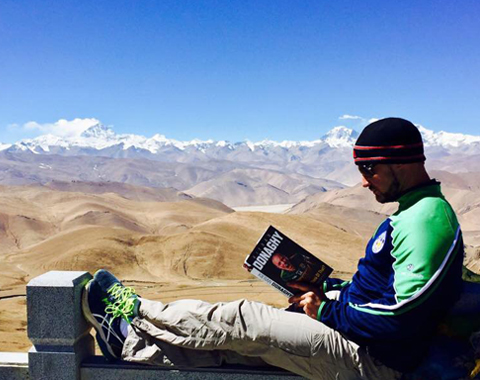
Lhasa - Gyantse - Shigatse - Everest Base Camp - Gyirong - Kathmandu
USD989
View Details -
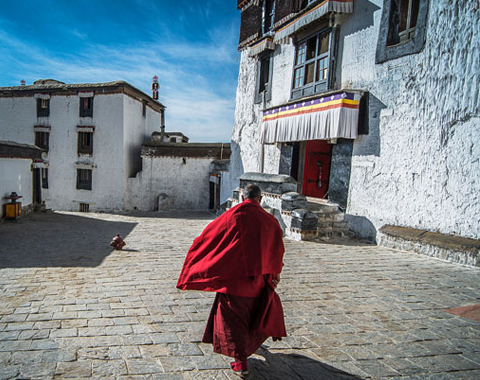
Lhasa - Gyantse - Shigatse- Lhasa
USD799
View Details -
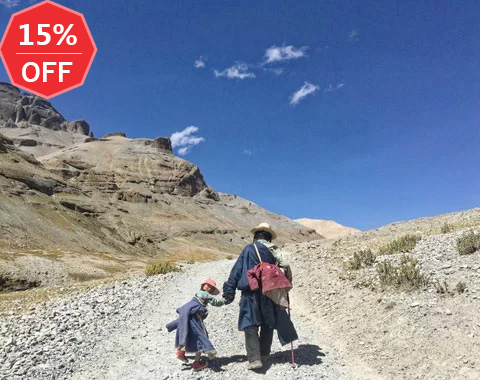
Lhasa - Gyantse - Shigatse - EBC - Saga - Darchen - Kailash Trek - Darchen - Saga - Gyirong - Kathmandu
USD2069
View Details
0 Comment ON "5 Main Ways to Meditate in Tibet: Try Them on Your Tibet Trip"


Dzogchen: Highest Form of Meditation Practice in Nyingma Tradition
Mantra Recitation: A Popular Form of Meditation Among Local Tibetans
Visualization: Uses Mental Imagery to Achieve Relaxation and Focus
Loving-Kindness meditation: A Distinct Meditation On Compassion
Breath Meditation: Simplest Form of Meditation to Reduce Stress
Recommenced Itineraries for Meditating on the Roof of the world