
 Search
.jpg "Tibetan Local Travel Agency")



Tibetan New Year Etiquette: Essential Dos and Don'ts
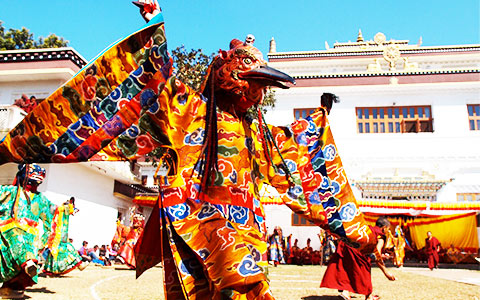
Tibetan New Year, also known as Losar, is one of the most important and joyful festivals in Tibet. It marks the beginning of a new year and is a time for family reunions.
It starts on the first day and ends on the fifteenth day of the first month in the Tibetan calendar for a total of 15 days. In 2026, the Tibetan New Year will begin on February 18.
During this period, we Tibetans gather to welcome the new year through various traditional customs and rituals. Here’s a guide to some of these traditional customs, as well as some taboos you should avoid.
Content
Replace Fragrant Curtains to Welcome the Fresh Beginning
Clean the House to Embrace the New and Let Go of the Old
Prepare the Chema Box to Wish for a Good Harvest
Gather to Enjoy the Night of Guthuk on New Year’s Eve
Make a Pilgrimage to Holy Sites on the First Day of the New Year
Visiting Relatives to Share New Year Wishes from the 2nd Day
Hold the Wei Sang Ceremony to Pray for Prosperity on the 3rd Day
Replace New Tibetan Prayer Flags to Wish for Good Fortune on the 3rd Day
Don’t Argue or Say Unlucky Words When Visiting Relatives and Friends
Don’t Step on or over Sacred Objects of New Year’s Rituals
Don’t Wear Improper or Revealing Clothing When Visiting Sacred Places
Don’t Take Photos Without Permission During New Year Ceremonies or Rituals
Replace Fragrant Curtains to Welcome the Fresh Beginning
Usually, before the new year arrives, we replace the old fragrant curtain with a new one. The fragrant curtain is a distinctive feature of Tibetan architecture, which hangs on doors and windows to protect the paint on the wooden frames. It is usually white in color, with red, yellow, and blue stripes on the edges.
We usually change the curtain once a year. It is a traditional ritual to welcome the new year and pray for auspiciousness.
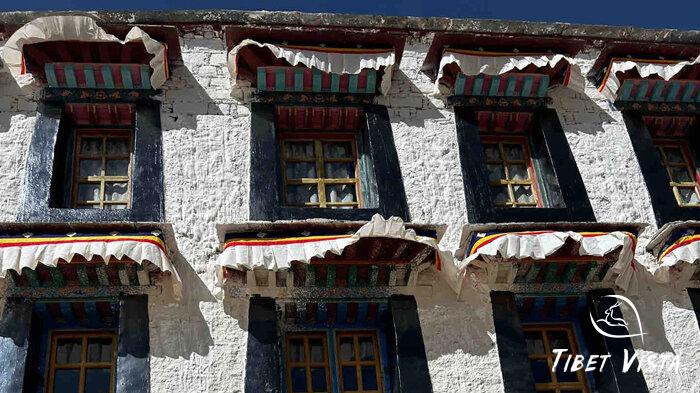 We usually change the fragrant curtain before the new year.
Clean the House to Embrace the New and Let Go of the Old
Like many other ethnic groups, we do a thorough house cleaning before the new year. From the kitchen to the living room, each of our family member takes part in the cleaning, sweeping every corner, and arranging everything neatly.
In our tradition, cleaning the house at the end of the year symbolizes getting rid of old things, removing bad luck, and welcoming the new year with a fresh home.
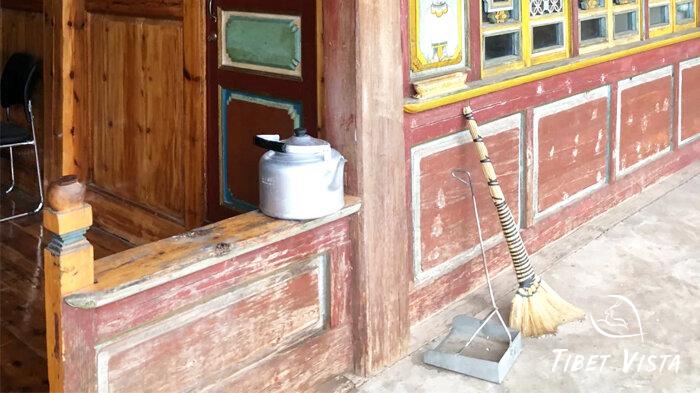 Do a thorough house cleaning before the new year.
Prepare the Chema Box to Wish for a Good Harvest
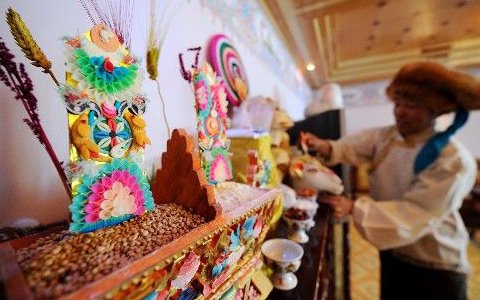
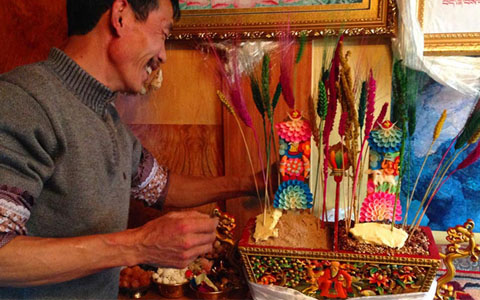
Preparing the Chema Box before the new year is an essential part of our traditions. It is an auspicious object used during the Tibetan New Year, Tibetan weddings, and major celebrations, symbolizing prosperity and good fortune in the coming year.
The Chema Box is a wooden container, carved and painted with auspicious patterns of Tibetan Buddhism on the outside. The inside is divided into two sections, with roasted highland barley grains on the left and tsampa mixed with yak butter on the right. Chema Box is also adorned with dyed barley ears, also known as Losar Medo in Tibet, and yak butter flowers that are carved with various patterns such as Buddhas, Vajras, or animals.
If you visit us during the new year, you’ll be warmly welcomed with the Chema Box. To accept the greeting, you can use your thumb and index finger to pinch a few barley grains and sprinkle it three times in the air. Then, you can pick up a small amount of tsampa, sprinkle it three times, and finally taste a bit. It is a reflection of our wishes for a plentiful harvest and prosperity.
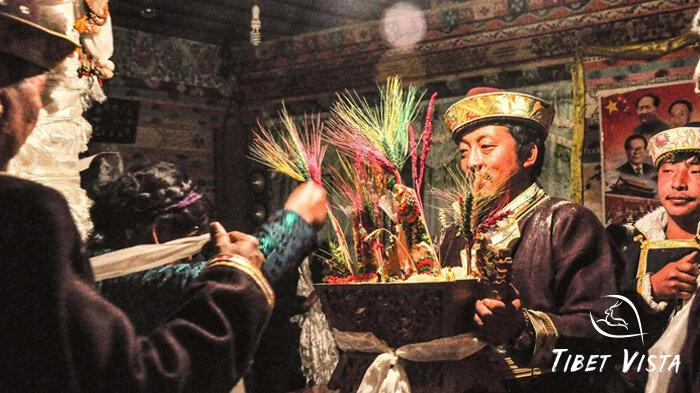 When our relatives and friends visit us, we'll welcome them with the Chema Box.
Gather to Enjoy the Night of Guthuk on New Year’s Eve
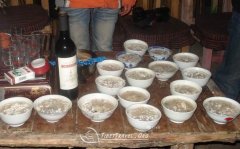
On Tibetan New Year’s Eve, we will gather at home to enjoy the special meal, Guthuk.
Guthuk, a type of traditional Tibetan food, is a stew with various ingredients such as beef, Chinese radish, and dough. The dough contains different items like chili pepper, wood, and wool.
It may sound unusual, but in fact, each stuffing bears a special meaning and can predict the diners’ fortune for the coming year. For example, if you find chilies in your dough, it suggests you are talkative; and if it is wool, it means you are gentle and kindhearted.
After dinner, we perform a ghost-expelling ritual. We carry torches, walk around their homes, and call out the words of exorcism to drive away evil spirits and misfortune. This ritual also invites good luck for the year ahead.
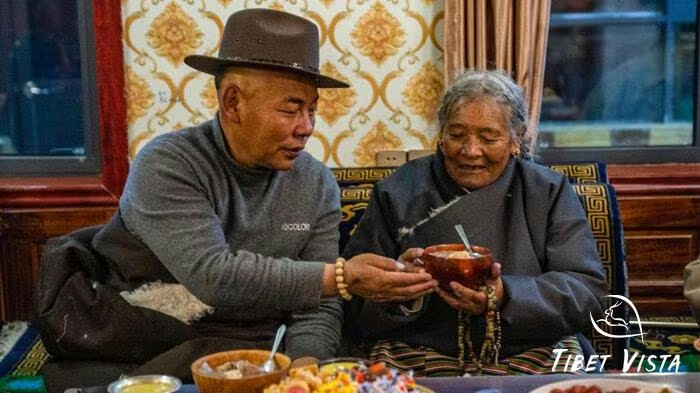 Enjoy the special meal "Guthuk" on Tibetan New Year’s Eve.
Make a Pilgrimage to Holy Sites on the First Day of the New Year
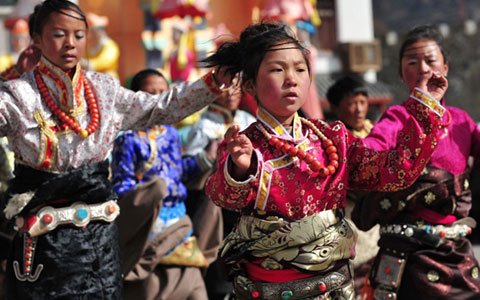
After New Year’s Eve, the first day of the new year marks a new beginning. On this day, in addition to celebrating with families and neighbors, we also dress in our traditional attire and head to holy sites. We usually go to places such as Jokhang Temple in Lhasa and other sacred monasteries to burn incense, make offerings, and pray for good fortune in the coming year.
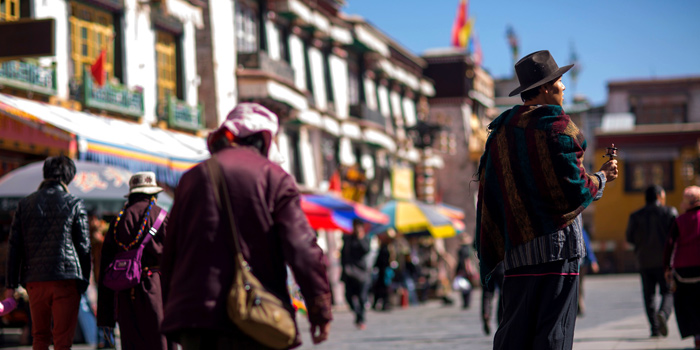

Join us and visit the sacred places in Lhasa during Tibetan New Year.
Visiting Relatives to Share New Year Wishes from the 2nd Day
From the second day of the New Year on, we pay a New Year visit to our relatives and friends. We will bring khadas and gifts to convey our new year wishes.
Meanwhile, we also exchange New Year greetings to share good wishes with each other during the entire festival. For example, one of the most frequently used Tibetan greetings is “Tashi Delek”, a common blessing that means “auspicious and all the best”. Whenever we visit each other, the first words are always “Tashi Delek”.
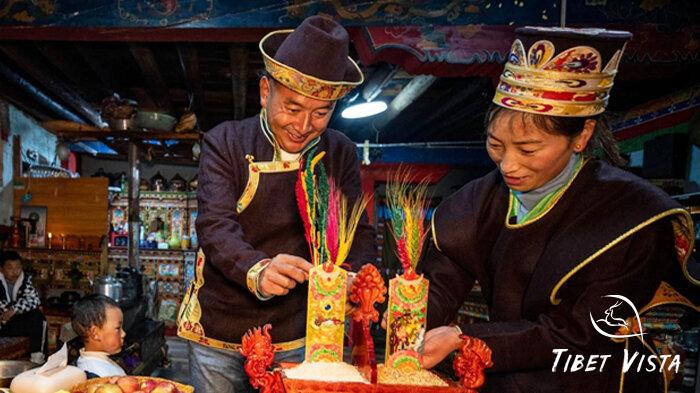 We usually visit our relatives and frineds from the second day of the New Year on.
Hold the Wei Sang Ceremony to Pray for Prosperity on the 3rd Day
On the third day of the Tibetan New Year, we perform the Wei Sang Ceremony, a traditional ritual to seek blessings.
We usually burn pine and cypress branches in an oven for this ceremony to produce aromatic smoke. Then, we sprinkle some tsampa, tea leaves, and barley grains into the oven as offerings. Next, we dip the branches in clean water and sprinkle them three times towards the rising smoke. Meanwhile, we always chant the Sanskrit mantra “Om mani padme hum”.
As the smoke rises to the sky, we believe our prayers are sent to the deities. It is a way to pray for prosperity, good fortune, and a good harvest in the new year.
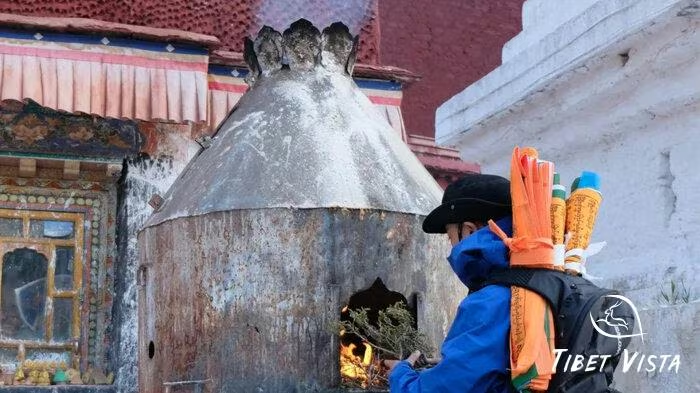 You can take part in the Wei Sang Ceremony to pray for prosperity During Tinetan New Year.
Replace New Tibetan Prayer Flags to Wish for Good Fortune on the 3rd Day
In addition to the Wei Sang Ceremony, we also replace new Tibetan prayer flags on the rooftops of our houses or nearby hillsides on the third day of the new year for blessings.
Tibetan prayer flags, also known as “Lungta” in Tibetan, are colorful rectangular cloth banners arranged in the order of blue, white, red, green, and yellow, representing the sky, clouds, fire, water, and earth, respectively. Every time the wind blows the flags, the prayers are sent to the Buddhas, who are believed to hear them and bring prosperity to us.
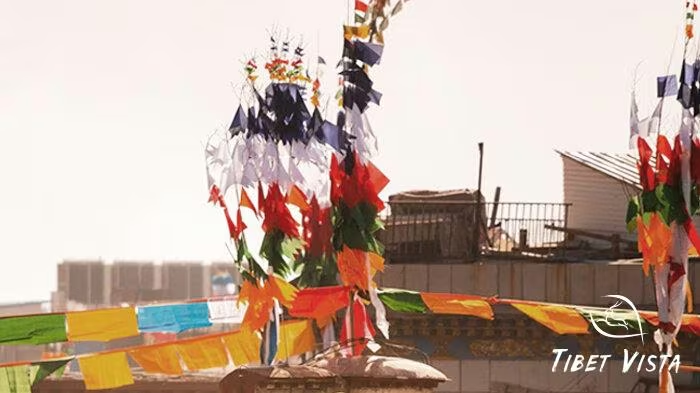 Replace new Tibetan prayer flags on the rooftops or nearby hillsides to wish for good fortune.
Don’t Argue or Say Unlucky Words When Visiting Relatives and Friends
In addition to the above etiquette, there are also some taboos during the Tibetan New Year.
We usually avoid arguments when visiting our relatives. As the Tibetan New Year Festival is a period of celebration and reunion, we cherish these meaningful moments and seek harmony.
We also avoid saying unlucky words like “die”, “get sick”, “kill”, or “poor”, because we believe that speaking these unlucky words may bring bad luck and misfortune in the new year.
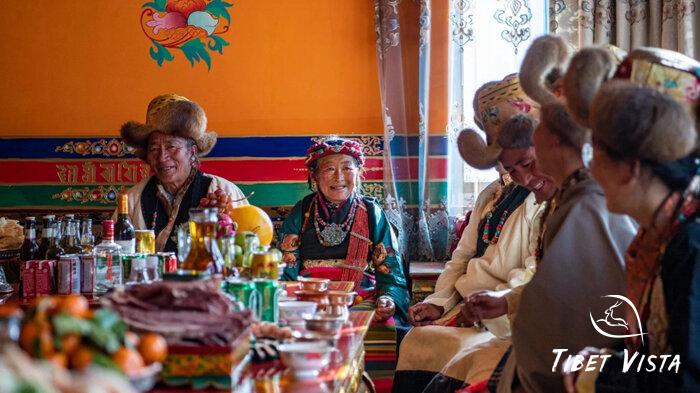 Avoid arguing or saying unlucky words when visiting relatives and friends during the new year.
Don’t Step on or over Sacred Objects of New Year’s Rituals
During the Tibetan New Year, we perform many rituals that involve some sacred items of Tibetan Buddhism. It is important not to tread on or over these sacred objects, such as the Tibetan prayer flags. These behaviors are considered disrespectful and may offend our customs. If you see these holy items in Tibet, it’s polite not to do so.
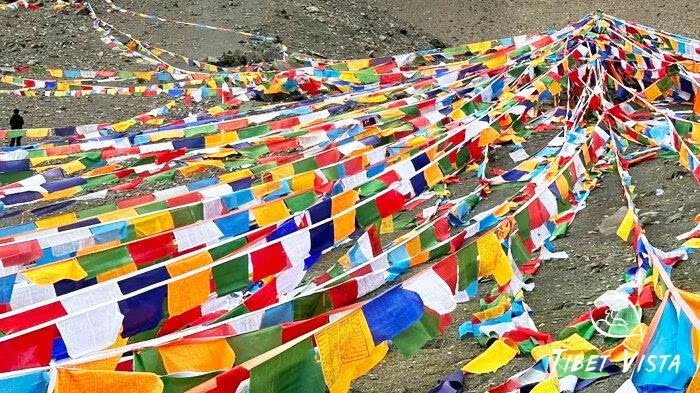 It is polite not to tread on or over sacred objects such as Tibetan prayer flags.
Don’t Wear Improper or Revealing Clothing When Visiting Sacred Places
There are many holy sites in Tibet, which are important Buddhist practice centers. We believe these places are blessed with sacred energy, deserving the utmost respect, including the dressing.
If you visit these places, please dress appropriately. You should avoid clothes such as shorts, sleeveless tops, or other garments that expose your legs or shoulders. In addition, it’s also polite to remove your hat and sunglasses. Following local etiquette help you better appreciate the sacred atmosphere of these sacred places during your Tibet tour.

Join us and explore the sacred places in downtown Lhasa and Lake Yamdrok.
Don’t Take Photos Without Permission During New Year Ceremonies or Rituals
We hold various ceremonies and rituals to celebrate the new year, which is important for us, but may appear mysterious to you.
No matter how curious you are about these rituals, it is polite to ask for permission before taking pictures or recording videos, because these rituals are sacred expressions of our faith. It can be rude if you take photos or record videos without permission.
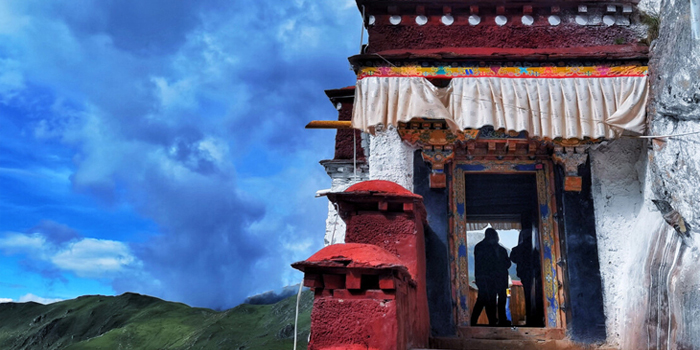
Join this Tibet meditation tour, visit sacred monasteries, and see the rituals and practices of monks.
Conclusion
Tibetan New Year is an important festival that involves many customs, traditions, and taboos. These are our distinctive ways to celebrate the new year in Tibet.
When visiting Tibet during this period, follow our etiquette and you’ll experience the charm of Tibetan New Year in a more respectful way. If you are interested in a Tibetan New Year tour, feel free to contact us to design your adventure in Tibet.

With exceptional passion and outstanding leadership, Mrs. Catherine has dedicated herself to Tibet inbound tourism and China tour for 15 years. As one of the handful females who see great potential of Chinese inbound tourism, Catherine has made great contribution to promoting Tibet tourism and enhancing the employment of Tibetans and prosperity of local Tibetan community.
Over the years, she travelled overseas with Tibet Tourism Bureau many times to promote Tibet tourism. Currently, Catherine works as the marketing director of Tibet Vista, an opinion leader behind the whole team of Tibet Vista.
 Email me about your travel idea
Related Articles & Posts
Most Popular Tibet Tour Packages
-

Lhasa - Gyantse - Shigatse - Everest Base Camp - Shigatse - Lhasa
USD949
View Details -
Lhasa - Gyantse - Shigatse - E.B.C - Saga - Kailash Trek - Darchen - Lake Manasarovar - Saga - Gyirong - Tingri - Lhasa
USD2069
View Details -

10 Days Lhasa to Everest Base Camp, Namtso Lake and Holy Elephant Gate Small Group Tour
Lhasa - Gyantse - Shigatse - EBC - Shigatse - North Tibet Grassland - Bange - Namtso Lake - Holy Elephant Gate - Lhasa
USD1299
View Details -
8 Days Driving Across Himalaya Overland Adventure from Kathmandu to Lhasa
Kathmandu - Gyirong - Everest Base Camp - Tingri - Shigatse - Gyantse - Lhasa
USD1019
View Details -
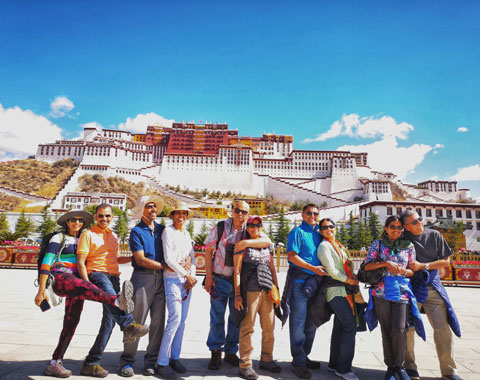
4 Days Lhasa Impression Small Group Tour: Explore the Heart of Tibet and Mingle with the Locals
Lhasa
USD509
View Details -
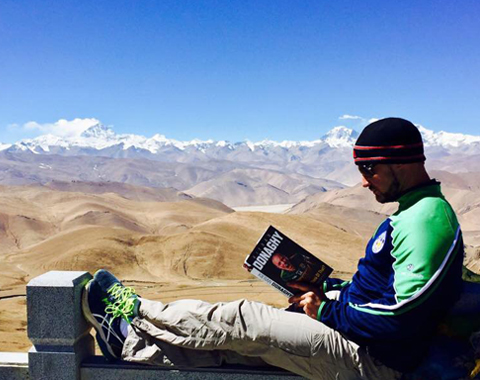
Lhasa - Gyantse - Shigatse - Everest Base Camp - Gyirong - Kathmandu
USD989
View Details -
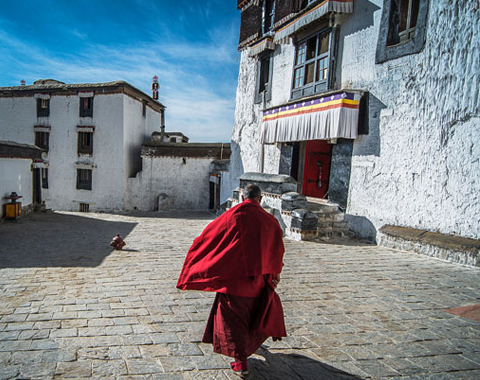
Lhasa - Gyantse - Shigatse- Lhasa
USD799
View Details -
Lhasa - Gyantse - Shigatse - EBC - Saga - Darchen - Kailash Trek - Darchen - Saga - Gyirong - Kathmandu
USD2069
View Details
0 Comment ON "Tibetan New Year Etiquette: Essential Dos and Don'ts"


Replace Fragrant Curtains to Welcome the Fresh Beginning
Clean the House to Embrace the New and Let Go of the Old
Prepare the Chema Box to Wish for a Good Harvest
Gather to Enjoy the Night of Guthuk on New Year’s Eve
Make a Pilgrimage to Holy Sites on the First Day of the New Year
Visiting Relatives to Share New Year Wishes from the 2nd Day
Hold the Wei Sang Ceremony to Pray for Prosperity on the 3rd Day
Replace New Tibetan Prayer Flags to Wish for Good Fortune on the 3rd Day
Don’t Argue or Say Unlucky Words When Visiting Relatives and Friends
Don’t Step on or over Sacred Objects of New Year’s Rituals
Don’t Wear Improper or Revealing Clothing When Visiting Sacred Places
Don’t Take Photos Without Permission During New Year Ceremonies or Rituals