
 Search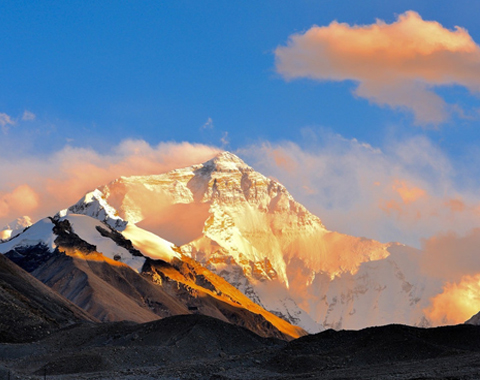
.jpg "Tibetan Local Travel Agency")



18 Days Classic Kashgar to Lhasa Overland Tour
Tour Route: Kashgar - Yecheng - Dahong Liutan - Duoma - Rutog - Shiquanhe - Zanda - Darchen - Kailash Trek - Darchen - Saga - Gyirong - Tingri - Everest Base Camp - Tingri - Shigatse - Gyantse - Lhasa
-
Tour Type:
Escorted by private guide and vehicle; leave 365 days a year!
-
Trip Level:
Moderate - suitable for ones with average level fitness.
-
Trip Level Guide:
- Easy - suitable for all level of fitness, family with kids and senior groups.
- Moderate - suitable for ones with average level fitness, family with kids bigger than 12 yrs.
- Moderate to Strenous - suitable for ones physically fit; have experiences of high altitude trek.
- Strenuous: suitable for adventures and individual with physically fit and healthy.
-
Season:春
Spring夏
Summer秋
Autumn冬
Winter
 Download PDF Brochure
 Brochure successfully sent!
We've sent the '18 Days Classic Kashgar to Lhasa Overland Tour ' brochure to . Check your inbox, and if you don’t see it, kindly check your spam/junk folder.
You might also like these adventures
-
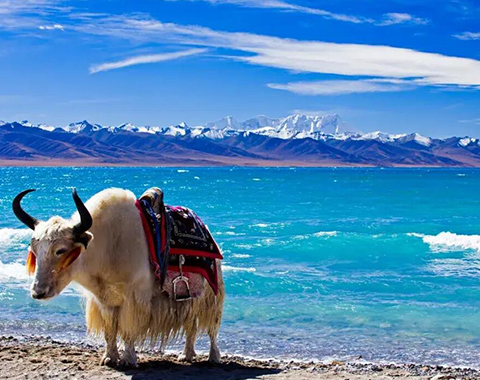
5 Days Travel to Sky Lake - Lhasa to Lake Namtso Small Group Tour
Tour Route: Lhasa - Namtso Lake - Lhasa
from USD689 p.p
-
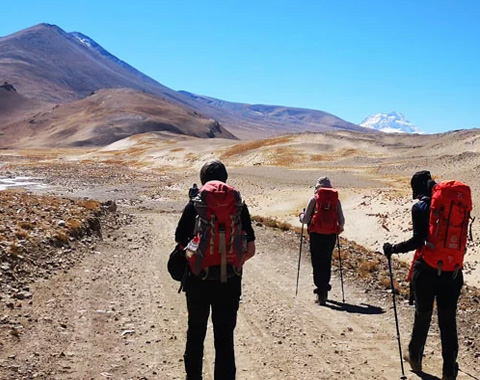
10 Days Best Everest Trekking Small Group Tour from Tingri to Everest Base Camp
Tour Route: Lhasa - Yamdrok Lake - Shigatse - Old Tingri - Lungjiang - Lamna-la - Chaya Pass - Everest Base Camp - Tingri - Shigatse - Lhasa
from USD1780 p.p
-
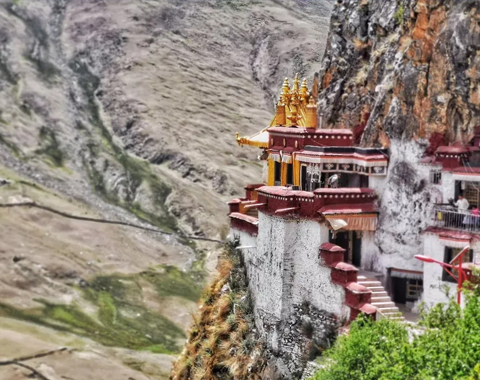
Tour Route: Lhasa - Drak Yerpa - Ganden - Lhasa
from USD599 p.p
Overview
This 18-day Kashgar to Lhasa overland trip is a challenge for the brave, taking you along the world’s highest highway, the Xinjiang-Tibet Road, from the exotic Xinjiang to the holy city of Lhasa.
Starting in Kashgar, you'll cross numerous mountain passes over 4,500 meters above sea level and travel through the stunning landscapes of the Taklamakan Desert and the high-altitude Ngari region. You'll explore the ancient ruins of the Guge Kingdom, admire the ancient Rutog Rock Painting, and experience the 3-day Kailash kora with a visit to the sacred Manasarovar Lake.
Continuing to the Himalayas, you'll visit Gyirong Port before heading to Everest Base Camp. Finally, you’ll journey along National Highway 318 to Lhasa, where you can explore the Potala Palace and Jokhang Temple, and bask in the city’s sunlight after an unforgettable adventure.
At a Glance
Day 1Arrive in Kashgar
Day 2Kashgar - Yecheng
Day 3Yecheng - Dahong Liutan
Day 4Dahong Liutan - Duoma
Day 5Duoma - Pangong Lake - Rutog - Shiquanhe
Day 6Shiquanhe - Zanda
Day 7Zanda - Darchen
Day 8Darchen to Dirapuk Monastery (Trek Day 1: 13km)
Day 9Dirapuk Monastery to Zutulpuk Monastery (Trek Day 2: 24km)
Day 10Zutulpuk Monastery to Darchen (Trek Day 3: 12km)
Day 11Darchen-Saga
Day 12Saga - Gyirong
Day 13Gyirong - Everest Base Camp - Tingri
Day 14Tingri - Shigatse
Day 15Shigatse - Gyantse - Lhasa
Day 16Lhasa Tour - Potala Palace, Johkang Temple, and Barkhor Street
Day 17Lhasa Tour - Dadong Village and Sera Monastery
Day 18Depart from Lhasa
Day to Day Itinerary
Day 1: Arrive in Kashgar
Welcome to Kashgar, the important hub on the Ancient Silk Road!
Upon your arrival at the hotel, you can take a good rest or explore the surroundings as you like.
Stay overnight in Kashgar.
Day 2: Kashgar - Yecheng
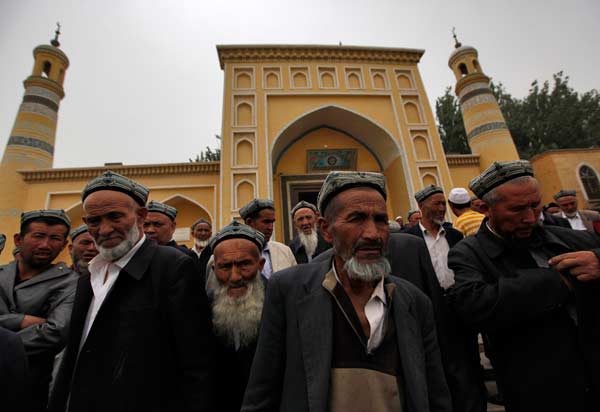
After breakfast, you will visit the Apak Hoja Tomb (Xiangfei Mu in Chinese) and enjoy the exotic Islamic architecture complex there.
Then, you will explore the Id Kah Mosque, the largest mosque in China. The gate of the mosque is built with sandy yellow bricks, which is very spectacular. The bell tower next to the mosque seems to be telling us the history of this ancient building.
After the sightseeing in Kashgar, you will start the overland journey to Yecheng, a small town rich in ethnic minority culture. It is also the starting point of the Xinjiang-Tibet Highway (G219 National Highway). Along the way, you will enjoy stunning views of the Taklamakan landscapes as the road runs along the edge of the Taklamakan Desert.
Stay overnight in Yecheng.
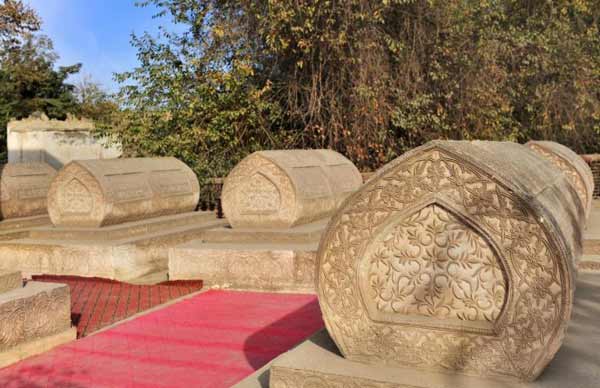
Day 3: Yecheng - Dahong Liutan
Today, you will experience a long road journey from Yecheng to Dahong Liutan.
After breakfast, you will start your road trip today. First, you will see K2, the main peak of the Karakoram Mountains, which is 8,611 meters above sea level and the second-highest peak in the world.
Then, you will pass through many mountain passes (Daban in Uyghur), such as Heika Daban, Kudi Daban, and the Maza Daban. You’ll enjoy the magnificent scenery of the Kunlun Mountains along the way. The average altitude throughout the journey exceeds 4,500 meters, making it a challenging day.
Finally, you will reach the Dahong Liutan, a small town situated at an altitude of 4,200 meters, where you can find accommodation.
Stay overnight in Dahong Liutan.


Day 4: Dahong Liutan - Duoma
Today, you will continue the Xinjang-Tibet road trip from Dahong Liutan. Heading south, you will cross the Jieshan Daban at an altitude of 5,248 meters and officially enter the Tibet Autonomous Region. Along the way, you will experience the sunlight and clouds changing colors and layers on the barren and vast plateau.
In the evening, you will arrive at Duoma town.
Stay overnight in Duoma.


Day 5: Duoma - Pangong Lake - Rutog - Shiquanhe
After breakfast, you will start today’s journey from Duoma to Shiquanhe.
First, you will reach the renowned Pangong Lake. Here, you’ll find the world’s highest bird island, which hosts over 20 bird species. The number of birds can reach tens of thousands each year, creating a spectacular sight.
Then, you will drive to Rutog County to explore the ancient Rutog rock paintings, which are ancient petroglyphs that reflect the lifestyle, religious ceremonies, and activities of the locals.
Finally, you will arrive in Shiquanhe Town, the capital of Ngari Prefecture.
Stay overnight in Shiquanhe.

.jpg "Rutog Rock Painting recalls what Ngari people see and how they live in ancient time.")
Day 6: Shiquanhe - Zanda
In the morning, you will first drive to the Ruins of Guge Kingdom. En route, you will pass through the magnificent Zanda Earth Forest, which has a unique landscape and is like a work of nature.
Then, you will head to the Ruins of Guge Kingdom. Ruling the western Tibetan plateau for 700 years, the Guge Kingdom mysteriously vanished 400 years ago. The remnants, resembling ancient fortresses, reveal exquisite carvings, gold and silver Buddha statues, and well-preserved murals, including the renowned "Guge Silver Eyes." This vanished kingdom leaves behind a splendid legacy, blending Tibetan Buddhism and political history in enduring masterpieces.
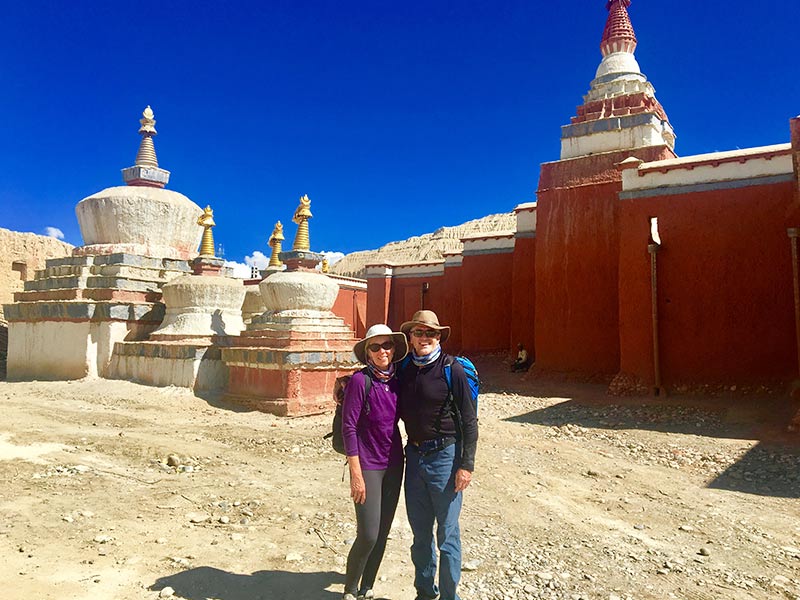
After that, you will drive back to Zanda town, where you’ll visit Toling Monastery, a hidden gem in western Tibet. The monastery boasts exquisite Buddhist murals comparable to the famous Dunhuang Mogao Caves, depicting heavenly scenes, playful animals, intricate patterns, and more. The architectural fusion of Indian, Nepali, and Tibetan styles at Toling Monastery provides a unique glimpse into Tibetan arts. Surrounded by 83 stupas, the monastery exudes a solemn atmosphere, adding to its ancient grandeur.
Stay overnight in Zanda.

Day 7: Zanda - Darchen
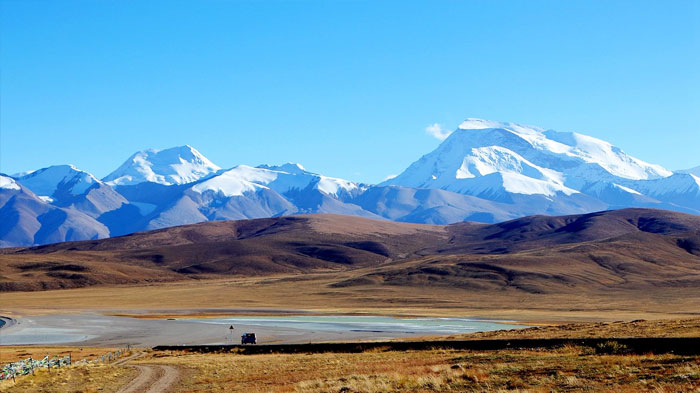
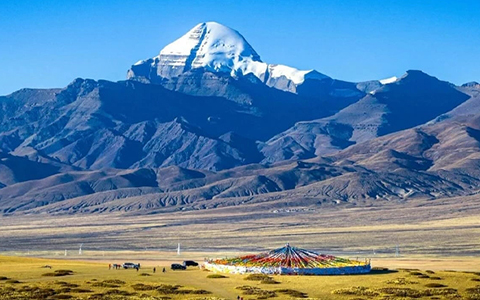
Today, you will continue the road trip from Zanda to Darchen, the small town at the foot of Mount Kailash.
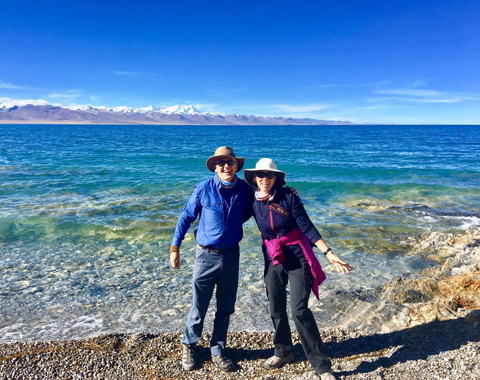
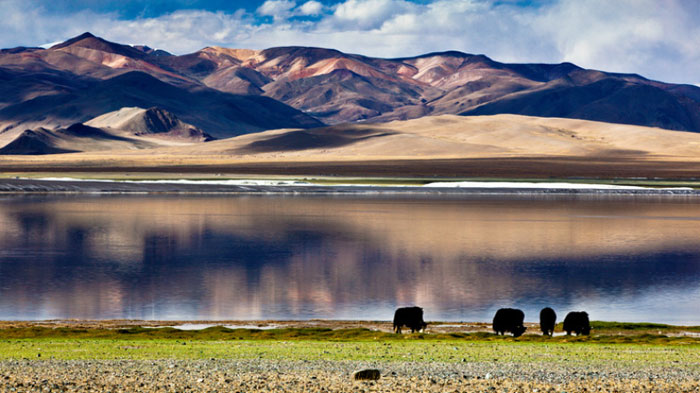
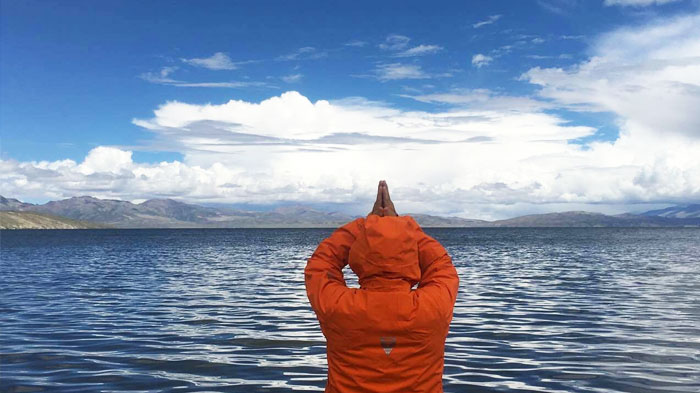
On the way, you will stop at Manasarovar Lake, the sacred lake near Mount Kailash. You’ll approach the shores of the sacred lake to touch its holy waters, engage in meditation, or just listen to the rhythmic waves of the sacred waters.
After the short break at the lakeside, you will drive to Darchen and prepare for the Kailash trek.
Stay overnight in Darchen.
Insider Tips:
If you need a porter, kindly inform your guide on this day, and your guide will arrange one for you the following day. Please note that the cost of the porter requires an additional payment.
Day 8: Darchen to Dirapuk Monastery (Trek Day 1: 13km)
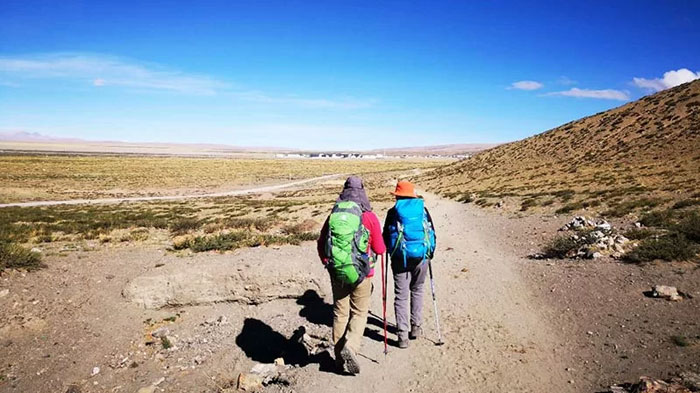
Today is the first day of your Mount Kailash trek.
After breakfast, you are supposed to take an eco-bus from Darchen to Sarshung Valley, where to start today’s 13-kilometer trek around Mount Kailash.
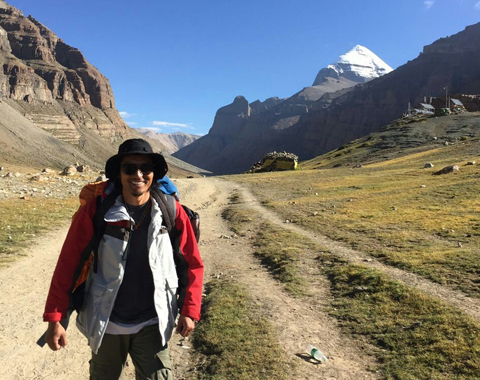
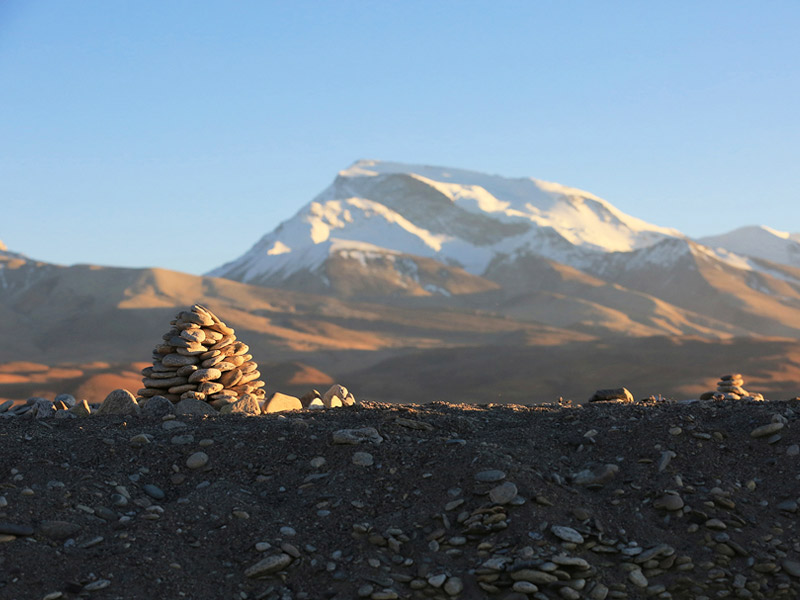
The first 13 kilometers are relatively easy, guiding you through the valley at the foot of Mount Kailash. You can clearly see the southern and western slopes of the sacred Mount Kailash.
After reaching the foot of the western slope, you will check in at the guesthouse in Dirapuk Monastery.
For the remainder of the day, follow our guide to explore the ancient Dirapuk Monastery (also known as Zhire Temple). Capture unforgettable moments in front of the sacred stupas and the grandeur of the western slope of Mount Kailash.
Weather permitting, immerse yourself in the awe-inspiring spectacle of the sunset over Mount Kailash from Dirapuk Monastery. Witness the sun's afterglow delicately illuminating the steep cliffs of the western slope as night descends.
Stay overnight in a local guesthouse.
Day 9: Dirapuk Monastery to Zutulpuk Monastery (Trek Day 2: 24km)
Start your day early with a 4-kilometer trek from Dirapuk Monastery to reach 5430 meters. This section offers a rapid climb with a breathtaking view of the sunrise over the northwest slope of Mount Kailash.
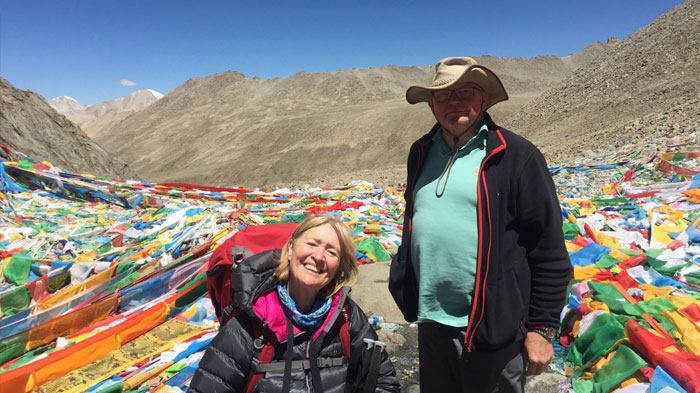
Afterward, you’ll continue another 2-kilometer trek to Dolma La Pass, the highest point at an altitude of 5630 meters. Along this path, you’ll see prayer flags hanging everywhere on the pass.
(Notice: The high altitude means even in summer, the path is icy and scattered with rocks, requiring caution to prevent slipping.)
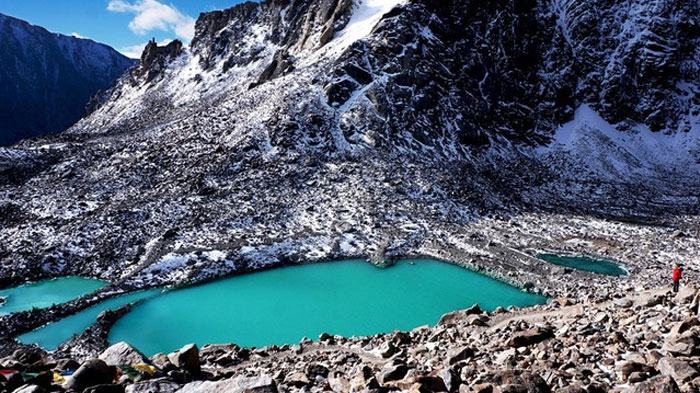
After successfully crossing Dolma La Pass, you’ll be greeted by the emerald-green Lake of Compassion (also known as Guri Kund), believed to purify a lifetime of sins with a dip. You’ll also witness the thick glaciers on the northwest slope of Mount Kailash.
Following the Lake of Compassion, a gradual descent leads you to the valley beneath the southeast foot of Mount Kailash, where Zutulpuk Monastery (also known as Dzutripuk Monastery) is located. Here, you may encounter adorable wild animals and find a peaceful resting spot on the grasslands.
Stay overnight in a local guesthouse.
Day 10: Zutulpuk Monastery to Darchen (Trek Day 3: 12km)
Today is the last day of your Mount Kailash kora.
In the morning, you’ll trek back from Zutulpuk Monastery to Darchen, the starting point of Kailash Trek.
After completing the Kailash trek in the morning, you are going to take a 30-kilometer drive to Lake Manasarovar. You’ll approach the shores of the sacred lake to touch its holy waters.
At the lakeside, you can engage in meditation, listen to the rhythmic waves of the sacred waters, or simply clean your body with the holy water, which holds significant spiritual meaning for Hindus and Buddhists.
There are also hot springs (optional) offering foot baths or soaking opportunities for visitors. If the Mount Kailash pilgrimage has left you feeling weary, consider spending a few dollars to enjoy the hot springs.
After today’s tour, get back to Darchen.
Stay overnight in Darchen.
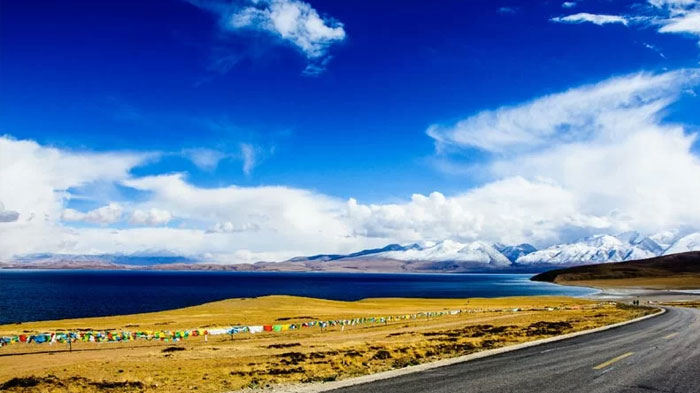
Day 11: Darchen-Saga
After breakfast, you’ll travel back to Sage and relive the scenic wonders of the Ngari Plateau, the Himalayas, and the Gangdise Mountains. Along the journey, you can stop at grassy pastures and lakes to get close to the nature and wildlife of Ngari.
Later today, you will finally arrive in Saga.
Stay overnight in Saga.
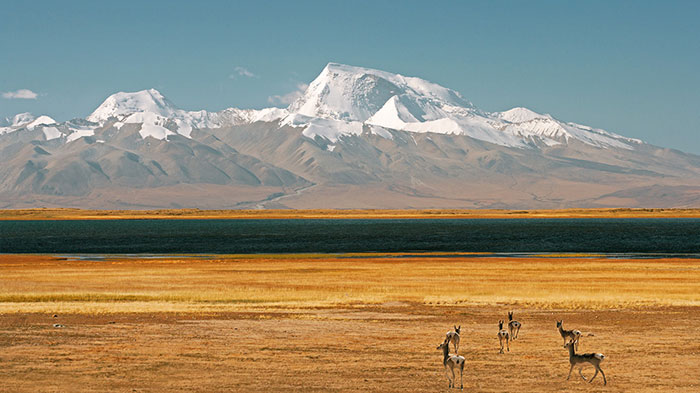
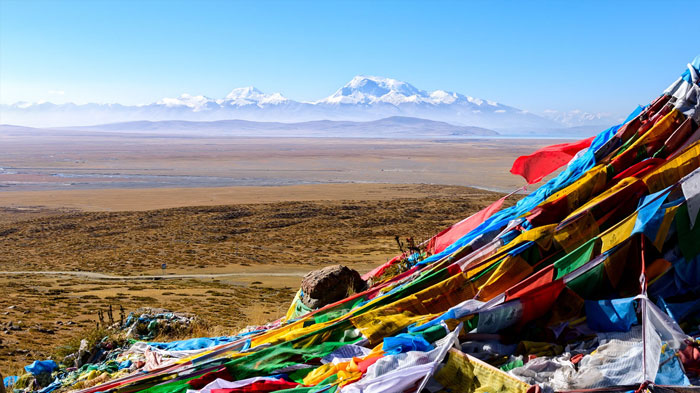
Day 12: Saga - Gyirong
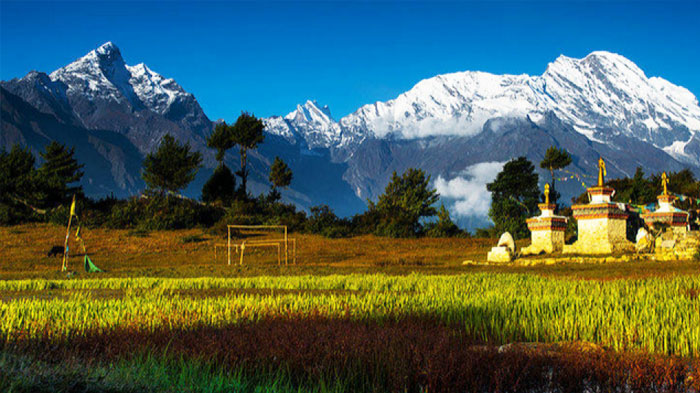
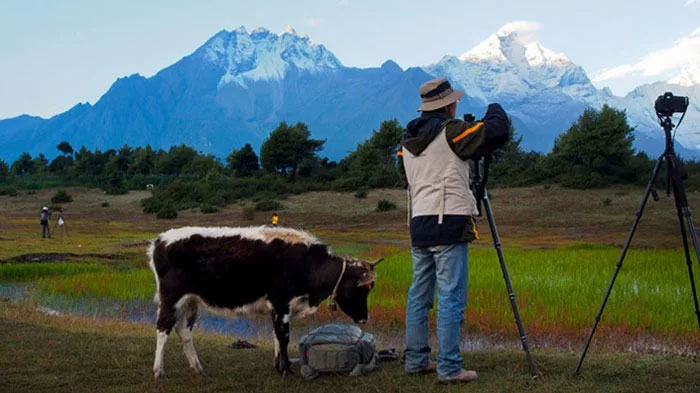
In the morning, start your journey to Gyirong Valley, the hidden gem on the Sino-Nepal border. As the altitude drops, the scenery along the roadside changes from snow-capped mountains and wastelands to dense forests and canyon landscapes.
Upon reaching Gyirong Town in the afternoon, you’ll explore Gyirong Valley described by British explorer Howard-Bury as the most beautiful valley in the world in his book 'Mount Everest: The Reconnaissance'.
Here, you can visit the Sherpa villages and admire dense forests, serene villages, and beautiful snow peaks above the woods. Additionally, you can experience the humid and mild oxygen, quite distinct from the dry and thin air of the Ngari Plateau.
Stay overnight in Gyirong.
Day 13: Gyirong - Everest Base Camp - Tingri
After breakfast, you will leave Gyirong and drive to Everest Base Camp in Tibet. Along the way, ou will see the scenery changing as the altitude increases.
First, you will be attracted by the forests, waterfalls, and bottomless canyons at an altitude of 2800 meters. Then cross the Kong Tang Lamu Pass at an altitude of 5236 meters and enter the plateau.
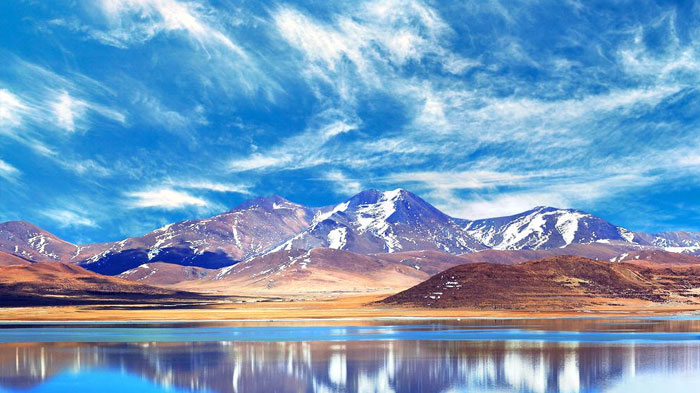
When passing by Mt. Shishabangma (8027m) and Pelku Tso Lake at its foot, you will be shocked by the tranquil and peaceful beauty.
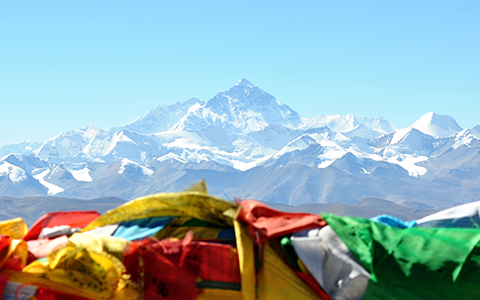
After that, you will enter the Mount Everest area. When passing through the world's most beautiful Everest viewing platform - Gawula Pass (5198m), you will see five peaks above 8000 meters in the Himalayas lined up. The world-famous Mount Everest stands among them, and beneath the peaks is the churning sea of clouds.
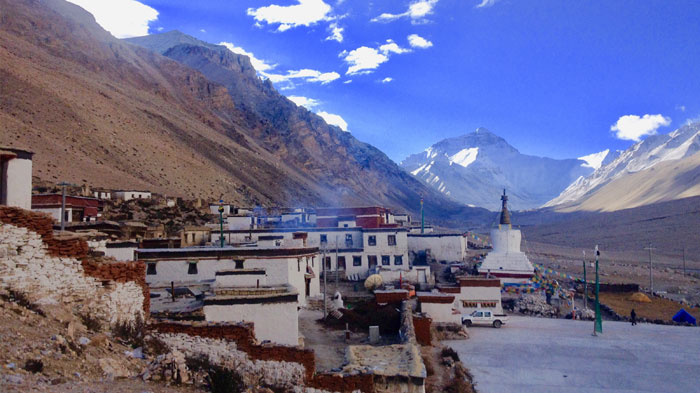
Later, you will arrive at Everest Base Camp, which is the second observation deck of Mount Everest. Here, you'll admire the world's highest peak from the foot of Mount Everest's North Slope and visit the world's highest temple, Rongbuk Monastery (5154m).
After visiting Everest Base Camp, we will continue our journey to Tingri (4300m).
Stay overnight in Tingri.
Insider Tips:
Since today’s itinerary rises sharply from low altitude to over 5000 meters, in order to ensure your travel safety and avoid altitude sickness, we choose to spend the night in Tingri County (4300m) instead of Everest Base Camp (5200m).
Day 14: Tingri - Shigatse
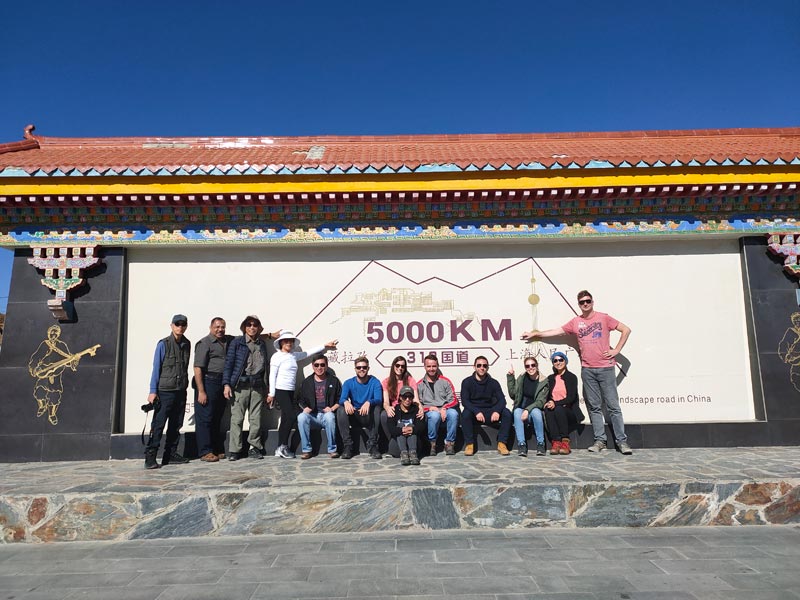
Start the journey to Shigatse in the morning, you will first visit the 5000m G318 National Highway milestone
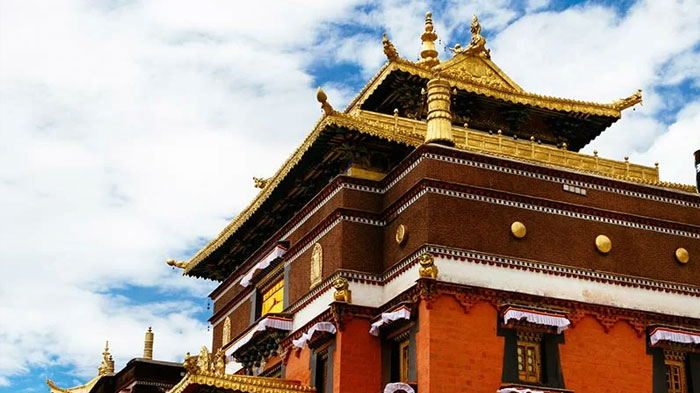
After your arrival in Shigatse in the early afternoon, you will visit the seat of Panchen Lama - Tashilhunpo Monastery, one of the most important monasteries in Tibet. The grand and magnificent halls of the largest local monastery occupy the entire hillside. This is the spiritual home of the Tibetan people in Shigatse, housing the world's largest statue of Maitreya Buddha.
Stay overnight in Shigatse.
Day 15: Shigatse - Gyantse - Lhasa
In the morning, start the overland journey from Shigatse to Lhasa, which includes visits to Tibet's most beautiful lake, glacier, and a charming Tibetan village.
After arriving in Gyantse, you can spend some time taking photos of the ancient city of Gyantse and visit the Perklor Monastery and Kumbum stupa.
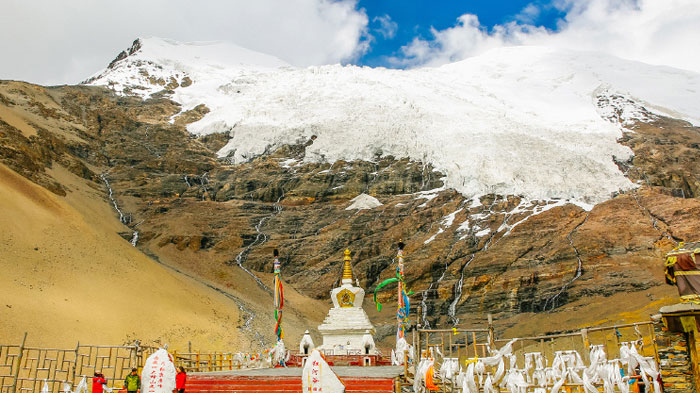
Next, you will pass and enjoy the Korola Glacier on the roadside. It is the largest glacier in Tibet. As you see the ice tongue of the glacier climb the entire hillside, you will feel the magical power of nature.
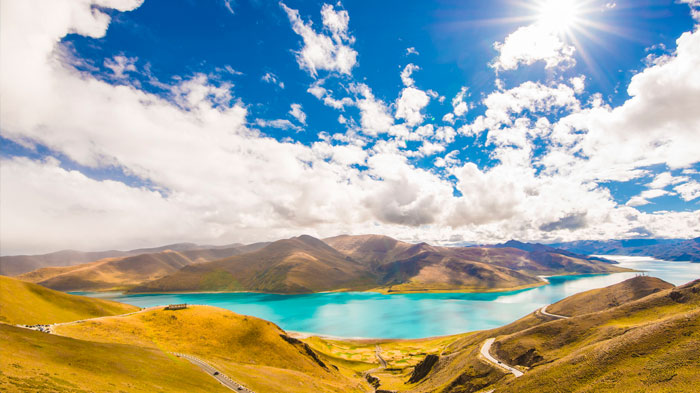
After that, drive to Yamdrok Lake, one of the ‘top three holy lakes’ in Tibet. The Yamdrok Lake, at 4400 meters above sea level, is surrounded by many snow-capped mountains. In the distance, you can have spectacular views of the holy Mount Nyenchen Khangsar (7191m), the highest mountain near Lhasa.
Continue to explore the lakeshore from various viewpoints, and at the end of the lake, you could visit a local family in the village and have lunch with the locals.
After a leisurely visit to Yamdrok Lake, continue your journey to Lhasa. Finally, you will arrive in Lhasa. After checking in at your hotel, allow yourself a well-deserved rest following today’s lengthy journey.
Stay overnight in Lhasa.
Day 16: Lhasa Tour - Potala Palace, Johkang Temple, and Barkhor Street
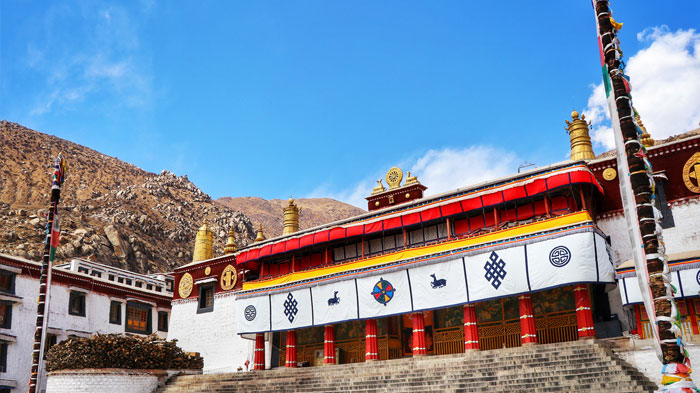
In the morning, you’ll explore the largest monastery in Tibet - Drepung Monastery, which was once the home to over 10,000 monks. As you walk through the Coqen Hall, your guide will provide detailed explanations of the worldview of Tibetan Buddhism and introduce notable figures in Tibetan Buddhist history.
Next, you’ll visit the renowned Loseling College (or an equivalent), offering a glimpse into the study and life of Tibetan monks. Explore their dormitories to gain insights into the Tibetan monks' daily routines and living conditions.
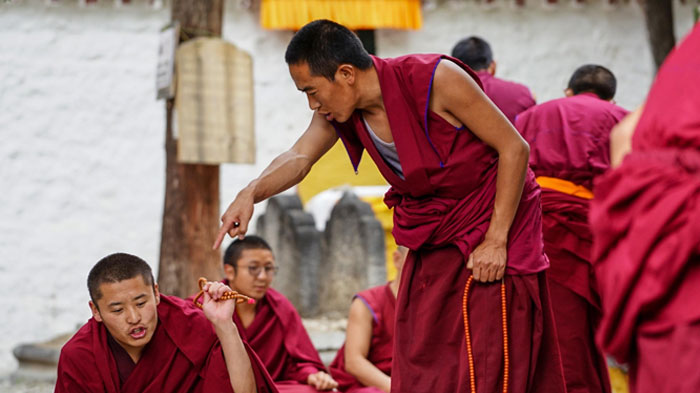
In the afternoon, you’ll head to Sera Monastery, another of the ‘great three’ Gelug monasteries of Tibet, to witness the famous Tibetan Monks Debate (15:00 - 17:00, from Monday to Saturday). Your guide will intricately explain how Tibetan monks engage in these debates to acquire knowledge and advance in their academic degrees.
Stay overnight in Lhasa.
Day 17: Lhasa Tour - Dadong Village and Sera Monastery
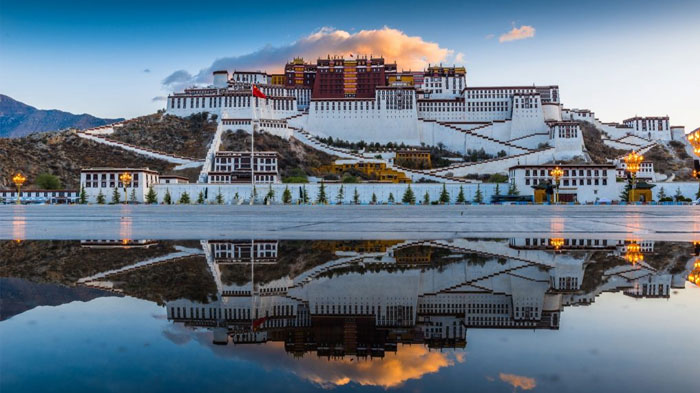
After breakfast, your first stop is the Potala Palace, where you can enjoy a panoramic view of the Lhasa Old Town. Discover the lives and stories of the Dalai Lamas through history within the palace, and the extraordinary treasures it holds. The most valuable collections of Potala Palace are the gilded burial stupas of former Dalai Lamas and the meditation cave of the 33rd great king of Tibet.
After touring the Potala Palace, you will visit Longwangtan Park at the foot of the Potala Palace. Here, you can appreciate the majestic Potala Palace from a different perspective and engage in local Tibetan folk activities.
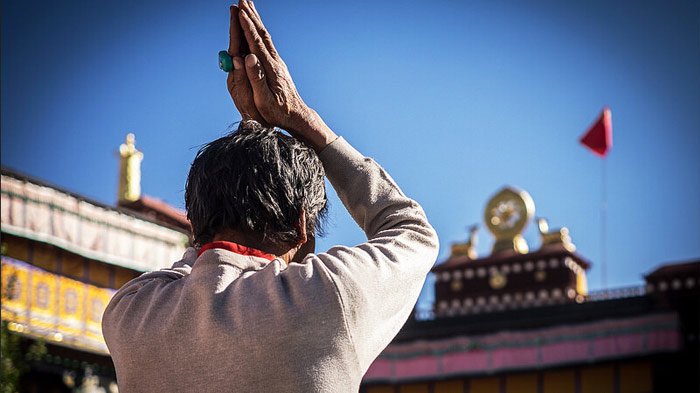
In the afternoon, you will head to the heart of Tibetan religion - the Jokhang Temple. Inside you can see the statue of Buddha Sakyamuni at the age of twelve. Outside, you can see pilgrims making prostrating in front of Jokhang Temple. Around the temple is Barkhor Street, where you can do kora (a religious circle of a building or mountain) with pilgrims and locals, and explore the old market.
Next, follow your guide to one of the liveliest indoor Tibetan tea houses in Lhasa. Sip traditional Tibetan sweet tea alongside local Tibetans as your guide shares insights into Tibetan social dynamics and daily life.
Stay overnight in Lhasa.
Day 18: Depart from Lhasa
Today marks the end of your Tibet tour.
Please make sure to verify your departure flight/train details with our guide in advance. And your guide will take you to the airport or train station.
Thank you for choosing Tibet Vista, and we extend a warm welcome for your return to Tibet in the future.
Service Guide
Service Included:
- Tibet travel permit and all other necessary permits to Tibet;
- All entrance ticket fees for all tourist sites listed in the itinerary;
- Personal knowledgeable English-speaking Tibetan local tour guide;
- Personal comfortable, clean and safe vehicle with reliable Tibetan local driver; vehicle ranging from 4WD land cruiser to minibus depending on your group size;
- All lodging listed in the itinerary; it’s your decision about the accommodation class: luxury 5-star international hotel, comfortable 4-star hotel, economic 3-star hotel or budget hostel, guesthouse or tent. Please tell us your accommodation preference when submitting the enquiry; we will arrange the best-value hotels for you.
- Domestic flight/train tickets listed in the itinerary;
- All meals listed in the above itinerary;
- Tourist accident/casualty insurance;
- First aid kit;
Service Excluded:
- International flight to and out of China;
- Chinese visa (Note: we could help you with the Chinese visa application, like providing the invitation letter, presenting the hotel or domestic flight reservation copies, etc that you may need. )
- Domestic flight/train not listed in the itinerary. (We can provide you the domestic flight/train ticket booking service at the BEST discount price; please contact us our travel experts for the details.)
- Meals not specified in the itinerary; usually it costs about USD3-15 per person for one meal in TAR (Tibet Autonomous Region).
- Tips and gratitude to tour guide and driver;
- Personal expenses, like laundry, phone call, snacks, soft drinks (please do the best to avoid the alcoholic beverages during your Tibet trip), optional tour activities, etc.
Contact us for your dream trip now !
Enquire NowYou May Also Like
-
 11 Days Lhasa to Kashgar Overland Adventure with Everest Base Camp Tour
Tour Route:Lhasa - Gyangtse - Shigatse - Everest Base Camp - Saga - Darchen - Zanda - Shiquanhe - Rutog - Duoma - Sanshili Yingfang - Yechen - Kashgar
View Details -
 14 Days Lhasa to Kashgar Overland Tour with Mount Kailash Kora
Tour Route:Lhasa - Gyangtse - Shigatse - Everest Base Camp - Saga - Darchen - Kailash Trek - Darchen - Zanda - Shiquanhe - Rutog - Duoma - Sanshili Yingfang - Yecheng - Kashgar
View Details -
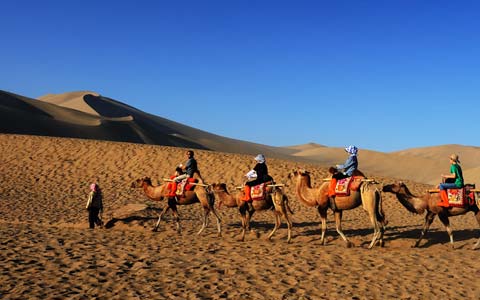 13 Days Tibet and Silk Road Tour from Xian
Tour Route:Lhasa - Xian - Dunhuang - Turpan - Urumqi - Kashgar - Urumqi
View Details -
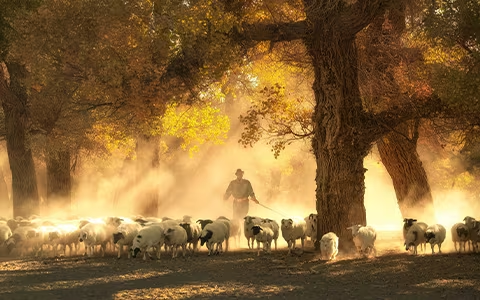 24 Days Tibet and Southern Xinjiang Adventure
Tour Route:Lhasa - Tsedang - Shigatse - Sakya - Mt. Everest - Xian - Dunhuang - Turpan - Korla - Mingfeng - Hetian - Kashgar - Urumqi
View Details
Most Frequently Asked Questions from our Clients
What Makes this Tibet Trip Different?

Experience an unforgettable 18-day overland journey from Kashgar to Lhasa along the Xinjiang Tibet Highway, featuring a sacred Kailash Kora and a visit to Everest Base Camp—truly a lifetime adventure through the best of Xinjiang and Tibet on the world’s highest highway.
Tibetan Travel Guru,Jamyang Tsering
Get A Quotation of this Tour
Get Started - 18 Days Classic Kashgar to Lhasa Overland Tour
You’re getting closer to your dream Tibet vacation! Fill out this form so our travel designers can start helping you plan a trip.
Privacy Policy: Your information is kept strictly confidential. Tibet Vista will never sell, trade, or give away your contact information to a third party.