
 Search
.jpg "Tibetan Local Travel Agency")


Tibetan Tea: A Taste of Tibetan Tea Culture in the Himalayas
If you travel to Tibet, you'll find that local Tibetans drink tea every day. The Tibetan tea they drink has its own flavors, known as Tibetan butter tea and Tibetan sweet tea. It has prevailed in Tibet for many years and has developed its own unique traditions, making it a vital part of Tibetan daily life and culture.
If you are interested in the taste of Tibetan tea and the rich Tibetan tea culture, you can explore our ultimate guide to discover the history of Tibetan tea, unique flavors, and traditional drinking etiquette of this popular drink on the Roof of the World.
Content
What Is Tibetan Tea? Traditional Beverage in Tibet
The Origin of Tibetan Tea: Dates Back to the Tang Dynasty
Tibetan Butter Tea: A Taste of Tibetan Nomadic Life and Tradition
Tibetan Sweet Tea: Most Popular Tibetan Tea among Tourists
How to Make Tibetan Tea? Easy Homemade Method and Traditional Tibetan Way
Best Places to Drink Tibetan Tea: From Local Teahouses to Tibetan Families
Tibetan Tea Drinking Etiquette when Visiting a Local Family
Explore More of Tibetan Tea Culture: Traditional Tibetan Teaware
What Is Tibetan Tea? Traditional Beverage in Tibet
Tibetan tea is the traditional beverage in Tibet. It's closely related to Tibetan hospitality and social activities.
Generally, Tibetan tea is brewed from strong tea leaves and ingredients such as yak butter, milk, salt, or sugar. Such processes create unique tastes that differ significantly from those of normal green tea or black tea. Tibetan tea is usually made from brick tea, a type of deep-fermented compressed tea.
Tibetan Butter Tea and Tibetan sweet tea are two popular types of Tibetan tea. Unique to Tibet, Tibetan tea has become a must-try for many visitors to Tibet, as it offers a glimpse into Tibetan traditions and way of life.
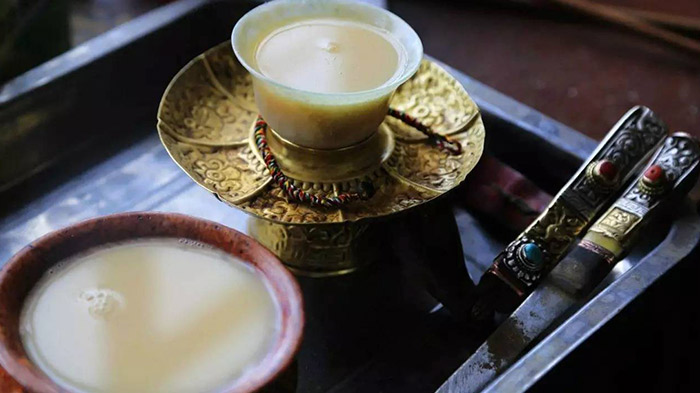 Tibetan butter tea is a daily drink in Tibet.
The Origin of Tibetan Tea: Dates Back to the Tang Dynasty
Tibetan tea has prevailed in Tibet for over 1300 years, yet Tibet itself is not originally a tea-growing region. The tea culture in this region originated from the Tang Dynasty, during which Princess Wencheng of the Tang married Songtsen Gambo, the king of Tibet. Then, as the economic and cultural exchanges between the two regions began, tea was first introduced into Tibet.
However, the harsh environment of the Tibetan Plateau made it difficult for tea plants to grow. So Tibetans relied on trade with the Han, exchanging horses and other goods for tea.
From then on, the trade of tea and horses between the Han and Tibetan people gradually developed and thrived, creating a network of caravan paths called the Ancient Tea Horse Road. Through the route,Tibetans obtained a steady supply of tea leaves.
As Tibetans believed that tea was beneficial to improve digestion and combat fatigue, drinking tea gradually became popular in Tibet, and Tibetan tea culture has prevailed till today. Tibetan people created new ways of drinking tea, such as the Tibetan butter tea, making their tea culture distinctive.
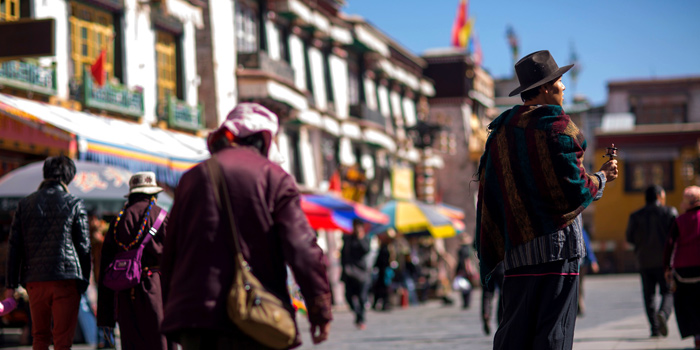

Explore the Heart of Tibet on our 4-day Lhasa tour and immerse yourself in Tibetan culture.
Tibetan Butter Tea: A Taste of Tibetan Nomadic Life and Tradition
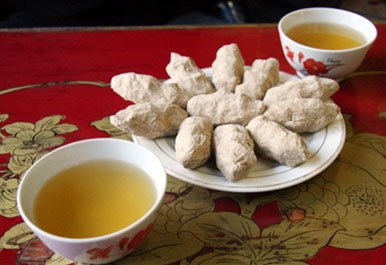
Tibetan butter tea, 'Po Cha' in Tibetan, also known as salty milk tea, is a popular type of traditional Tibetan tea. It's an acquired taste for many visitors, because it's made from tea leaves and yak butter and processed with salt. It tastes savory and creamy, and some non-Tibetans consider it a sort of light soup rather than tea.
Tibetan butter tea is a traditional drink in Tibet, often enjoyed with tsampa together as part of a typical Tibetan breakfast.
It's not only a popular beverage, but also a reflection of Tibetan nomadic life and tradition. In the past, the living conditions on the plateau were harsh, and food resources were limited. The combination of tea, salt, and yak butter makes Tibetan butter tea high-calorie and rich in nutrition, providing energy and warmth, helpful to combat fatigue, coldness, and altitude sickness.
The aromatic substances in the tea can dissolve fat, help digestion, and replenish the lack of vitamins, which is helpful for Tibetan nomadic life in pastoral areas on the plateau.
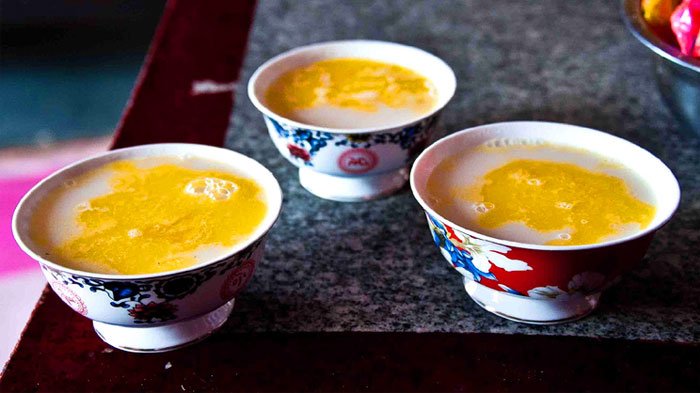 Tibetan butter tea is a reflection of Tibetan nomadic life and tradition.
Tibetan Sweet Tea: Most Popular Tibetan Tea among Tourists
Tibetan sweet tea, known as 'Qabadi' in Tibetan, is a sweet beverage, believed to have been inspired by the Indian Chai. It's made from black tea, milk, sugar, and sometimes condensed milk.
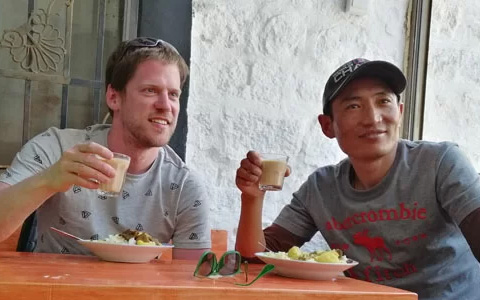
It's a popular choice in Tibetan Teahouses these days, where locals gather to chat, relax, and spend time together. For young Tibetans, Tibetan sweet tea carries a touch of modern lifestyle and urban culture.
Tibetan sweet tea tastes lighter, smoother, and more refreshing than Tibetan butter tea, similar to that of milk tea, and more acceptable to tourists from around the world. During your Tibet tour, don't miss a chance to visit a local teahouse and taste a cup of authentic sweet tea.
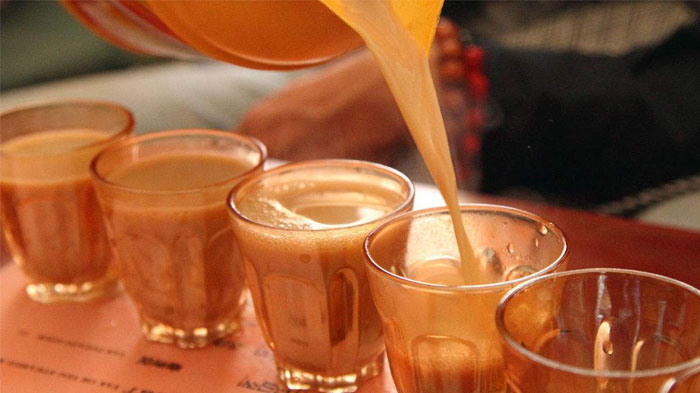 Tibetan sweet tea is the most popular Tibetan tea among tourists.
How to Make Tibetan Tea? Easy Homemade Method and Traditional Tibetan Way
Tibetan tea often leaves a deep impression, making many travelers long for it even after their journey to Tibet. Surprisingly, it's easy to make Tibetan tea at home now.
You just need to boil two spoons of black tea leaves in water, strain the tea leaves, and then mix the tea with milk and sugar. Pour the mixture into a cup, heat it again, and a cup of Tibetan sweet tea is made.
If you mix the tea with yak butter and salt in a blender for 2-3 minutes, heat the mixture again, and pour it into a bowl, that's Tibetan butter tea.
If you are interested in the traditional method of making Tibetan butter tea, here is a guide. It's a handcrafted process, usually starting with making yak butter.
Tibetan people usually heat the yak milk and pour it into a large wooden churn, which is called 'mdong-mo' in Tibetan. Then, they separate the oil from the water by plunging the churn up and down many times, creating a layer of creamy yellow fat on top. Next, it is scooped out and poured into leather pouches, and it solidifies into yak butter after cooling.
With the yak butter, now you can make Tibetan butter tea with the following steps:
Step 1: Boil the brick tea in a pot until it thickens, and then separate the tea leaves.
Step 2: Add the boiled tea to the wooden churn.
Step 3: Add yak butter and salt into the wooden churn.
Step 4: Stir all the ingredients in the churn repeatedly until the butter, tea, and salt blend together.
Step 5: Heat the butter tea in the pot again, and pour it into the bowl.
Video about How to Make Tibetan Butter Tea with the Traditional Method
Best Places to Drink Tibetan Tea: From Local Teahouses to Tibetan Families
Drinking Tibetan tea is one of the top Tibet travel experiences that you should not miss. It is often said that if you haven't tasted Tibetan butter tea, you haven't truly been to Tibet.
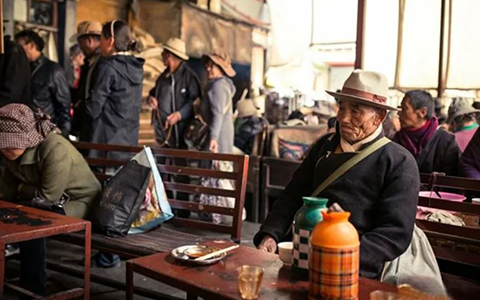
Tibetan Teahouses are good places to enjoy Tibetan tea. It's an important social activity for Tibetans to go to Tibetan Teahouses, where acquaintances and strangers sit together, share tables, enjoy the Tibetan tea, and chat happily.
You can easily find traditional Tibetan Teahouses around the Potala Palace or alongside Barkhor Street. They are two of the most popular stops on any Lhasa City tour, offering easy access for you to try Tibetan tea. After exploring the splendid palace and the bustling street, you can have a seat in a local teahouse, taste authentic Tibetan tea, and experience the daily life in Lhasa.
Though you can enjoy both Tibetan sweet tea and Tibetan butter tea in Tibetan Teahouses, the most authentic experience is visiting a Tibetan family. You'll see how the hostess makes Tibetan tea and taste the most traditional flavor in a Tibetan family.
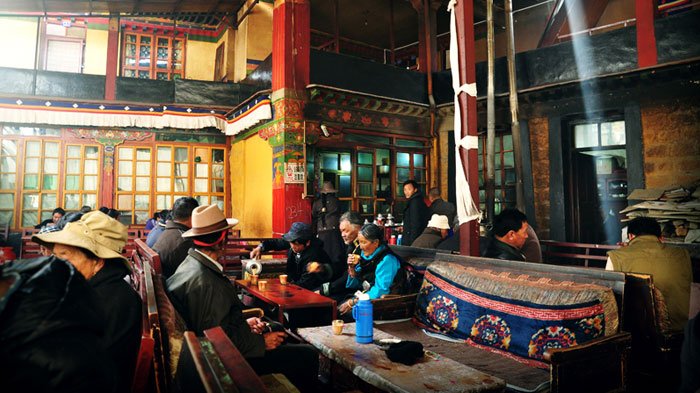 The inside of the traditional tibetan teahouse.
Tibetan Tea Drinking Etiquette when Visiting a Local Family
When you visit a Tibetan family, you'll be warmly welcomed with a bowl of Tibetan tea. Usually, the tea is prepared by the hostess of the family.
When offered, you should receive the tea with both hands. It is polite to drink in small sips rather than finishing it all at once. After each sip, the host refills the bowl to the brim to show their hospitality.
If you don't want to have more tea, just use your hands to cover the bowl or leave the tea untouched. You can drain the bowl when you leave, but in Tibetan culture, leaving a little tea is also acceptable, which means good wishes to meet again in the future.
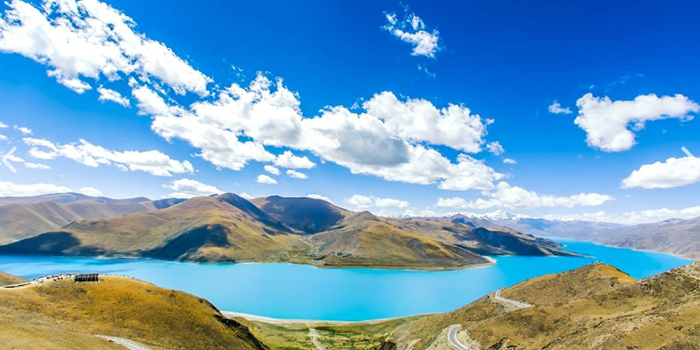
This tour invites you to visit a local family and enjoy the local dishes by Yamdrok Lake.
Explore More of Tibetan Tea Culture: Traditional Tibetan Teaware
When drinking Tibetan tea, locals usually use 'Phorpa', a traditional Tibetan wooden bowl that is popular teaware in Tibet. Each family member has their own personal bowl. The traditional wooden bowl is handcrafted and carved with beautiful patterns.
In wealthy families, the wooden bowls may have silver lids engraved with designs of good luck. More luxurious bowls can be made from ceramics, silver, gold, and jade, like pieces of art.
The various types of Tibetan teaware are an integral part of Tibetan tea culture. When traveling in Tibet, don't forget to enjoy Tibetan tea and explore the craftsmanship of the traditional teaware.
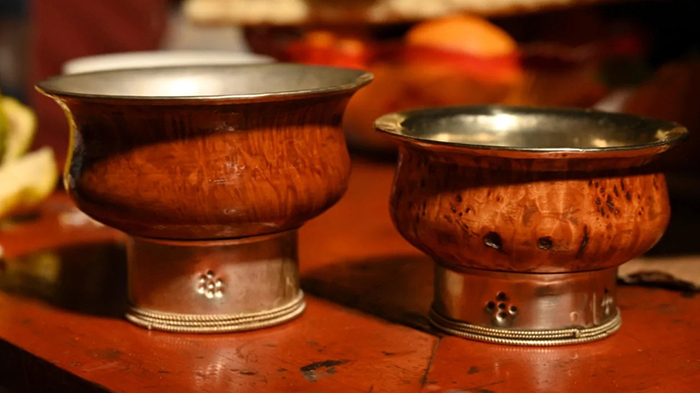 The traditional Tibetan wooden bowl is a part of Tibetan handicraft.
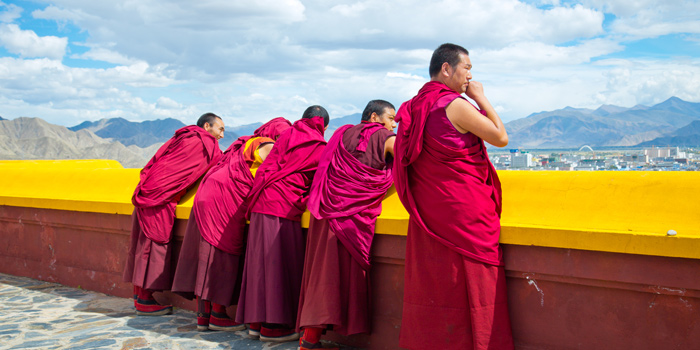
Explore the central Tibet and get a complete impression of Tibet's religion, cultural treasures, and dreamlike landscape.
Conclusion
The tradition of drinking tea in Tibet has thrived for more than 1,300 years. It's inseparable from Tibetan people's daily life and is an important part of Tibetan culture.
Drinking Tibetan tea is an easy way to experience the extraordinary Tibetan culture. You can go to Tibetan Teahouses or visit a Tibetan family to taste Tibetan tea and take part in Tibetan social activities.
As the best-known Tibetan local travel agency, we can take you to the authentic Tibetan teahouses or arrange a visit to a Tibetan family, with a wonderful opportunity for you to enjoy traditional Tibetan tea in a home setting.
Just share your Tibet travel ideas with us and tell us the way you want, and we'll take you to experience the authentic Tibet the way you like.

With exceptional passion and outstanding leadership, Mrs. Catherine has dedicated herself to Tibet inbound tourism and China tour for 15 years. As one of the handful females who see great potential of Chinese inbound tourism, Catherine has made great contribution to promoting Tibet tourism and enhancing the employment of Tibetans and prosperity of local Tibetan community.
Over the years, she travelled overseas with Tibet Tourism Bureau many times to promote Tibet tourism. Currently, Catherine works as the marketing director of Tibet Vista, an opinion leader behind the whole team of Tibet Vista.
 Email me about your travel idea
Related Articles & Posts


Most Popular Tibet Tour Packages
-
Lhasa - Gyantse - Shigatse - Everest Base Camp - Shigatse - Lhasa
USD949
View Details -
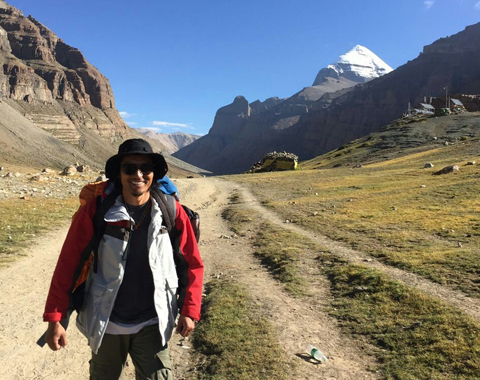
Lhasa - Gyantse - Shigatse - E.B.C - Saga - Kailash Trek - Darchen - Lake Manasarovar - Saga - Gyirong - Tingri - Lhasa
USD2069
View Details -
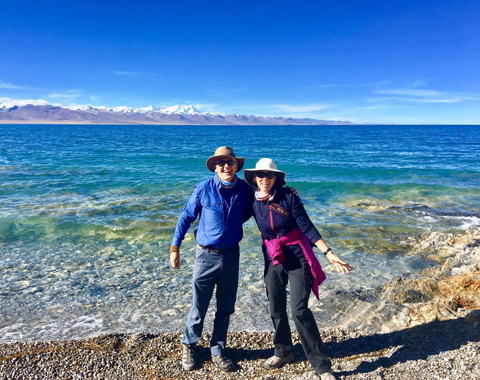
10 Days Lhasa to Everest Base Camp, Namtso Lake and Holy Elephant Gate Small Group Tour
Lhasa - Gyantse - Shigatse - EBC - Shigatse - North Tibet Grassland - Bange - Namtso Lake - Holy Elephant Gate - Lhasa
USD1299
View Details -
8 Days Driving Across Himalaya Overland Adventure from Kathmandu to Lhasa
Kathmandu - Gyirong - Everest Base Camp - Tingri - Shigatse - Gyantse - Lhasa
USD1019
View Details -
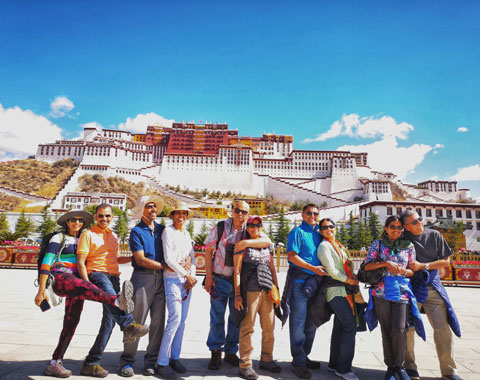
4 Days Lhasa Impression Small Group Tour: Explore the Heart of Tibet and Mingle with the Locals
Lhasa
USD509
View Details -
Lhasa - Gyantse - Shigatse - Everest Base Camp - Gyirong - Kathmandu
USD989
View Details -
Lhasa - Gyantse - Shigatse- Lhasa
USD799
View Details -
Lhasa - Gyantse - Shigatse - EBC - Saga - Darchen - Kailash Trek - Darchen - Saga - Gyirong - Kathmandu
USD2069
View Details
0 Comment ON "Tibetan Tea: A Taste of Tibetan Tea Culture in the Himalayas"


What Is Tibetan Tea? Traditional Beverage in Tibet
The Origin of Tibetan Tea: Dates Back to the Tang Dynasty
Tibetan Butter Tea: A Taste of Tibetan Nomadic Life and Tradition
Tibetan Sweet Tea: Most Popular Tibetan Tea among Tourists
How to Make Tibetan Tea? Easy Homemade Method and Traditional Tibetan Way
Best Places to Drink Tibetan Tea: From Local Teahouses to Tibetan Families
Tibetan Tea Drinking Etiquette when Visiting a Local Family
Explore More of Tibetan Tea Culture: Traditional Tibetan Teaware