
 Search
.jpg "Tibetan Local Travel Agency")



How Cold is Mount Everest Peak? Weather and Temperatures on the Top of Everest
If you know anything about Mount Everest, it’s that it is high and cold. As the highest mountain in the world, the summit of Mount Everest, in the rarefied air at 8,849 meters and buffeted by the racing winds of the jet stream, is anything but warm.
Even though the extreme weather conditions at the summit of Mount Everest are intimidating, many climbers successfully reach the top each year.
Curious about how cold it is on the top of Mt.Everest and when the optimal time to climb is?
This guide will delve into the climate of Mount Everest and provide you with essential tips for planning your journey to Mount Everest.
Content
The Coldest Temperature recorded on top of Mt. Everest Was -41°C (-42°F)
The High Altitude Greatly Affects the Temperature of Mount Everest
Jet Streams also Amplify the Cold Temperatures at the Top of Mount Everest.
Best Time to Climb Mount Everest: Between Monsoon Seasons in April and May
Best Time to See the Summit of Mount Everest: April, May, September, and October
The Coldest Temperature recorded on top of Mt. Everest Was -41°C (-42°F)
In December 2004, a record low temperature of -41°C (-42°F) was recorded on the peak of Mount Everest. It’s no surprise it was at that time of year. The average temperature at the Everest summit during winter, from December until February, is -36°C (-32.8°F). It’s a beautiful time of piercing blue skies and snow on the mountain but also a time of unforgiving conditions.
Even the warmest temperature recorded at the summit is well below freezing. That peak of -16ºC (3F) is not far off the summer average of -18°C (-0.4°F) to -20°C (-4°F) seen between June and August. Autumn brings a rapid cool, dropping to -27°C to -30°C (-16.6°F to -22°F) in October and November.
Spring, April, and May, specifically, are the prime climbing seasons for Mount Everest. It’s not warm, with temperatures at the summit ranging between -20°C and -30°C (-4°F to -22°F), but more stable weather conditions make it favorable for climbing.
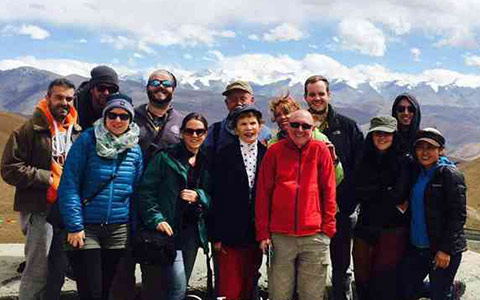
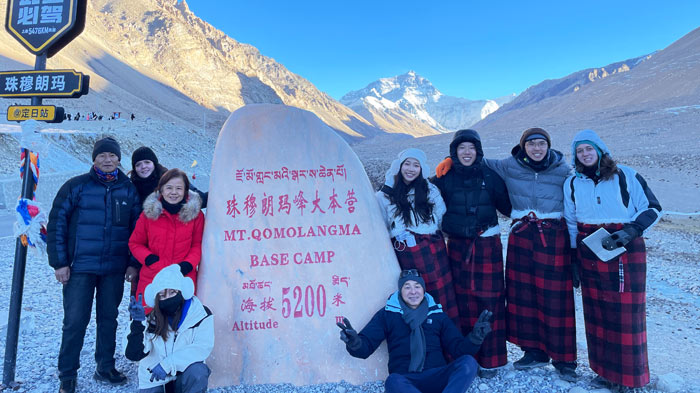 Travelers take photos with Mt. Everest base camp marker at Tibet EBC.
The High Altitude Greatly Affects the Temperature of Mount Everest
Temperatures drop as altitude increases in a phenomenon known as lapse rate. Generally, it gets around 6°C colder for every 1000-meter rise in altitude. At Everest’s 8,849m, this effect is pronounced. The thinner air at higher elevations is not able to retain heat, so despite the intense sunlight, the peak of Mt.Everest never rises above freezing.
At Everest Base Camp in Tibet (5,000m), around 3,800m lower than the summit, the temperature difference can be drastic. In winter, low temperatures average around -15°C. Still cold but much warmer than the -36°C found at the peak. During the summer months, the air is rapidly heated by the strong sun and can reach 22°C in the daytime but still quickly cools to 4°C overnight. Spring and autumn dip below freezing when the sun goes down, but see comfortable daytime weather around 15-17°C.
Another 1,000m lower, at Tashi Zong Village, where amazing views of the tallest peaks of the Himalayas can be seen, including Mt. Everest, the higher air pressure creates milder temperature swings. Summer brings highs of around 19°C, and winter averages a relatively mild -5 to -8°C.
 The amazing views of the tallest peaks of the Himalayas can be seen at Tashi Zong Village.
Travel Tips
For Everest Base Camp tours in Tibet, accommodation options change during the winter months, typically from November to early April, due to the extreme cold. During this period, the Everest Base Camp tent hotels are closed because of the harsh weather conditions. As a result, if you visit Everest Base Camp in winter, you will need to choose between staying at the Rongbuk Monastery Guesthouse, which is close to the base camp, or at local guesthouses in Tashi Zong Village.
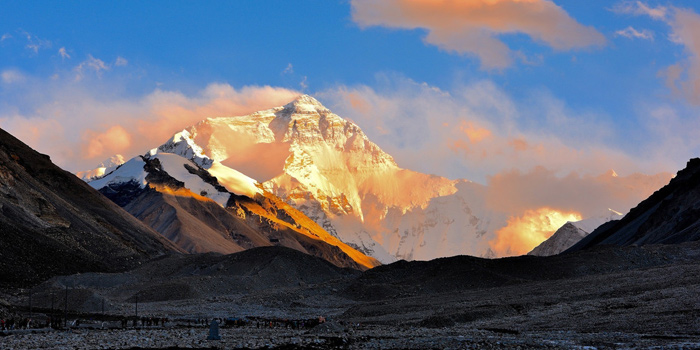

Join our popular Everest Base Camp tour to reach the top of the world!
Jet Streams also Amplify the Cold Temperatures at the Top of Mount Everest.
In addition to being the highest place on Earth, the peak of Mount Everest is also the windiest. Hurricane-force winds can batter the summit, creating wind chill-adjusted temperatures as low as -70°C. This is cold enough to cause frostbite on exposed skin almost instantly.
The jet streams are narrow bands of fast-moving air high up in the atmosphere. The subtropical jet stream engulfs the peak of Everest for a major part of the year with sustained winds of around 120 kph and gusting up to speeds of 285 kph. Not only dangerous for the speed and wind chill, but the high winds can result in lower air pressure, further reducing oxygen levels.
From the middle of October until the end of March, hurricane-like wind conditions persist at the peak. The climbing window opens in April and May when rising temperatures lead to a reversal in the jet stream causing winds to temporarily drop off. From June to September, Everest feels the effects of the Indian monsoon. Wind speeds are lower, around 80 kph, but the wet air from the Indian Ocean can cause frequent and unpredictable storms.
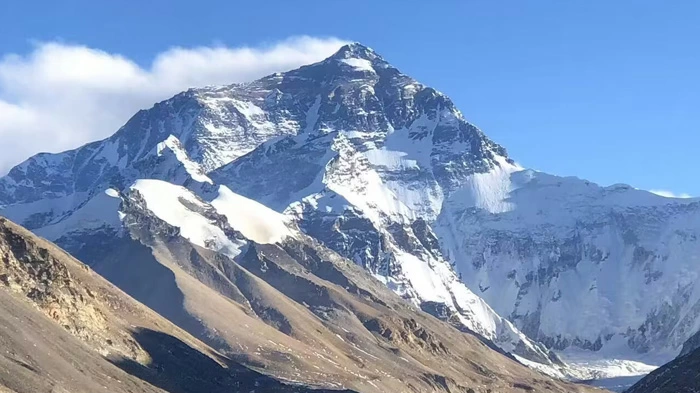 The jet stream over the summit of Mount Everest.
Best Time to Climb Mount Everest: Between Monsoon Seasons in April and May
Though summer is the warmest season, the summer monsoon significantly affects climbing Mount Everest by bringing heavy snowfall, increased rainfall, and unpredictable weather conditions. These factors contribute to a higher risk of avalanches, as the rapid accumulation of snow creates unstable layers on the slopes. Additionally, the monsoon moisture can weaken ice structures and glaciers, leading to more crevasse formation and potential icefall collapses. The established climbing routes can become obscured by snow, complicating navigation and increasing the risk of getting lost.
Favorable conditions for climbing Everest exist only for a short period in April and May before summer comes. The brief spring has the most stable weather with a warming from the harsh winter temperatures, and calming of the intense winds. Ahead of the monsoon season, the weather is dry with little precipitation. Visibility of and from the peak is excellent during this time.
Autumn is another favorable period. After the summer monsoon recedes, dry conditions return for more stable weather with good visibility. Late September and the first two weeks of October are usually the most suitable times during this season. There is often more snow on the mountain than in spring, but it is also less crowded.
Winter is a harsh and inhospitable time. Extreme cold, intense winds, and heavy snowfall combine for severe safety risks. Visibility can frequently drop to 0 during blizzards and snowstorms.
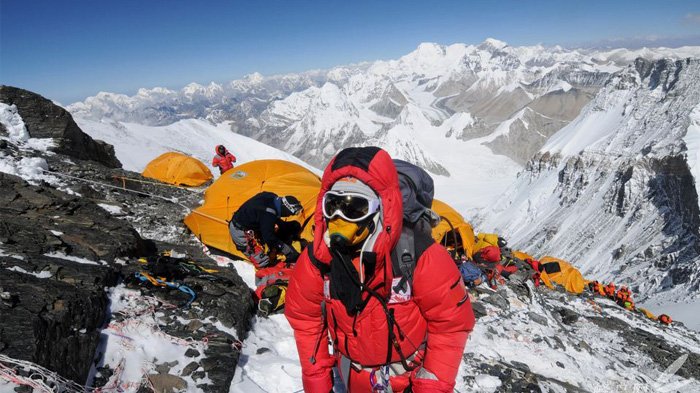 Mt.Everest climbing
Best Time to See the Summit of Mount Everest: April, May, September, and October
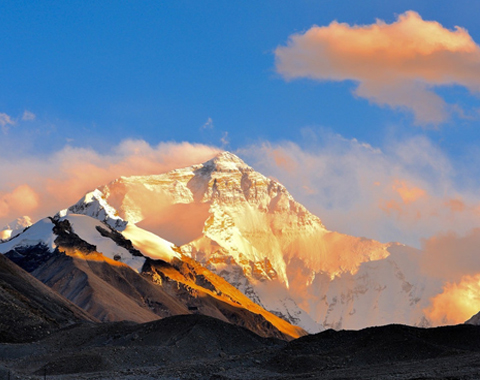
For ordinary tourists, taking a Tibet Everest Base Camp tour is the best option for seeing the peak of Everest without climbing or trekking. It’s possible to drive all the way from Lhasa right up to the base camp. From the Everest Base Camp in Tibet, there is a clear and unobstructed view of the summit of Mount Everest. You can stay overnight to witness the awesome sight of sunset and sunrise over Mount Everest and see the mountain against the backdrop of the glowing Milky Way.
Spring and autumn, particularly from April to May and September to October, are the best times to visit Everest Base Camp in Tibet. The milder weather and warm daytime temperatures make for pleasant outdoor conditions. Clear skies with great visibility are the norm for these seasons, so you are almost guaranteed a great view. Summer is warmer, but the peak is often obscured by clouds. Winter has the clearest views, but even at EBC, temperatures never rise above 0°C.
Join our popular Everest Base Camp tour to reach the top of the world!
Conclusion
While Mount Everest is perpetually cold, the unique climate in Mount Everest has dynamic weather throughout the year. Brief periods of calm arrive in the spring and autumn, opening up the sought-after climbing windows for people wanting to reach the peak.
Less exposed to freezing temperatures and strong winds, the Everest Base Camp at a lower altitude offers you a great chance to experience the majesty of Mount Everest without the risks of climbing. A Lhasa to Everest Base Camp tour allows you to enjoy stunning views of Mount Everest and the Himalayas in one go. With milder weather and extended periods of clear visibility, it is a popular year-round tour in Tibet.

With exceptional passion and outstanding leadership, Mrs. Catherine has dedicated herself to Tibet inbound tourism and China tour for 15 years. As one of the handful females who see great potential of Chinese inbound tourism, Catherine has made great contribution to promoting Tibet tourism and enhancing the employment of Tibetans and prosperity of local Tibetan community.
Over the years, she travelled overseas with Tibet Tourism Bureau many times to promote Tibet tourism. Currently, Catherine works as the marketing director of Tibet Vista, an opinion leader behind the whole team of Tibet Vista.
 Email me about your travel idea
Related Articles & Posts

Most Popular Tibet Tour Packages
-
Lhasa - Gyantse - Shigatse - Everest Base Camp - Shigatse - Lhasa
USD949
View Details -
Lhasa - Gyantse - Shigatse - E.B.C - Saga - Kailash Trek - Darchen - Lake Manasarovar - Saga - Gyirong - Tingri - Lhasa
USD2069
View Details -
10 Days Lhasa to Everest Base Camp, Namtso Lake and Holy Elephant Gate Small Group Tour
Lhasa - Gyantse - Shigatse - EBC - Shigatse - North Tibet Grassland - Bange - Namtso Lake - Holy Elephant Gate - Lhasa
USD1299
View Details -
8 Days Driving Across Himalaya Overland Adventure from Kathmandu to Lhasa
Kathmandu - Gyirong - Everest Base Camp - Tingri - Shigatse - Gyantse - Lhasa
USD1019
View Details -
4 Days Lhasa Impression Small Group Tour: Explore the Heart of Tibet and Mingle with the Locals
Lhasa
USD509
View Details -
Lhasa - Gyantse - Shigatse - Everest Base Camp - Gyirong - Kathmandu
USD989
View Details -
Lhasa - Gyantse - Shigatse- Lhasa
USD799
View Details -
Lhasa - Gyantse - Shigatse - EBC - Saga - Darchen - Kailash Trek - Darchen - Saga - Gyirong - Kathmandu
USD2069
View Details
0 Comment ON "How Cold is Mount Everest Peak? Weather and Temperatures on the Top of Everest"


The Coldest Temperature recorded on top of Mt. Everest Was -41°C (-42°F)
The High Altitude Greatly Affects the Temperature of Mount Everest
Jet Streams also Amplify the Cold Temperatures at the Top of Mount Everest.
Best Time to Climb Mount Everest: Between Monsoon Seasons in April and May
Best Time to See the Summit of Mount Everest: April, May, September, and October