
 Search
.jpg "Tibetan Local Travel Agency")


Holy Lakes in Tibet: Don’t Miss One in Your Tibet Tour
Mountains and lakes in Tibet are always regarded as sacred sites by Tibetan people. If you travel to Tibet, do not miss the holy sites in Tibet. It is said that you have never been to Tibet if you haven't ever visited one of the spectacular Tibet attractions - the top three holy lakes in Tibet.
The top three holy lakes in Tibet are Namtso Lake, Manasarovar Lake, and Yamdrok Lake. It is highly recommended to visit at least one of the sacred lakes on your Tibet tour.
 1. What is a Holy Lake in Tibet?
2. The Most Sacred Lake in Tibet: Manasarovar Lake
3. The Most Popular Holy Lake in Tibet: Namtso Lake
4. The Nearest Holy Lake to Lhasa: Yamdrok Lake
1. What is a Holy Lake in Tibet?
There are over 1,000 lakes in Tibet and a lake can be called a ‘holy lake’ always due to its spiritual significance in religious traditions. Some holy lakes are believed to be a source of divine energy and a place of purification, where pilgrims can wash away sins and seek spiritual renewal, while some lakes are named after local myths and legends.
Among the numerous lakes in Tibet, the most famous holy lakes are Manasarovar Lake, Namtso Lake, and Yamdrok Lake. Each of these stunning bodies of water not only boasts breathtaking landscapes but also holds profound religious significance for local Tibetans. These lakes serve as vital spiritual sites, attracting pilgrims who seek connection with the divine amidst their awe-inspiring beauty.
2. The Most Sacred Lake in Tibet: Manasarovar Lake
Located at the foot of Asia’s holiest mountain Kailash, the Manasarovar Lake is the most sacred lake in Tibet. Similar to Mount Kailash, Manasarovar Lake is also considered sacred by Hindus, Buddhists, and Jains. For pilgrims, it is a lifetime goal to take a Kailash Manasarovar yatra. They believe that bathing in its waters can cleanse themselves of sins and bring blessings and enlightenment.
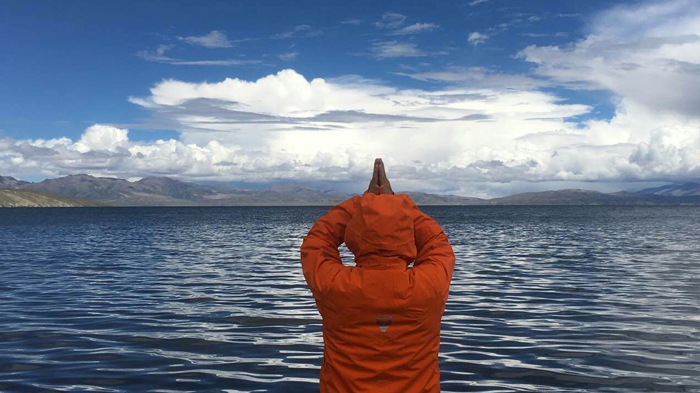 The Most Sacred Manasarovar Lake is a lifelong destination for many pilgrims.
The stunning natural landscape surrounding Manasarovar Lake enhances its significance. As the largest freshwater lake with the most transparent water in China, Manasarovar Lake offers stunning views, particularly with the majestic Mount Kailash in the background. This captivating scenery attracts not only spiritual seekers but also ordinary tourists, who come to admire its beauty and serenity.
Located in the Ngari region in far western Tibet, Manasarovar Lake is the most difficult to reach of the three holiest lakes in Tibet. It is around 1,193 kilometers away from Lhasa and about 805 kilometers away from Kathmandu by land. You can stop by Manasarovar Lake before or after visiting Mount Kailash.
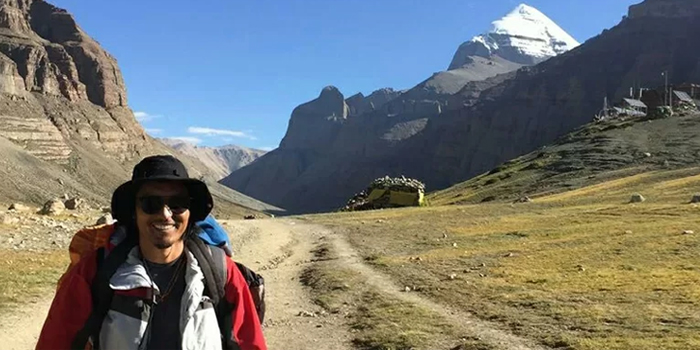

The best time to visit Manasarovar Lake is from late April to early October, during which the weather is generally milder and more stable, with temperatures ranging from comfortable to pleasant cool. The skies are often clear, providing breathtaking views of the lake and surrounding mountains. If you want to experience a more spiritual atmosphere, you can visit Manasarovar Lake and Mount Kailash during the Saga Dawa Festival, which is the most important festival in this region.
3. The Most Popular Holy Lake in Tibet: Namtso Lake
Namtso Lake is the most frequently visited among the three holy lakes and also one of the must-see Tibet attractions. Located at an altitude of 4,718 meters, it is the highest saltwater lake in the world. It is said that Namtso Lake enjoys the purest blue water in the world. The vast expanse of clear blue lake water reflects the crystal blue sky, you can't even tell which is the lake and which is the sky. With the inverted reflection of the towering Nyenchen Tanglha which is located in the south of the lake, Namtso Lake appears more charming and graceful.
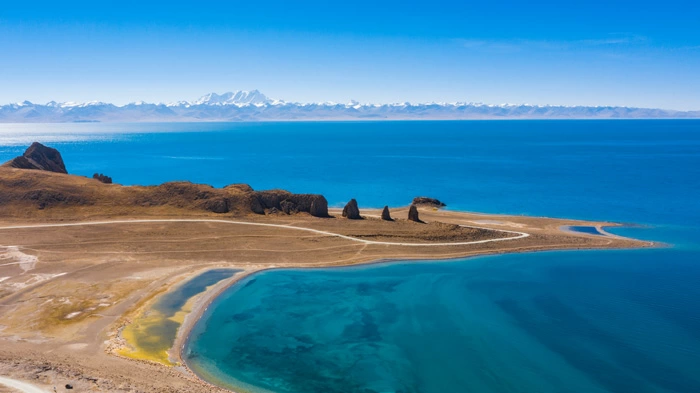 The holy Namtso Lake with Nyenchen Tanglha Mountain in the background.
A legend says that Namtso Lake and the Nyenchen Tanglha Mountain are snuggled lovers. The lake, with its bright blue waters, represents the gentle spirit of a goddess, while the mountain stands tall as her strong protector.
Located around 250 kilometers north of downtown Lhasa, the journey takes about 4 to 5 hours, En route, you can witness the vast grassland of northern Tibet and cross the Lagenla Pass at 5,190 meters above sea level.
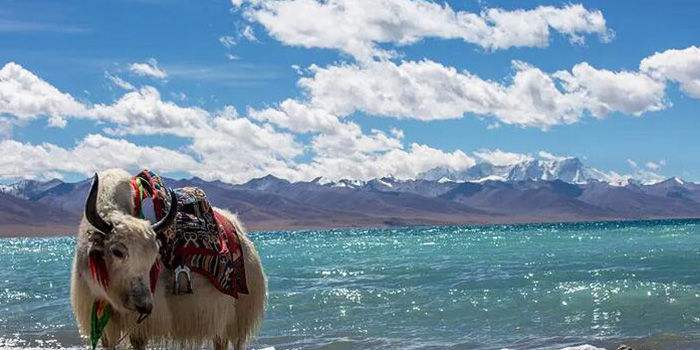
Namtso Lake can be visited all year round except in winter. From November to late March, temperatures can drop significantly, and the road to Namtso Lake may be blocked due to heavy snow. So, try to avoid visiting Namsto Lake in winter.
The best time to visit Namtso Lake is from late May to early October. During this period, the mild temperatures and clear skies make it pleasant to enjoy a leisurely walk around the lakeside. Additionally, the summer months (June, July, and August) are the peak season for visiting Namtso Lake. During this time, northern Tibet's grasslands come alive with yaks and sheep grazing on lush greenery. The horse racing festival in the Nagqu area attracts many locals and tourists. Additionally, summer is the best season for birdwatching at Namtso, making it an ideal time to experience the region's vibrant wildlife and culture.
4. The Nearest Holy Lake to Lhasa: Yamdrok Lake
On the way from Lhasa to Gyantse, you will see the stunning turquoise holy lake Yamdrok. The Yamdrok Lake means the "Jasper Lake" in the Tibetan language, there are numerous lake crossings of the Yamdrok Lake, like the corals. Thus, Yamdrok Lake has other beautiful and vivid names like Coral Lake or Green Jade Lake. The former name is because of its irregular shape- with many short streams winding into the nearby mountains thus looks like the coral. The latter refers to the beautiful appearance of the lake's pure clean water, just like the surface of a fine jade.
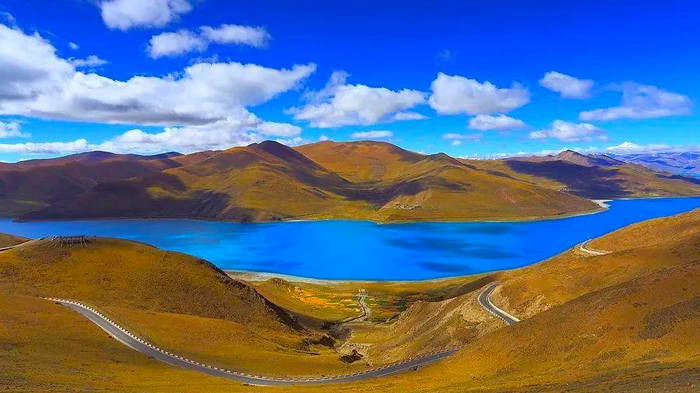 The turquoise Lake Yamdrok.
According to folklore, Yamdrok Lake was created by a fairy from Heaven. Local pilgrims believe that doing a kora around the lake is equivalent to a pilgrimage to the holy city of Lhasa. By doing so, they can receive good luck and blessings for the entire year.
Nowadays, Yamdrok Lake is a popular tourist spot on the tour from Lhasa to Everest Base Camp. You can stop at the viewpoint for a short break to enjoy the stunning views of this turquoise lake. If you only have a few days to spend in Lhasa and its surroundings, you can also take a day tour of Yamdrok Lake. On a day tour, you can fully explore the lake from various viewpoints, visit the isolated monastery on the island, and meet a local family in a lakeside village.
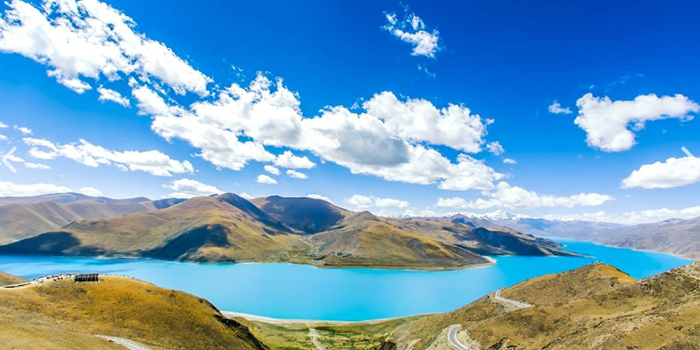
Yamdrok Lake can be visited year-round. Even in winter, the frozen lake offers a uniquely peaceful scene. Regardless of the season, you’ll experience something special. The lake's waters reflect different shades of blue depending on the sunlight, making each moment you visit truly unique.
Watch the video to see the highlights of visiting Yamdrok lake in Tibet.
5. Do’s and Don’ts when visiting a Holy Lake in Tibet
While visiting the holy sites in Tibet, please respect the local culture and religions.
Do follow the clockwise direction when taking a kora around the holy lake in Tibet. Following this direction demonstrates respect for the customs and beliefs of the local community, fostering a deeper connection to the spiritual significance of the site.
Do ask for permission before taking photos of local pilgrims. Respect their privacy and cultural customs and always approach them with kindness and appreciation for local traditions.
Do carry out any waster you bring in and don’t litter when you visit a holy lake in Tibet. Maintaining the pristine environment is essential for preserving the natural beauty and spiritual significance of these sacred sites.
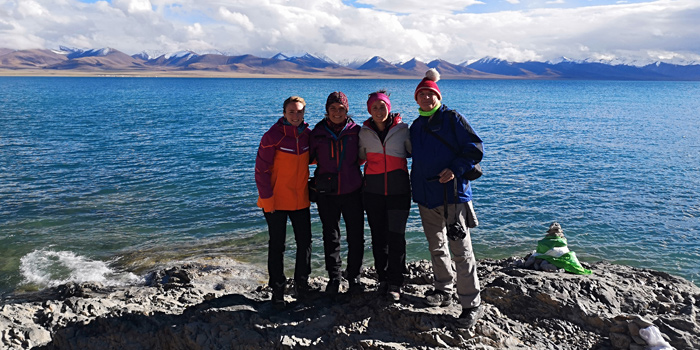
Don’t swim in holy lakes in Tibet. It is typically considered disrespectful to the local beliefs and traditions. These lakes are viewed as sacred spaces, and swimming can be seen as a violation of their spiritual significance.
Don’t touch the mani stones at the lakeside. These stones are highly revered in Tibetan Buddhism and serve to accumulate merit and blessings. Touching them can be seen as disrespectful and may disturb the spiritual energy and intentions behind them.
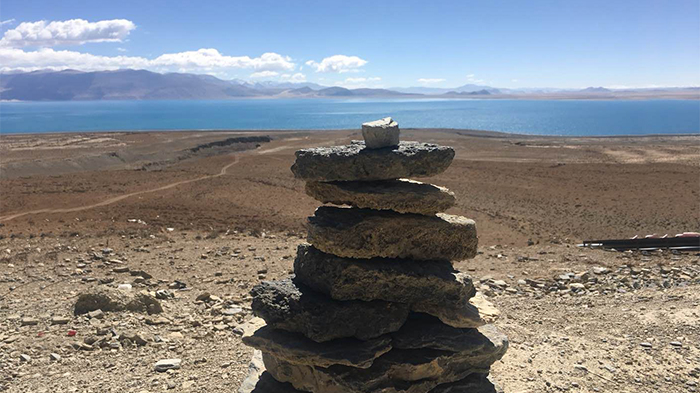 Please don't touch the sacred mani stones when visiting a holy lake.
Conclusion
There are more than 1,000 lakes in Tibet, among which Namtso Lake, Yamdrok Lake, and Manasarovar Lake are the three most famous holy lakes. Most tourists who come to Tibet will at least visit one of the three holy lakes. These holy lakes not only offer breathtaking views of the unique beauty of the Tibetan Plateau but also serve as sacred places for experiencing Tibetan religious culture. If you have any thoughts about visiting holy lakes in Tibet, feel free to share your travel ideas with us.

Exceedingly approachable, attentive, and knowledgeable, Pasang exemplifies what a top-notch local Tibetan guide can be. Based on his 20+ years of guide experience, Pasang knows how to flexibly rearrange a traveler’s itinerary to make it comfortable for travelers during long rides. He always checked in with each traveler to make sure they were feeling well due to the altitude.
Besides, Pasang’s encyclopedic knowledge of Tibetan culture & history helps travelers easily navigate through the mysterious Tibetan monasteries and old streets, etc. When Pasang unwinds, he also enjoys sharing his expertise by writing travel articles.
 Email me about your travel idea
Related Articles & Posts

![Tibet Yamdrok Lake Tour [!year_txt!]: 10 Local Tips to Remember](https://data.tibettravel.org/assets/images/yamdrok-lake/ride-tibetan-yaks-in-yamdrok-lake480.webp)
-
Lhasa - Gyantse - Shigatse - Everest Base Camp - Shigatse - Lhasa
USD949
View Details -
Lhasa - Gyantse - Shigatse - E.B.C - Saga - Kailash Trek - Darchen - Lake Manasarovar - Saga - Gyirong - Tingri - Lhasa
USD2069
View Details -
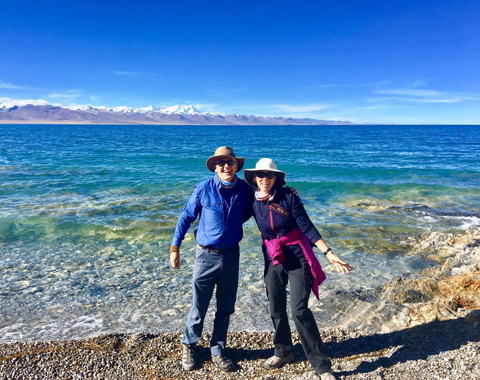
10 Days Lhasa to Everest Base Camp, Namtso Lake and Holy Elephant Gate Small Group Tour
Lhasa - Gyantse - Shigatse - EBC - Shigatse - North Tibet Grassland - Bange - Namtso Lake - Holy Elephant Gate - Lhasa
USD1299
View Details -
8 Days Driving Across Himalaya Overland Adventure from Kathmandu to Lhasa
Kathmandu - Gyirong - Everest Base Camp - Tingri - Shigatse - Gyantse - Lhasa
USD1019
View Details -
4 Days Lhasa Impression Small Group Tour: Explore the Heart of Tibet and Mingle with the Locals
Lhasa
USD509
View Details -
Lhasa - Gyantse - Shigatse - Everest Base Camp - Gyirong - Kathmandu
USD989
View Details -
Lhasa - Gyantse - Shigatse- Lhasa
USD799
View Details -
Lhasa - Gyantse - Shigatse - EBC - Saga - Darchen - Kailash Trek - Darchen - Saga - Gyirong - Kathmandu
USD2069
View Details
0 Comment ON "Holy Lakes in Tibet: Don’t Miss One in Your Tibet Tour"

