
 Search
.jpg "Tibetan Local Travel Agency")


Everest Trek via the Gama Valley (East Slope): Complete Guide to Routes, Itinerary, Costs & Best Seasons
Trekking through the Gama Valley offers one of the most intimate and least-traveled approaches to Mount Everest.
Located on the mountain’s eastern slope, this route leads you toward the dramatic Kangshung Face, an immense and rarely seen wall of Everest that only a handful of trekkers encounter.
Unlike the busier trails in Nepal or the classic Tibet-side access to the North Base Camp, the Gama Valley remains remote, pristine, and quiet. As you enter the Gama Valley, the landscape unfolds in a gradual but dramatic sequence.
The lower valley begins with forests, waterfalls, and river-fed meadows. As the trail rises, these give way to alpine basins, hanging glaciers, and wide-open high meadows and orchid valley. The upper valley eventually leads into a vast glacial amphitheater facing Everest.
This guide provides everything you need to prepare for the trek, including route breakdowns, day-by-day itineraries, altitude insights, safety tips, packing recommendations, costs, and the best time to visit.
Key Takeaways
- The Gama Valley offers rare access to Everest’s Kangshung Face.
- A remote, quiet trek far from commercial routes.
- Features diverse landscapes: forests, waterfalls, glaciers, and high meadows.
- Best for trekkers seeking wilderness, challenge, and solitude.
- This guide includes all essential planning information.
Content
Overview: What Makes the Gama Valley Trek Distinctive
The Most Recommended Itinerary: 15-Day Everest Gama Valley Trek
Classic 8-Day Gama Valley Trekking Route (On-foot section only)
Who Is This Trek For? (And Who Should Avoid It?)
How to Reach the Trek Starting Point: Lhasa → Shigatse → Tingri → Youpa Village
Trek Difficulty: Is the Gama Valley Everest Trek Hard?
Altitude on the Everest Trek along the Gama Valley
Best Time for the Gama Valley Trek (Weather & Visibility Guide)
Gama Valley Trek Cost: How Much Should You Budget?
Required Permits for the Everest Trek along the Gama Valley
Packing List for the Gama Valley Trek
Why Choose Tibet Vista for the Everest Trek along the Gama Valley
Overview: What Makes the Gama Valley Trek Distinctive
Why the Gama Valley Stands Out
The Gama Valley, located on the eastern slope of Mount Everest, is widely regarded as one of the most scenic and ecologically diverse valleys in the Himalaya.
What makes it exceptional is the combination of dramatic landscapes, rare access to Everest’s Kangshung Face, and a level of tranquility rarely found on other Everest routes.
A Valley of Contrasting Environments
As trekkers move deeper into the valley, the scenery shifts dramatically:
- Lower Valley: forests, meadows, grazing lands
- Mid Valley: waterfalls, alpine basins, wildflowers
- Upper Valley: glaciers and vast views of Everest’s east face
Cultural and Natural Richness
Seasonal Sherpa and Tibetan settlements dot the valley, offering insight into Himalayan pastoral life. Botanists often visit the region for its orchids and rare alpine species, especially in late spring.
Why This Matters for Trekkers
You experience Everest in a quieter, more immersive way, no crowds, no commercialization, just pure Himalayan wilderness.
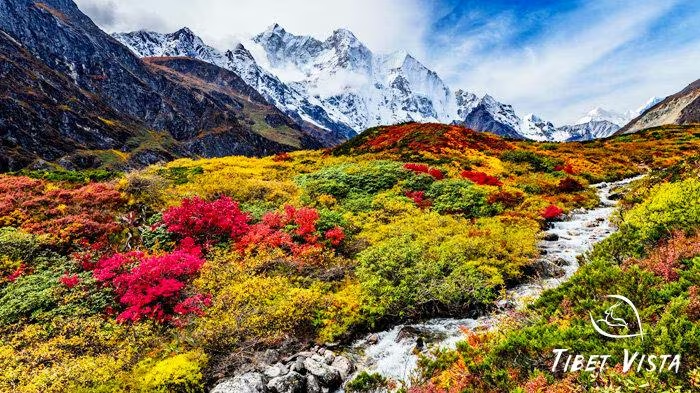 Gama Valley is considered one of the most beautiful valleys in the world.
Key Takeaways
- One of the most scenic and ecologically diverse valleys in the Himalaya.
- Offers rare access to Everest’s dramatic Kangshung Face.
- Features distinct landscape zones, each visually unique.
- Rich in botanical diversity, especially in spring.
- Ideal for trekkers seeking solitude and pristine wilderness.
The Most Recommended Itinerary: 15-Day Everest Gama Valley Trek
This 15-day itinerary for the Gama Valley trek combines both the trek and essential acclimatization and travel time, ensuring a comfortable and enjoyable journey.
It offers 8 days of trekking through the stunning landscapes of the Gama Valley, with the additional time for acclimatization in Lhasa and transportation between key points.
| Day | Route / Activity | Approx. Altitude | Key Highlights |
| Day 1 - 2 | Arrive in Lhasa and Lhasa Tour | 3,650 m | Rest, acclimatize, Potala Palace, Jokhang Temple |
| Day 3 | Lhasa → Gyantse → Shigatse | 3,800 m | Yamdrok Lake, Karo La Glacier |
| Day 4 | Shigatse → Tingri → Chutang → Youpa Village | 4,700 m | Trek starting point |
| Day 5 - 12 | Trek Through Gama Valley | ~4,800 m | Meadows, Sherpa Villages, Snow peaks, Rivers |
| Day 13 | Return to Shigatse | 3,800 m | Drive to Shigatse |
| Day 14 - 15 | Shigatse → Lhasa → Departure | 3,650 m | Yalong Valley |
Key Takeaways
- The trek includes 8 days of trekking inside the Gama Valley
- Altitude builds gradually: 3,650 m → 5,344 m
- The journey includes cultural sightseeing + wilderness trekking
- The Kangshung Face viewpoint on Day 9 is the main highlight
- Proper acclimatization is built into the itinerary
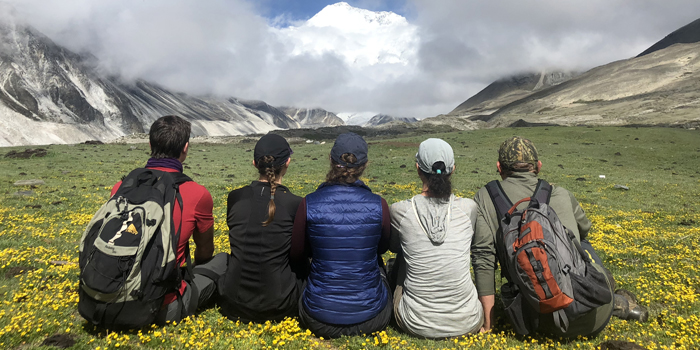

Join our 15 days Gama Valley trekking tour to uncover the best of Everest’s east slope
Classic 8-Day Gama Valley Trekking Route (On-foot section only)
As one of the best trekking routes in Tibet, the Gama Valley trek unfolds through a series of distinct landscape zones as you travel deeper toward Everest’s eastern face. https://www.tibettravel.org/tibet-travel-advice/best-tibet-trek-routes.html
Each day presents new terrain, new ecological environments, and progressively higher altitude. This section breaks down the 8-day trekking route in a clear, structured format. Route Summary Table
| Trek Day | Route Segment | Approx. Altitude | Terrain Type | Key Highlights |
| Day 1 | Youpa → Showo-tso | 4,700 → 4,800 m | Meadows, riverbanks | Gentle start, diverse vegetation |
| Day 2 | Showo-tso → Dolshang | 4,800 → 4,900 m | Alpine basins | Waterfalls, open valleys |
| Day 3 | Dolshang → Tangsung Viewpoint | 4,900 → 5,000 m | Gradual ascent | Expansive Himalayan vistas |
| Day 4 | Tangsung → Paltang | 5,000 → 5,050 m | Moraine, glacier foothills | Entering high-alpine terrain |
| Day 5 | Paltang → Kangshung Face → return | 5,200 m | Glacier amphitheater | Closest view of Everest’s East Face |
| Day 6 | Paltang → Tangsung | 5,050 → 5,000 m | Descending trail | New views on return |
| Day 7 | Tangsung → Tsosho-rim | 5,000 → 4,850 m | Wetlands, pastures | Yak grazing areas, wildlife |
| Day 8 | Tsosho-rim → Nangma-la Pass → Lhundupling | 4,850 → 5344m→ 4,700 m | Lower valley terrain | Final descent through forest edge |
Trek Summary
- Total Distance: 110 kilometers (approximately)
- Trekking Days: 8 days of hiking
- Highest Point: Nangma-la Pass (5,344 meters)
- Difficulty Level: Moderate to Challenging
- Altitude Range: From 4,700 meters (Youpa Village) to 5,344 meters (Nangma-la Pass)
- Average Trekking Hours: 6 - 8 hours per day
- Terrain: Varies from lush forest trails to rocky, glacier-scraped paths
Who Is This Trek For? (And Who Should Avoid It?)
The Gama Valley Everest Trek is a rewarding journey through some of the most remote and breathtaking landscapes in Tibet. However, it is not suitable for everyone.
Here’s a breakdown of the ideal trekkers and those who may want to reconsider this route based on physical and altitude requirements.
Ideal For:
1. Experienced Trekkers
- Previous trekking experience at high altitudes (preferably above 3,500 meters).
- Those who are comfortable with long, challenging days of hiking in rugged terrain.
- If you've done treks like Annapurna Circuit or Manaslu in Nepal, this trek will suit your level.
2. Adventurers Seeking Remote Routes
- Trekkers who want to escape the crowds of traditional Everest Base Camp routes and explore the quieter East Slope of Everest.
- Ideal for those who appreciate solitude and want to experience untouched landscapes.
3. Physically Fit Hikers
- Must be in excellent physical condition, able to hike 6–8 hours a day with substantial elevation gain.
- Daily trekking involves high-altitude conditions and significant elevation changes.
Not Ideal For:
1. Beginners or First-Time Trekkers
- If you have little or no trekking experience, the Gama Valley trek may be too demanding.
- It is recommended to gain high-altitude trekking experience (e.g., through Nepal’s Ghorepani Poon Hill trek or Langtang trek) before attempting the Gama Valley route.
2. Those Not Comfortable with High Altitudes
- The trek reaches Everest Base Camp in the east slope at 5,310 meters, and trekkers will spend several days at high altitudes, where oxygen levels are thin.
- If you’re prone to altitude sickness in Tibet or have not adapted well to high altitudes before, this trek might not be suitable.
3. Travelers Who Prefer Luxury
- This trek involves basic accommodation and camping at times.
- If you are used to luxury or hotel-style accommodations, this trek may feel uncomfortable.
| Category | Recommendation | Notes |
| Physical Fitness | Experienced trekkers | High endurance, 6–8 hours/day hiking |
| Altitude Experience | Prior high-altitude experience | Must handle 4,700–5,200 m |
| Terrain Type | Rugged, steep inclines | Includes moraines, rocky terrain, glaciers |
| Accommodation Type | Basic camping | No lodges or tea houses |
| Health Conditions | Must be physically fit | Heart, lungs, and joints must be strong |
| Experience Type | Remote, wilderness trekking | Expect isolation and minimal human interaction |
Key Takeaways:
- Best for: Experienced trekkers, adventure seekers, nature lovers, and photographers in good physical condition.
- Avoid if: You are a beginner, have health concerns related to altitude, prefer luxury, or seek an easy trek.
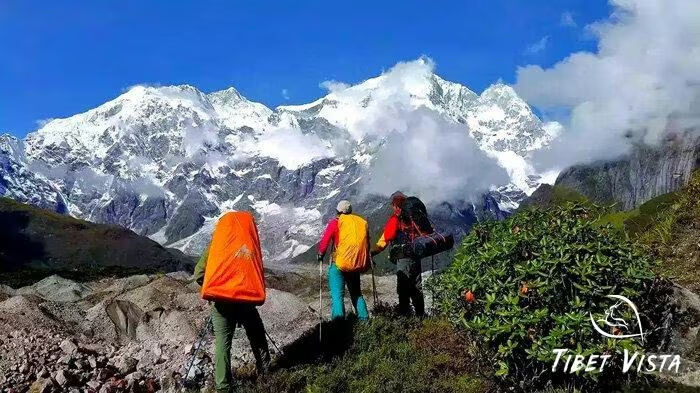 Our guests visit breathtaking landscapes druing Gama Valley trekking tour.
Gama Valley was praised as one of the Top Ten Landscapes in the world
How to Reach the Trek Starting Point: Lhasa → Shigatse → Tingri → Youpa Village
Your Journey Begins in Lhasa
Reaching the Gama Valley involves a combination of overland travel and a short approach drive before the trekking route officially starts.
Most travelers arrive in Lhasa, the capital of Tibet, either by flight or via the high-altitude Qinghai-Tibet Railway. Spending at least two days for a Lhasa tour is essential for acclimatization before heading into higher terrain.
Step 1: Travel from Lhasa to Shigatse (3,800 m)
The first stage of the journey takes you southwest across the Tibetan Plateau. Along the way, you’ll pass several iconic landmarks:
- Yamdrok Lake, one of Tibet’s three holy lakes
- Karo La Glacier, descending directly toward the highway
- Gyantse, home to the historic Kumbum Stupa
This scenic drive helps you gradually adjust to higher elevations while experiencing classic Tibetan landscapes.
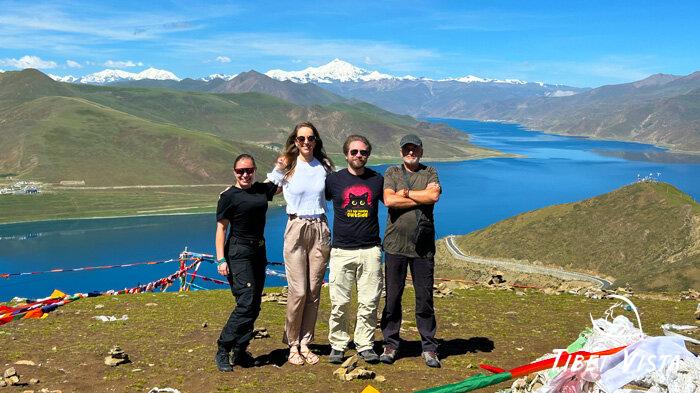 Our guests visit the turquoise Yamdrok Lake during Lhasa to Gama Valley tour.
Step 2: Shigatse to Tingri (4,300 m)
Leaving Shigatse, the road continues toward Tingri county, a small town on the Himalaya’s northern edge. The landscape opens dramatically here, revealing distant views of Everest, Lhotse, and Makalu on clear days. Tingri serves as your gateway to the trekking region.
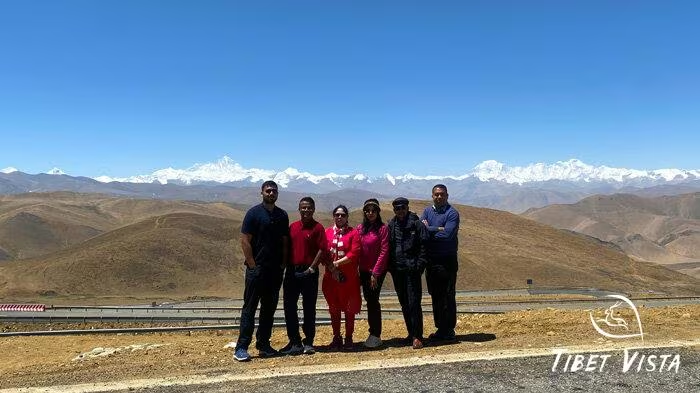 Our guests visit the Himalayan Range at Gawula Pass.
Step 3: Drive to Youpa Village — Starting Point of the Trek (4,700 m)
From Tingri, a rougher mountain road leads toward Chutang and finally Youpa Village, where the Gama Valley trek officially begins. This is where you meet the local logistics team, cooks, yak handlers, and additional support staff, who accompany you into the remote valley.
Why This Multi-Stage Approach Matters
- Ensures progressive altitude acclimatization
- Provides access to essential gear checks and supplies
- Allows your guide team to assess weather and trail conditions
- Reduces risks before entering the valley’s more isolated sections.
Travel Time Summary
| Segment | Duration | Notes |
| Lhasa → Shigatse | 6–7 hours | Scenic drive via Yamdrok Lake |
| Shigatse → Tingri | 4–5 hours | Opens toward Himalayan range |
| Tingri → Youpa Village | 2–3 hours | Off-road section, trek begins here |
Key Takeaways
- Gama Valley treks begin in Lhasa for acclimatization.
- Overland travel to Shigatse and Tingri offers iconic Himalayan scenery.
- Youpa Village marks the official trail start at 4,700 m elevation.
- The staged approach is designed to maximize safety and proper acclimatization.
Trek Difficulty: Is the Gama Valley Everest Trek Hard?
The Gama Valley Everest Trek is a moderate to challenging trek, suitable for experienced trekkers. It involves rugged terrain, high altitudes, and long trekking days. Here’s what to expect:
Physical Difficulty:
- Daily Trekking Hours: 6–8 hours
- Distance: 15–20 km per day
- Terrain: Rocky paths, glacier fields, and steep ascents. This trek requires good stamina, but no technical climbing skills. It’s physically demanding due to long hours of hiking at high altitudes.
Weather and Terrain Challenges:
- Weather: Expect cold nights and strong winds at higher altitudes. Winter-like conditions are common.
- Terrain: The path is rugged and uneven, trekking poles are recommended for stability.
Is This Trek Right for You?
- Best for: Experienced trekkers with high-altitude experience.
- Avoid if: You’re a beginner or have not trekked at high altitudes before.
- Click here to see How to Prepare for Trekking in Tibet
| Category | Rating | Notes |
| Physical exertion | ★★★★☆ | Long days; elevation adds stress |
| Altitude challenge | ★★★★★ | Sustained 4,700–5,200 m exposure |
| Terrain difficulty | ★★★★☆ | Moraines, uneven trails, occasional steep sections |
| Weather exposure | ★★★★☆ | Cold nights, high winds |
| Logistical support needed | ★★★★★ | Remote region; requires full expedition support |
Altitude on the Everest Trek along the Gama Valley
The trek reaches 5,310 meters at Everest Base Camp in the east slope, and trekkers will spend much of their time at altitudes above 4,000 meters. Here’s what you need to know to stay safe and enjoy your trek in Tibet.
Altitude Profile:
Is This Trek Right for You?
- Lhasa: 3,650 meters
- Shigatse: 3,900 meters
- Tingri: 4,300 meters
- Youpa Village: 4,700 meters
- Everest Base Camp in the east slope: 5,310 meters
- Nangma-la Pass: 5,344 meters
Acclimatization Tips:
- Spend 2-3 days in Lhasa to adjust to the altitude before trekking.
- Take it slow: Gradual ascent helps your body adapt.
- Stay hydrated and eat high-calorie foods to maintain energy.
| Season | Conditions | Visibility | Temperature | Suitability |
| Spring (Apr–Jun) | Stable and crisp | High | Mild days / cold nights | Excellent |
| Excellent | Dry, crisp, stable | Highest | Mild–cool | Best overall |
| Monsoon (Jul–Aug) | Cloudy, wet | Low–variable | Cool–humid | Poor (except botany) |
| Winter (Nov–Mar) | Cold, windy | Clear but harsh | Very cold | Not suitable |
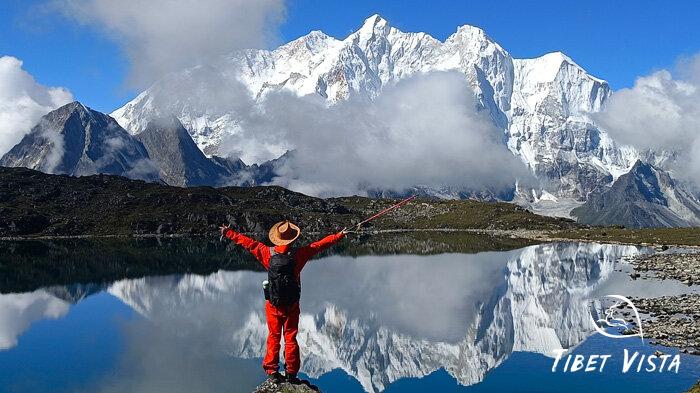 Visit Mount Everest east slope in Gama Valley.
Best Time for the Gama Valley Trek (Weather & Visibility Guide)
The best seasons to trek in Tibet are spring and autumn, but each season brings its own unique features. Here’s a breakdown of the best times to trek the Gama Valley and what to expect from the weather.
Spring (April–June):
- Weather: Mild daytime temperatures, ranging from 10°C to 15°C at lower altitudes. Nights can get cold, with temperatures dropping below freezing at higher elevations.
- Visibility: Excellent views of the Everest East Slope and surrounding peaks due to clear skies.
- Trekking Conditions: Snow may still be on the ground at higher altitudes, but the weather is stable, making it an ideal time for trekking.
Why Spring?: This season offers the best of both worlds: moderate temperatures for trekking and the chance to witness the blooming wildflowers and lush green valleys.
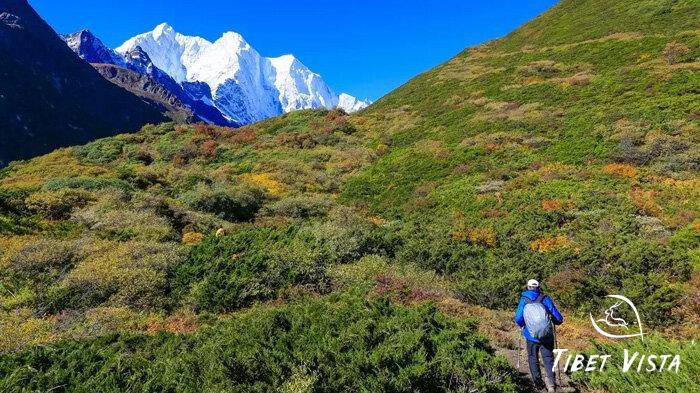 Spring is the best time to Gama Valley trekking tour.
Autumn (September–October):
- Weather: Crisp mountain air and stable weather. Daytime temperatures range from 10°C to 17°C, and nighttime temperatures can drop to below freezing at higher altitudes.
- Visibility: The clearest skies of the year, making it the best time for photography of Everest and the surrounding peaks.
- Trekking Conditions: With dry conditions and minimal rain, the trail will be in its best condition.
Why Autumn?: This is the peak trekking season in Nepal and Tibet due to the perfect weather conditions and stunning mountain views, with clear visibility and dry paths.
Monsoon (July–August):
- Weather: This is the rainy season in the Himalayas. Expect frequent showers and cloudy skies, especially in the late afternoons.
- Visibility: Poor visibility due to cloud cover and haze. Not ideal for photography or panoramic views of Everest.
- Trekking Conditions: The trail may be slippery, and some areas could be prone to landslides.
Why Avoid the Monsoon: The risk of poor visibility and slippery trails makes this season less ideal for trekking. If you choose to trek during monsoon, be prepared for unpredictable weather.
- Click here to see more details about visiting Tibet in rainy season
Winter (November–March):
- Weather: Very cold temperatures, with daytime highs ranging from –5°C to 10°C. Nights can get extremely cold, with temperatures dropping as low as –15°C or more.
- Visibility: Clear skies often provide stunning views of Everest, but it can be very windy, especially at higher altitudes.
- Trekking Conditions: Snow is common at higher elevations, and trekking conditions can be harsh due to extreme cold, strong winds, and shorter daylight hours.
Season Conditions Visibility Temperature Suitability Spring (Apr–Jun) Stable and crisp High Mild days / cold nights Excellent Autumn (Sep–Oct) Dry, crisp, stable Highest Mild–cool Best overall Monsoon (Jul–Aug) Cloudy, wet Low–variable Cool–humid Poor (except botany) Winter (Nov–Mar) Cold, windy Clear but harsh Very cold Not suitable
Key Takeaways:
- Best Time to Trek: Spring (April–June) and Autumn (September–October) offer the most pleasant trekking conditions and clear visibility for stunning views of Everest.
- Not ideal Time to Trek: Monsoon season (July–August) due to frequent rain and poor visibility.
- Winter: Not recommended for trekking because of harsh conditions and extreme cold, but winter is a great time to enjoy an regular Everest base camp tour with clear skies and low cost.
Gama Valley Trek Cost: How Much Should You Budget?
Here's a breakdown of what you should expect to pay, including options for group and private treks, as well as additional expenses.
Average Cost Breakdown
- Group Trek: For a group trek, you can expect to pay USD 2,890 per person for a small group tour. This price typically covers the trekking guide, transportation, accommodation, permits, and meals during the trek.
- Private Trek: A private trek will be more expensive, generally costing USD 3,500 to 4,500 per person depending on the number of participants, accommodation style, and additional services requested. Private treks offer a more personalized experience with a dedicated guide and vehicle.
What’s Included in the Trek Cost?
Most trekking agencies, including Tibet Vista, include the following in their trek package:
- Trekking Permits: Tibet Travel Permit, Aliens’ Travel Permit, Everest National Park Entrance Fee
- Accommodation: Hotels and guesthouses in Lhasa, Shigatse, Tingri; Camping and basic guesthouses along the trekking route.
- Meals: All meals during the trek.
- Trekking Guide: Experienced Tibetan guides with knowledge of the region and high-altitude safety protocols.
- Travel Insurance: It’s essential to have travel insurance with high-altitude coverage.
- Transport: Private vehicle for overland transport from Lhasa to Tingri and back, with the option of a 4WD vehicle to reach Youpa Village (the starting point of the trek).
Additional Costs to Consider
While most of the essentials are included, you should budget for the following optional and personal expenses:
- Tips: It’s customary to tip your guide and porters.
- Gear Rental: You can rent trekking gear (such as sleeping bags, trekking poles, climbing boots) if needed, with prices ranging from USD 10–30 per day.
- Snacks and Drinks: While meals are included, snacks, bottled drinks, and additional food items can be purchased during the trek. Expect to pay about USD 5–10 per day for extra food.
- Souvenirs: Small souvenirs from the local villages, including handmade crafts and Tibetan jewelry, usually range from USD 5 to 20.
- Porters or yaks: Carry your trekking gear (depending on the trekking style you choose).
Budgeting for the Trek
- Group Trek: USD 2,890 per person
- Private Trek: USD 3,500 to 4,500 per person
- Total Cost: This does not include flights to Lhasa, or extra snacks and souvenirs.
Tips for Saving on the Trek:
- Join a Group: Joining a group trek is the most affordable option, as costs are shared among multiple trekkers.
- Book Early: Prices can fluctuate, so booking in advance often guarantees the best rates.
- Minimize Extra Gear Rentals: If possible, bring your own gear to save on rental costs.
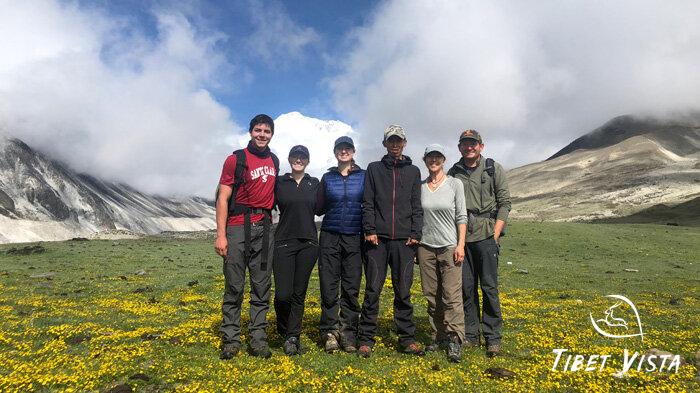 Join our Gama Valley group trekking tour with our Tibetan tour guide.
Join our Gama Valley trekking small group tour to uncover the Everest with lower cost
Required Permits for the Everest Trek along the Gama Valley
The Everest Gama Valley Trek requires two permits, as the trek takes you through restricted areas of Tibet. Here’s a breakdown of the necessary permits and how to secure them for your journey.
1. Tibet Travel Permit (TTP)
- How to obtain it: The TTP can only be obtained through a licensed tour operator. Tibet Vista will handle the application process for you after you provide your passport details and Chinese visa.
- What it covers: This permit allows you to enter Tibet and travel within Lhasa and Shigatse.
- Processing Time: It usually takes 10–15 days to process the TTP.
 Tibet travel permit is necessary to enter Tibet for travel.
2. Aliens' Travel Permit (ATP)
- How to obtain it: The Aliens' Travel Permit is issued by the Public Security Bureau (PSB) in Tibet, and can be arranged by your tour operator once you are in Tibet.
- What it covers: The ATP allows you to travel to restricted regions like Tingri, Rongbuk, and the Everest Base Camp area.
How Tibet Vista Helps with Permits
Tibet Vista handles the entire permit process for you. Once you book your Tibet tour with us, you’ll be required to provide a copy of your passport and Chinese visa. Tibet Vista will take care of the permit applications, ensuring you receive all the necessary documentation to travel to and trek in Tibet.
Accommodation Along the Route
Accommodation along the Gama Valley Everest Trek varies from basic guesthouses to camping, depending on where you are. The trek takes you through some remote areas, so while comfort is limited, you'll have everything you need to rest and recharge for the next day’s adventure.
Lhasa and Shigatse
Lhasa is your starting point, and here you'll find comfortable hotels ranging from budget to 5 star hotels like St.Regis and Shangri-la. The best accommodations in Lhasa have modern amenities, such as hot showers, oxygen supply and Wi-Fi, to ensure a comfortable stay.
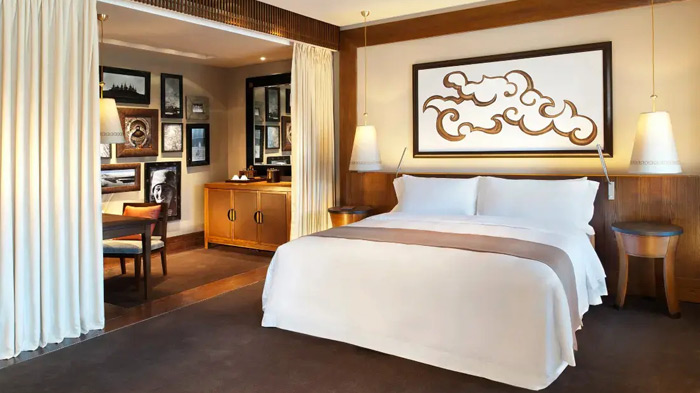 The sparkling clean St. Regis Lhasa Resort guest room.
Shigatse, Tibet's second-largest city, offers guesthouses and decent hotels like Hilton Shigatse. While these accommodations are simple, they provide a good rest before heading into the higher altitudes.
Tingri (4,300 meters)
The town of Tingri serves as the gateway to the trek, and here, you’ll stay in basic guesthouses with shared bathrooms and cold water. The accommodation is minimal but functional.
Youpa Village and Accommodation during the trek
At Youpa Village, the trek officially begins. You’ll stay in basic guesthouses or camp during this part of the trek. The accommodation is rudimentary, with shared spaces for meals and rest.
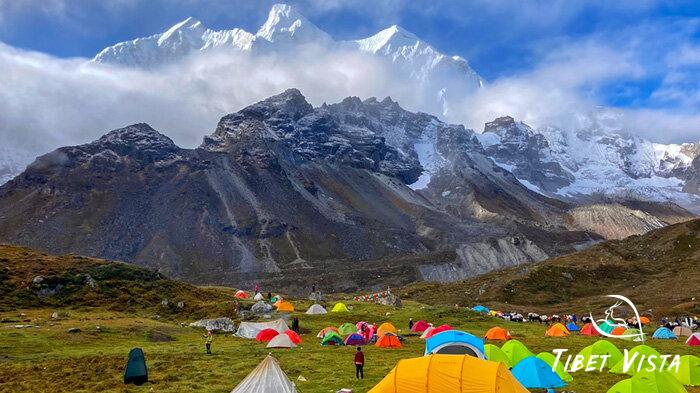 Camp at Gama Valley during trekking tour.
Key Notes:
- Accommodation in big cities like Lhasa and Shigatse has the majority options.
- Accommodation from Youpa village and during the trek is simple but sufficient for the journey.
Packing List for the Gama Valley Trek
With high-altitude trekking, varying weather conditions, and rugged terrain, it’s important to have the right gear and clothing to stay warm, dry, and well-prepared. Here’s what you need to bring for your journey.
1. Clothing
- Base Layer: Thermal tops and bottoms (merino wool or synthetic materials). Avoid cotton, which retains moisture.
- Mid Layer: A fleece jacket or down jacket to provide insulation in cold conditions.
- Outer Layer: Windproof and waterproof jackets and pants to protect against wind and rain.
- Trekking Pants: Quick-dry trekking pants that allow movement and flexibility.
Accessories:
- Warm hat and sun hat.
- Neck gaiter or buff for wind protection.
- Insulated gloves and lightweight trekking gloves for varied temperatures.
2. Footwear
- Trekking Boots: Waterproof, sturdy boots with good ankle support are essential for rocky and uneven paths. Make sure they’re broken in to prevent blisters.
- Trekking Socks: Wool or synthetic moisture-wicking socks to keep feet dry and warm.
- Camp Shoes: Lightweight sandals or slippers for comfort at the end of trekking days.
3. Trekking Gear
Your trekking gear should help you handle the long days, varying conditions, and ensure hydration and stability
- Trekking Poles: Collapsible poles to help with stability on rocky, uneven trails and to reduce strain on your knees.
- Daypack: A lightweight daypack (20-30L) to carry essential items like water, snacks, and your camera.
- Sleeping Bag: A high-altitude sleeping bag, rated for -10°C or lower to keep warm at night.
- Water Bottles / Hydration System: Insulated water bottles to prevent freezing, and a hydration system (Camelbak) for convenience during the hike.
4. Personal Items
These personal items will ensure your health and comfort during the trek.
- Sunscreen: High SPF sunscreen to protect against strong sun at higher altitudes.
- Lip Balm: Protect your lips with SPF lip balm.
- Toiletries: Wet wipes, toilet paper, and hand sanitizer for hygiene in remote areas.
- Click here to see the ultimate packing list for a Everest base camp tour
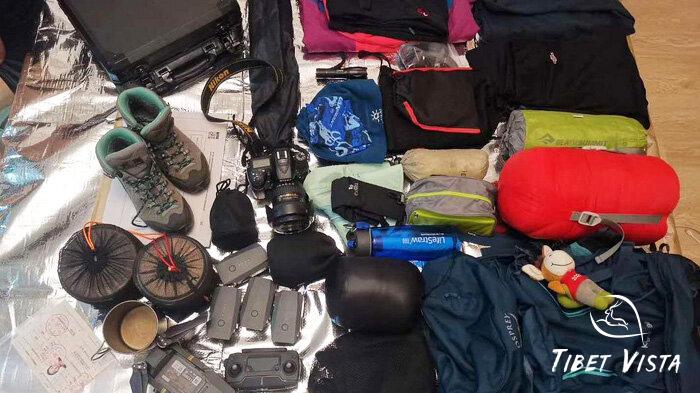 Packing list for the Gama Valley trek tour.
Why Choose Tibet Vista for the Everest Trek along the Gama Valley
Choosing the right operator is essential for a safe, comfortable, and memorable trek in the Gama Valley. Tibet Vista is the leading tour operators for trekking in Tibet, offering unparalleled expertise and a focus on safety, personalized service, and local knowledge.
1. Safety-First Approach
- Acclimatization: We prioritize proper acclimatization with planned rest days in Lhasa and Shigatse to reduce the risk of altitude sickness.
- AMS Prevention: Our guides are trained in AMS prevention and will monitor trekkers throughout the trek to ensure a safe journey.
- Emergency Support: In the unlikely event of an emergency, Tibet Vista is equipped with first-aid kits and has established protocols for high-altitude evacuations.
2. Small-Group and Private Treks
- We offer small-group tours (capped at 12 participants) for a more personalized experience. This allows for greater flexibility and one-on-one attention from your guide.
- For those seeking a more customized experience, we also offer private trekking tours, where you can enjoy a completely tailored itinerary based on your preferences.
3. Comprehensive Services
- Permits and Logistics: Tibet Vista handles all permits, including the Tibet Travel Permit, Aliens’ Travel Permit, so you don’t need to worry about paperwork. We take care of all the logistics, including transportation, accommodation, and meals.
- Comfort and Convenience: We provide comfortable guesthouses and tented camps along the trek and ensure reliable 4WD transport for all overland journeys. Your comfort is a priority.
4. Expertise in High-Altitude Trekking
- We specialize in high-altitude trekking, including routes like the Gama Valley and Everest Base Camp trekking routes. Our experienced guides are trained to handle the challenges that come with, ensuring that you stay safe and comfortable at every stage of the journey.
- Proper Trekking Gear: We provide quality trekking gear, including sleeping bags, tents, and cooking equipment, all suitable for high-altitude conditions.
5. Responsible Travel
- Tibet Vista is committed to responsible tour. We work closely with local communities and ensure that the environmental impact of our trekking operations is minimized. We also support local Sherpa and Tibetan guides to ensure that the region’s economy benefits from tourism.
Why Choose Tibet Vista for Your Everest Gama Valley Trek:
- 30+ years of expertise in Tibet trekking
- Safety-first protocols and AMS prevention
- Small-group treks for a personalized experience
- Complete package: permits, transportation, accommodation, meals
- Positive customer feedback and high reputation
- Support for local communities and responsible tourism
Trekking with Tibet Vista means safety, comfort and unparalleled experience
Everest Trek along the Gama Valley FAQs
1. What is the Gama Valley trek?
The Gama Valley trek is a remote trekking route that takes you through the East Slope of Mount Everest. The trek offers incredible views of Everest, glaciers Tibetan villages, and rugged terrain.
2. How long is the Gama Valley trek?
The trek itself lasts 8 days of trekking, but the entire itinerary is 15 days, including acclimatization in Lhasa and Shigatse, as well as travel time to and from the trek starting point.
3. What’s the best time to trek the Gama Valley?
Spring (April–June): Ideal weather with clear skies, mild temperatures, and great visibility for mountain views.
Autumn (September–October): Crisp, dry weather and excellent visibility. This is the most popular trekking season in Tibet. - Click here to see the best time to visit Tibet
4. How difficult is the Gama Valley trek?
The Gama Valley trek is moderate to challenging. The 8 days of trekking involve 6–8 hours of walking per day at high altitudes. It’s suitable for experienced trekkers with good fitness.
5. What are the risks of altitude sickness (AMS)?
Altitude sickness is a risk for any trek above 2,500 meters. The trek reaches Everest Base Camp in the east slope at 5,310 meters, so proper acclimatization is essential. It’s important to pace yourself, stay hydrated, and spend time acclimatizing in Lhasa before beginning the trek.
6. Can I trek independently, or do I need a guide?
Trekking independently is not allowed in Tibet. You must travel with a licensed guide and a tour operator. Tibet Vista handles all permits, guides, and logistics for your safety and compliance with Tibetan regulations.
7. Is the Gama Valley trek suitable for beginners?
The Gama Valley trek is not recommended for beginner trekkers. It’s best suited for experienced trekkers who are comfortable with high-altitude trekking and long, challenging days. If you are new to trekking, consider a shorter, less strenuous trek in Nepal or lower-altitude areas.
Conclusion: Walking Toward the Top of the World
The Gama Valley Everest Trek offers an unparalleled experience for trekkers seeking a serene route to Everest Base Camp. Whether you’re motivated by the challenge of high-altitude trekking or the wish to experience the unique Sherpa culture, this trek will not disappoint.
Why Choose the Gama Valley Trek?
- Incredible Views: Experience the majestic North Face of Everest, an angle that most trekkers never get to see.
- Peaceful Solitude: Avoid the crowds of the classic Everest Base Camp trek and enjoy the tranquility of Gama Valley.
- Cultural Immersion: Trek through Sherpa villages, visit ancient monasteries, and engage with the local Tibetan culture.
- Physical Challenge: With its moderate to challenging difficulty, the trek offers an exciting challenge for those who are physically fit and experienced with high-altitude trekking.
Call to Action:
If you’re ready to embark on the adventure of a lifetime, book your Gama Valley Everest Trek today with Tibet Vista. Our experienced guides, top-notch equipment, and seamless logistics will ensure that your journey is as smooth and memorable as possible. Contact us now to begin your Everest adventure!
Born in the Kham region and growing up in Lhasa, Lobsang Tsering has been credited by many travelers as a versatile, professional, and charismatic Tibetan guide. He is also one of the most experienced Tibetan guides in our big family.
Nowadays, Lobsang has dedicated himself to creating bite-sized Tibet travel videos and writing insightful travel articles for global travelers planning to visit Tibet.
 Email me about your travel idea
Related Articles & Posts

Most Popular Tibet Tour Packages
-
Lhasa - Gyantse - Shigatse - Everest Base Camp - Shigatse - Lhasa
USD949
View Details -
Lhasa - Gyantse - Shigatse - E.B.C - Saga - Kailash Trek - Darchen - Lake Manasarovar - Saga - Gyirong - Tingri - Lhasa
USD2069
View Details -
10 Days Lhasa to Everest Base Camp, Namtso Lake and Holy Elephant Gate Small Group Tour
Lhasa - Gyantse - Shigatse - EBC - Shigatse - North Tibet Grassland - Bange - Namtso Lake - Holy Elephant Gate - Lhasa
USD1299
View Details -
8 Days Driving Across Himalaya Overland Adventure from Kathmandu to Lhasa
Kathmandu - Gyirong - Everest Base Camp - Tingri - Shigatse - Gyantse - Lhasa
USD1019
View Details -
4 Days Lhasa Impression Small Group Tour: Explore the Heart of Tibet and Mingle with the Locals
Lhasa
USD509
View Details -
Lhasa - Gyantse - Shigatse - Everest Base Camp - Gyirong - Kathmandu
USD989
View Details -
Lhasa - Gyantse - Shigatse- Lhasa
USD799
View Details -
Lhasa - Gyantse - Shigatse - EBC - Saga - Darchen - Kailash Trek - Darchen - Saga - Gyirong - Kathmandu
USD2069
View Details
0 Comment ON "Everest Trek via the Gama Valley (East Slope): Complete Guide to Routes, Itinerary, Costs & Best Seasons"


Overview: What Makes the Gama Valley Trek Distinctive
The Most Recommended Itinerary: 15-Day Everest Gama Valley Trek
Classic 8-Day Gama Valley Trekking Route (On-foot section only)
Who Is This Trek For? (And Who Should Avoid It?)
How to Reach the Trek Starting Point: Lhasa → Shigatse → Tingri → Youpa Village
Trek Difficulty: Is the Gama Valley Everest Trek Hard?
Altitude on the Everest Trek along the Gama Valley
Best Time for the Gama Valley Trek (Weather & Visibility Guide)
Gama Valley Trek Cost: How Much Should You Budget?
Required Permits for the Everest Trek along the Gama Valley
Packing List for the Gama Valley Trek
Why Choose Tibet Vista for the Everest Trek along the Gama Valley