
 Search
.jpg "Tibetan Local Travel Agency")


Chengdu to Lhasa Overland Tour: A Classic and Thrilling Adventure from Sichuan to Tibet
As one of the highest and most scenic routes to Tibet, the journey from Chengdu to Lhasa is an adventure across the most breathtaking landscapes on Earth. Starting from Chengdu at 500 meters and climbing to Lhasa at 3,650 meters, the highlights along the way rise with the altitude.
Currently, there are two overland routes connect Chengdu and Lhasa, the northern G317 and the southern G318. The G317 takes you across the ancient Kham region, rich in Tibetan culture and heritage, while the G318 is the most popular and scenic route among our guests.
Here, we’ve gathered detailed information about both routes, including the best travel seasons and must-see attractions. With our bases in Chengdu and Lhasa, we can help you experience the beauty along the way and immerse yourself in Tibetan culture, all in one unforgettable journey!
Content
Chengdu to Lhasa Overland Tour Route: Two Routes Available - G317 & G318
G318: The Most Popular and Scenic Overland Route from Chengdu to Lhasa (80% Choice)
G317: The Most Cultural and Inspiring Overland Route from Chengdu to Lhasa (20% Choice)
Best Time for an Overland Trip from Chengdu to Lhasa: Spring and Autumn
How to Plan This Overland Trip? Choose a Travel Agency Like Us
More Practical Travel Tips for the Chengdu to Lhasa Overland Trip
Chengdu to Lhasa Overland Tour Route: Two Routes Available - G317 & G318
Traveling from Chengdu to Lhasa overland is one of the most exciting ways to witness the gradual transformation from Sichuan’s green valleys to the high-altitude landscapes of Tibet. Two major highways connect these regions, the Northern Route (G317) and the Southern Route (G318).
 (Simple click to enlarge the map)
Two routes, G318 and G317, connect Chengdu with Lhasa.
The G318 Route, also known as the Sichuan-Tibet Highway southern route. Stretching 2,149km long, it’s often called “the most beautiful highway in China”. For the scenery, the road winds through snow-capped mountains, turquoise lakes, lush forests, and ancient Tibetan villages. For the culture, it is often used as a pilgrimage route to get to the holy city of Lhasa.
Along the way, you’ll pass through famous spots such as Kangding, Litang, Batang, and Nyingchi before reaching Lhasa. With well-developed road conditions and endless photo opportunities as well as the pilgrims along the way, G318 is ideal for first-time visitors who want to experience both adventure and comfort.
In contrast, the G317 Route, or Sichuan-Tibet Highway Northern route, offers a deeper dive into Tibetan culture and a more off-the-beaten-path experience. Stretching nearly 2,293km, this route crosses the traditional Kham regions, where you’ll encounter sacred monasteries and nomadic settlements.
Destinations like Ganzi, Dege, and Chamdo reveal the raw beauty and strong spiritual essence of the Tibetan plateau. Compare with the Southern route, the road can be more challenging. But the cultural rewards, most notably Larung Gar Buddhist Academy and Derge Parkhang, with many local people still living in the same way as they did in the days of Songtsen Gampo.
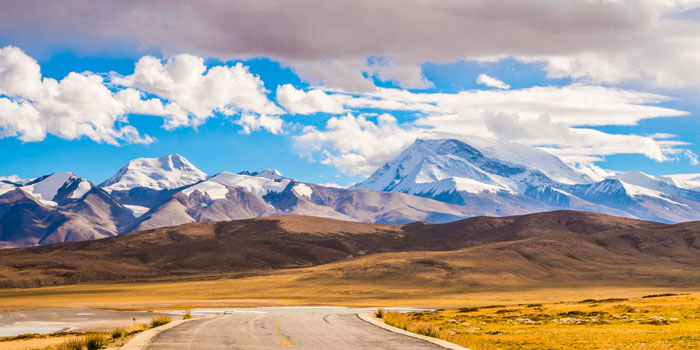

Join our 7 days Chengdu to Lhasa overland tour to travel across the Top Scenic Road to Tibet via G318 National Highway.
G318: The Most Popular and Scenic Overland Route from Chengdu to Lhasa (80% Choice)
As the most popular route from Chengdu to Lhasa, the southern route along the G318 can be divided into three sections: from Chengdu to Markam, from Markam to Nyingchi, and from Nyingchi to Lhasa. Generally, it takes about 7 to 10 days to complete the entire journey. The highest points along the way are Litang and Bangda, situated at elevations above 4,000 meters.
 (Simple click to enlarge the map)
Chengdu to Lhasa Southern Route along the G318.
The distance from Chengdu to Markam is around 800 kilometers, and this section is fully paved. The first stop is Ya’an, located at the western edge of the Sichuan Basin and along the upper reaches of the Yangtze River. From Ya’an, it’s only about 230 kilometers to Kangding, the capital of Garze Tibetan Autonomous Prefecture.
Kangding has long been an important trading town where Chinese brick tea was once carried by porters from Chengdu to exchange for Tibetan wool. Notable attractions here include Mount Paoma (Riding Mountain) and Mugecuo Lake, both well worth a visit.
After exploring Kangding, the next stop is Xinduqiao Bridge. Situated at an altitude of 3,300 meters, the area is known for its picturesque Tibetan villages and stunning natural scenery. You’ll definitely be captivated by the beauty here, so be sure to take plenty of photos.
Further along the route lies Litang, standing at over 4,000 meters above sea level. Many travelers begin to feel the effects of altitude sickness in Tibet here. Litang is famous for its annual horse-racing festival held from August 1st to 7th, when the town comes alive with tens of thousands of Khampa people and their colorful Tibetan tents.
It’s also known as the birthplace of the 7th and 10th Dalai Lamas. There are several good hiking opportunities around Litang, making it a rewarding stop before you finally reach Markam, where you officially enter Tibet from Sichuan Province.
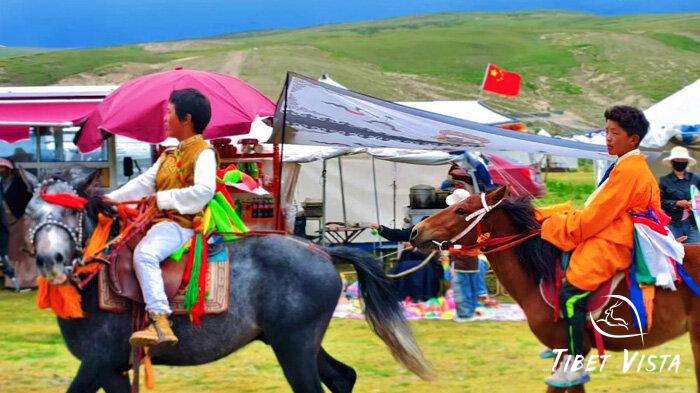 Litang Horse Racing festival.
From Markam to Nyingchi is about 782 kilometers. The first stop is Zogang County in Chamdo Prefecture, an important transport hub since ancient times. Mostly inhabited by Tibetans, the area features diverse landscapes where both the Lancang and Nujiang rivers flow through.
Next is Bangda County, home to the vast Bangda Prairie with roaming herds and rich pasturelands. Animal husbandry thrives here, along with medicinal plants like Cordyceps, Fritillaria, and Rhodiola. The Bangda Airport, the world’s highest at 4,334 meters, also lies here.
Continue to Ranwu Town in Nyingchi Prefecture, 195 kilometers away at 3,807 meters. This traditional Tibetan village sits near Ranwu Lake, whose blue waters, snow peaks, and green meadows form one of Tibet’s most beautiful sights.
Then comes Bomi County, known for its rich harvests of fungus and matsutake mushrooms. Nearby lies the spectacular Midui Glacier, rising to 6,800 meters and famed as one of China’s most beautiful glaciers. A visit to nearby Midui Village adds a touch of local charm.
The final highlight before Nyingchi is Lulang Town, surrounded by snow peaks, virgin forests, and peaceful farmland. Don’t miss the scenic Lulang Forest and the local specialty, Stone Pot Chicken. From here, you’ll soon arrive Tibetan Alps and Nyingchi tour awaits.
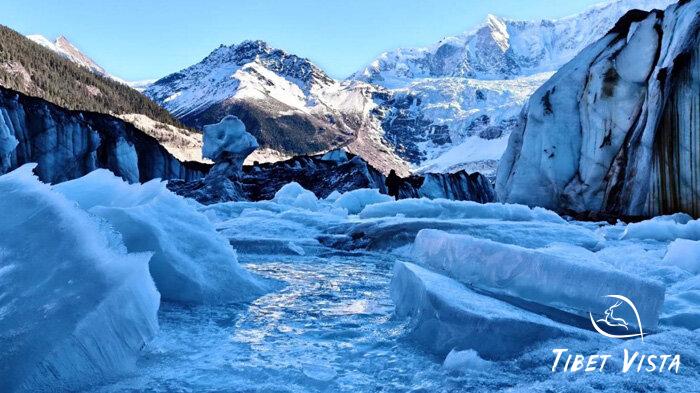 Stunning blue ice of Midui Glacier.
From Nyingchi to Lhasa is about 400 kilometers, connected by a modern highway. Nyingchi lies at an average elevation of 3,000 meters, making it the lowest area on the Qinghai-Tibet Plateau and earning it the nickname “Tibetan Jiangnan.”
If you travel between late March and April, you can enjoy the famous Nyingchi Peach Blossom Festival. The region boasts a well-preserved ecological environment and a pleasant climate. The Monba and Lhoba ethnic groups live here, still maintaining their traditional lifestyles and beliefs.
About 140 kilometers farther is Basum Lake near Gongbo’gyamda County, a sacred lake for local people and an International Forest Park since 2001. Its crystal-clear waters reflect snow-capped peaks, while seagulls and white cranes add to its serene beauty.
The road ahead is generally good, but you’ll need to cross the Mila Mountain Pass at about 5,000 meters, where you can admire the grandeur of Mount Namcha Barwa. Beyond the pass lies Gongbo’gyamda County, known as “Tibetan Jiangnan” for its mild climate and abundant rainfall.
Finally, you’ll arrive in Lhasa-the political, economic, and cultural heart of Tibet. One of the highest cities in the world, Lhasa tour awaits with its magnificent Buddhist landmarks, including the Potala Palace, Jokhang Temple, and Norbulingka, among many other sacred and scenic sites.
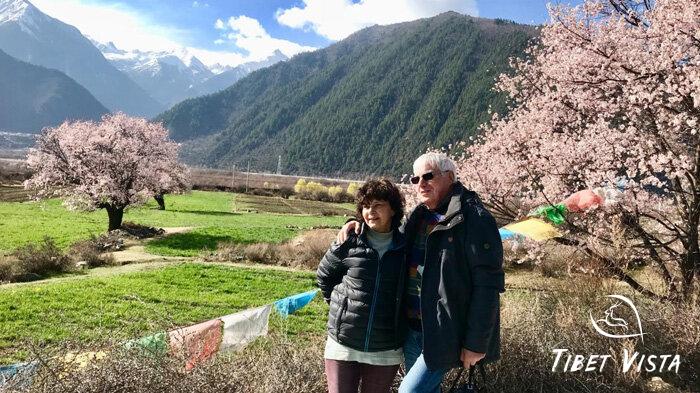 Our beloved guests exploring Nyingchi during the peach blossom festival.
G317: The Most Cultural and Inspiring Overland Route from Chengdu to Lhasa (20% Choice)
The northern G317 Highway attracts travelers seeking a deeper cultural experience and quieter landscapes. Passing through the historic Kham region, this journey usually takes 8 to 10 days. And is divided into two sections: from Chengdu to Dege, and from Dege to Lhasa.
 (Simple click to enlarge the map)
Chengdu to Lhasa Northern Route along the G317.
From Chengdu to Dege, about 800 km, the first stop is Dujiangyan City, home to the ancient Dujiangyan Irrigation System and nearby Mount Qingcheng, both UNESCO World Heritage Sites. Next comes Wolong National Nature Reserve, famous for its Panda Research Center.
Continue to Mount Siguniang (“Four Girls Mountain”), where four snow peaks rise above 5,000 meters, offering stunning alpine scenery. About 57 km from Xiaojin lies Danba, known as the “Kingdom of Watchtowers,” with its ancient Qiang stone towers.
Further ahead, Bamei is the birthplace of the 11th Dalai Lama, home to Huiyuan Monastery built by the 7th Dalai Lama. Another 77 km brings you to Daofu, where the 450-year-old Nyitso Monastery stands. Then comes Garze, a valley town at 3,400 m surrounded by the Chola Mountains, home to Garze and Den monasteries and local Tibetan shops.
On the way to Dege, stop at Yihun Lhatso, a sacred alpine lake set against 6,000-meter glaciers, perfect for hiking and camping. Finally, reach Dege, the cultural heart of Kham, where the 18th-century Bakong Scripture Printing Press preserves over 217,000 woodblocks, representing 70% of Tibet’s literary heritage.
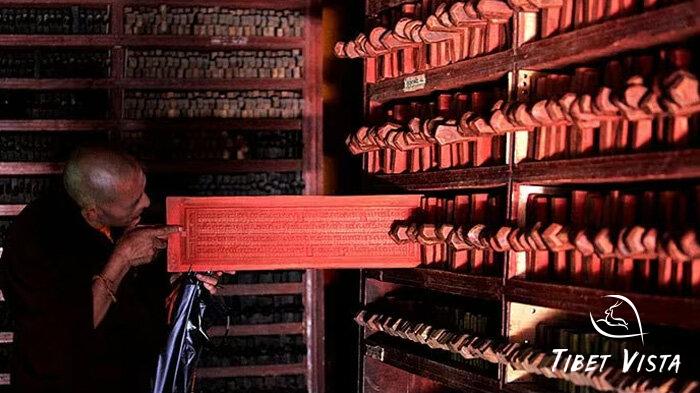 Bakong Scripture Printing Press and Monastery.
From Dege to Lhasa is about 1,400 kilometers. Passing Dege, you enter Tibet. The first stop is Jomda, 109 km from Dege, where you can rest after crossing the Jinsha River and visit Wala Monastery.
Next is Chamdo County, the administrative center of Chamdo Prefecture, covering 10,700 km² with a population of 78,000, 90% of whom are Tibetan. The most famous site here is Jampaling Monastery (also called Changbalin or Qiangbalin Si), once home to 2,500 monks. Though partially destroyed in 1912, it was rebuilt in 1917 and now houses about 800 monks.
The route continues through Riwoqe, Dingqing, and Baqing counties before reaching Nagchu Prefecture, Tibet’s largest, divided into 11 counties, with Nagchu as its capital.
A must-see is Namtso Lake, a saltwater mountain lake at 4,718 meters, on the border of Damxung County (Lhasa) and Baingoin County (Nagqu). Renowned for its stunning beauty, Namtso is the largest lake in Tibet and a highlight of the Nyainqentanglha mountain range.
On the way from Namtso Lake to Lhasa, the Yangpachen Hot Spring is a must-see. Located in Yangbajing, about 87 km northwest of Lhasa, it sits at 4,290-4,500 meters, among the highest hot springs in the world. The nearby geothermal power station supplies much of Lhasa’s electricity. After a relaxing soak, continue another 75 km to reach Lhasa.
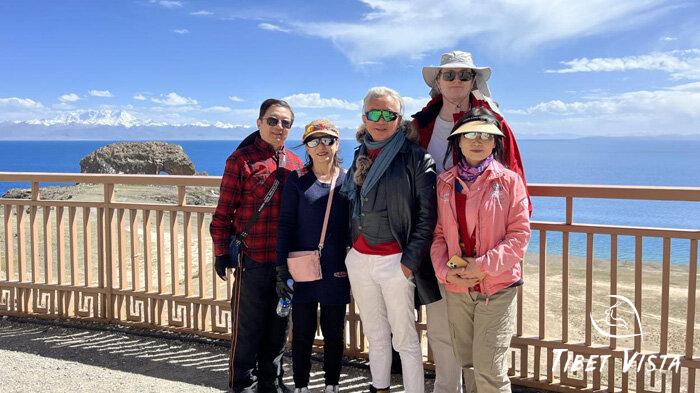 Our guests explore Namtso Lake, with the holy elephant gate on the north bank.
Best Time for an Overland Trip from Chengdu to Lhasa: Spring and Autumn
The best times to drive from Chengdu to Lhasa are in spring, from April to May, and in autumn, from September to October. During these periods, daytime temperatures can reach around 21°C, while nighttime temperatures stay above freezing on the Tibetan Plateau. These seasons also offer the clearest skies, with roughly 27 clear days per month. - Click here to see the best time to visit Tibet
In spring, after the cold winter passes, the roads are ice-free, making travel safer and easier. Daytime temperatures average around 16°C, and nights hover near 1°C. The weather is generally clear, with bright skies and breathtaking views along the long, winding route.
Autumn, following the rainy season, brings drier and clearer conditions. Daytime temperatures average about 18°C, and with roughly 28 clear days per month, the risk of rockslides is reduced. This makes it an ideal season for sightseeing and enjoying the dramatic mountainous landscapes.
Summer, from July to August, is traditionally Tibet’s rainy season, with temperatures around 21°C. Heavy rains during this time can trigger landslides and mudslides. Despite these risks, summer is also culturally vibrant, with local horse racing festivals held in Nagchu.
Winter, from November to March, is the least suitable time for an overland journey from Chengdu to Lhasa. Nighttime temperatures can drop as low as -20°C. Snow begins at higher elevations in mid-November, with drifts that can block roads until at least March. Freezing temperatures, icy roads, and limited accommodations make driving extremely hazardous.
Although winter is not ideal for driving the rugged Chengdu to Lhasa route, it is an excellent time for a Tibet winter tour within the Tibetan Plateau, especially heading to Mt.Everest from Lhasa. Most attractions are accessible, except for Mount Kailash and Lake Namtso.
With fewer tourists, lower travel costs, and vibrant festivals such as the Tibetan New Year, winter offers a unique opportunity to experience the most authentic Tibetan culture compared to any other season. What’s more, we upgrade all accommodations during the winter tour and offer free cultural activities, allowing you to fully appreciate this unique season in Tibet.
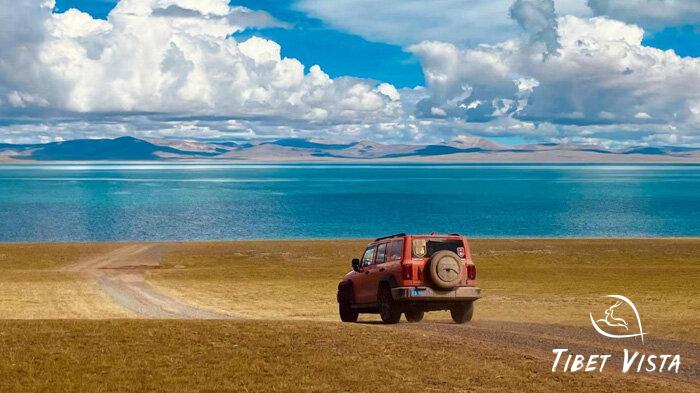 The stunning views of Tibet overland tour in autumn.
How to Plan This Overland Trip? Choose a Travel Agency Like Us
Given the long distance, rising altitudes, and challenging road conditions, the most important factor when planning an overland trip from Chengdu to Lhasa is choosing a trustworthy travel agency-like us, Tibet Vista. With over 60 local Tibetan guides, and full logistical support, we ensure your journey is both safe and comfortable.
In 2025, we helped 197 travelers from around the world complete the overland journey from Chengdu to Lhasa. Most opted for the famous southern route along the G318, while those seeking a deeper cultural experience chose the northern route along the G317.
Regardless of the itinerary, our local teams based in Lhasa and Chengdu provide thorough preparations and seamless pick-up at both ends. You can even extend your tour from Lhasa to Kathmandu. With support from our Kathmandu office, you’ll enjoy smooth border transfers and continue your adventure in the Himalaya region.
Since 1984, Tibet Vista has been dedicated to offering extraordinary experiences for international travelers exploring Tibet. From assisting with Tibet travel permits and Tibet train tickets to providing flexible options like small group tours, an unforgettable journey is just a click away.
Our Customer’s Feedback about Traveling from Chengdu to Lhasa Via G318 with Tibet Vista.
More Practical Travel Tips for the Chengdu to Lhasa Overland Trip
1. After leaving Chengdu and before reaching Lhasa, accommodation and food options along the way may be limited, with most places serving Sichuan and Tibetan cuisine. If you’re concerned about hygiene, it’s advisable to bring disposable bed sheets and covers for comfort.
2. Dressing in layers is recommended for the overland tour from Chengdu to Lhasa. As both altitude and weather change along the route, you can add or remove layers accordingly. A down jacket and warm inner clothing are essential.
3. Sunglasses and sunscreen are must-haves once you enter Tibet. They also help prevent snow blindness if you plan to explore the snowy mountains in western Sichuan.
4. All foreign travelers need a Tibet Travel Permit to enter Tibet, which can only be arranged through a registered tour operator like us. Since it takes at least a week to process the permit, we recommend contacting us at least two weeks in advance to start your Chengdu to Lhasa tour.
Conclusion
The overland trip from Chengdu to Lhasa is an unforgettable adventure through some of the most breathtaking and spiritual landscapes in the world. Whether you go for the scenic G318 or the more cultural G317, every stretch of the road shows you something new about Tibet.
With our experienced local team in both Chengdu and Lhasa, you can travel smoothly and safely while enjoying every moment along the way. So come join us on the overland journey from Chengdu to Lhasa and see why this route is one of world’s greatest adventures.

Tashi Namgyal is a devout Buddhist and an extraordinary local Tibetan guide who exemplifies the essence of excellence. With 20+ years of guide experience, Tashi excels at channeling his deep knowledge of Tibetan culture to guests through his unique sense of humor.
When off work, Tashi loves reading books on Tibetan Buddhism and practicing Buddhism himself like meditation, which makes him a perfect choice for the Tibet meditation tour.
Apart from that, Tashi was born with a knack for connecting with young people. Whether you are on his cycling tour, Buddhist meditation tour, or Mt.Kailash pilgrimage, you will be taken great care of and have a delightful experience.
 Email me about your travel idea
Related Articles & Posts
Most Popular Tibet Tour Packages
-
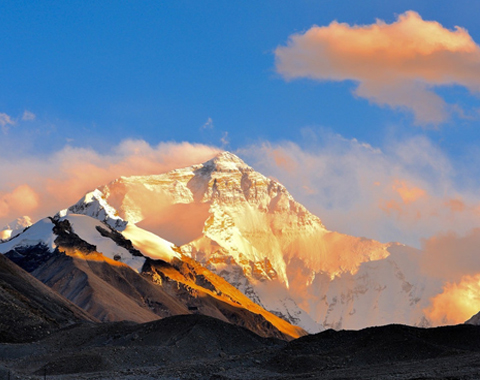
Lhasa - Gyantse - Shigatse - Everest Base Camp - Shigatse - Lhasa
USD949
View Details -
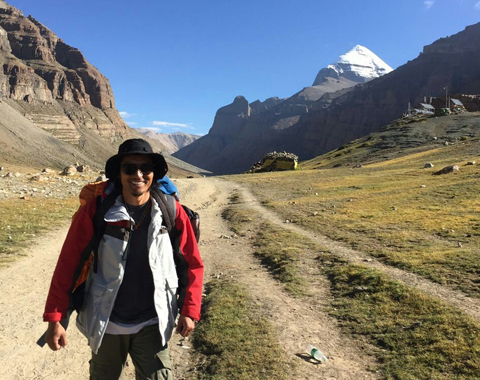
Lhasa - Gyantse - Shigatse - E.B.C - Saga - Kailash Trek - Darchen - Lake Manasarovar - Saga - Gyirong - Tingri - Lhasa
USD2069
View Details -
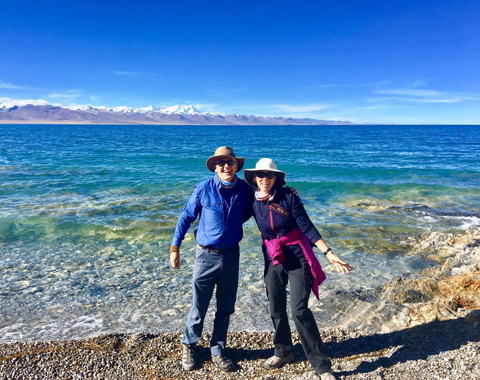
10 Days Lhasa to Everest Base Camp, Namtso Lake and Holy Elephant Gate Small Group Tour
Lhasa - Gyantse - Shigatse - EBC - Shigatse - North Tibet Grassland - Bange - Namtso Lake - Holy Elephant Gate - Lhasa
USD1299
View Details -
8 Days Driving Across Himalaya Overland Adventure from Kathmandu to Lhasa
Kathmandu - Gyirong - Everest Base Camp - Tingri - Shigatse - Gyantse - Lhasa
USD1019
View Details -
4 Days Lhasa Impression Small Group Tour: Explore the Heart of Tibet and Mingle with the Locals
Lhasa
USD509
View Details -
Lhasa - Gyantse - Shigatse - Everest Base Camp - Gyirong - Kathmandu
USD989
View Details -
Lhasa - Gyantse - Shigatse- Lhasa
USD799
View Details -
Lhasa - Gyantse - Shigatse - EBC - Saga - Darchen - Kailash Trek - Darchen - Saga - Gyirong - Kathmandu
USD2069
View Details
0 Comment ON "Chengdu to Lhasa Overland Tour: A Classic and Thrilling Adventure from Sichuan to Tibet"


Chengdu to Lhasa Overland Tour Route: Two Routes Available - G317 & G318
G318: The Most Popular and Scenic Overland Route from Chengdu to Lhasa (80% Choice)
G317: The Most Cultural and Inspiring Overland Route from Chengdu to Lhasa (20% Choice)
Best Time for an Overland Trip from Chengdu to Lhasa: Spring and Autumn
How to Plan This Overland Trip? Choose a Travel Agency Like Us
More Practical Travel Tips for the Chengdu to Lhasa Overland Trip